Shanghai Key Laboratory of Orthopaedic Implant, Department of Orthopaedic Surgery, Shanghai Ninth People's Hospital, Shanghai Jiao Tong University School of Medicine, Shanghai, 200011, China.
Clinical and Translational Research Center for 3D Printing Technology, Shanghai Ninth People's Hospital, Shanghai Jiao Tong University School of Medicine, Shanghai, 200011, China.
J Nanobiotechnology. 2022 Apr 20;20(1):195. doi: 10.1186/s12951-022-01403-y.
The rapid spread of infectious bacteria has brought great challenges to public health. It is imperative to explore effective and environment-friendly antibacterial modality to defeat antibiotic-resistant bacteria with high biosafety and broad-spectrum antibacterial property.
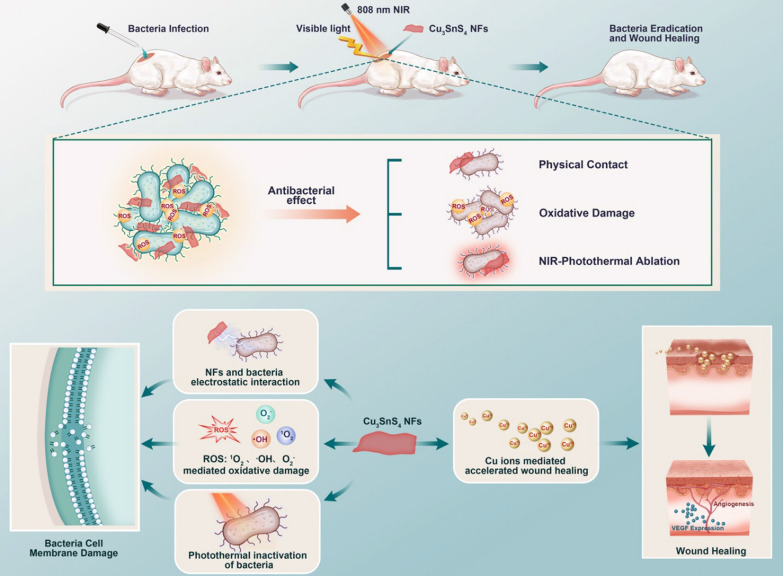
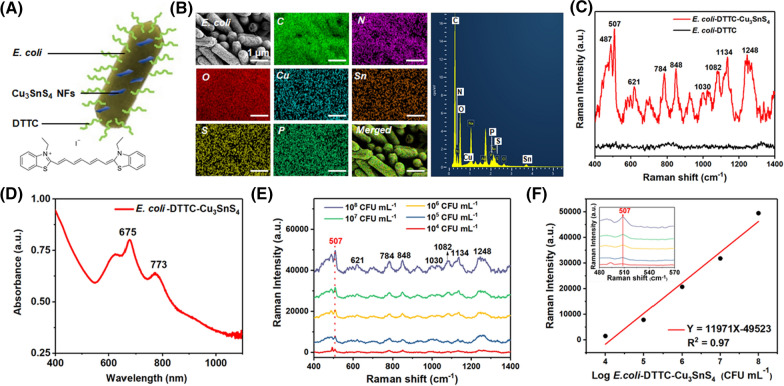
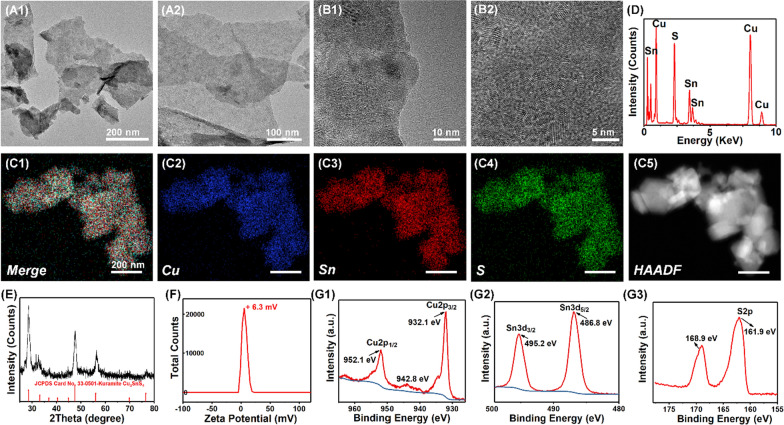
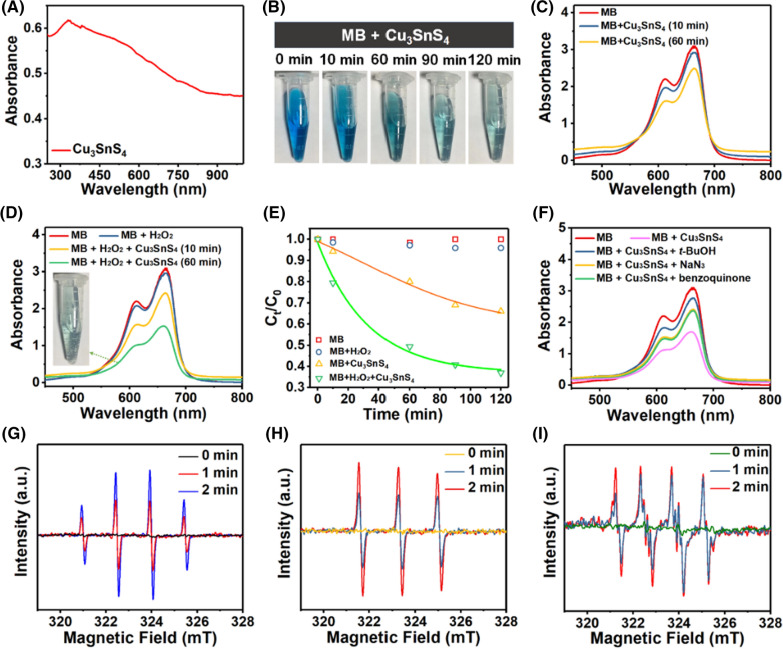
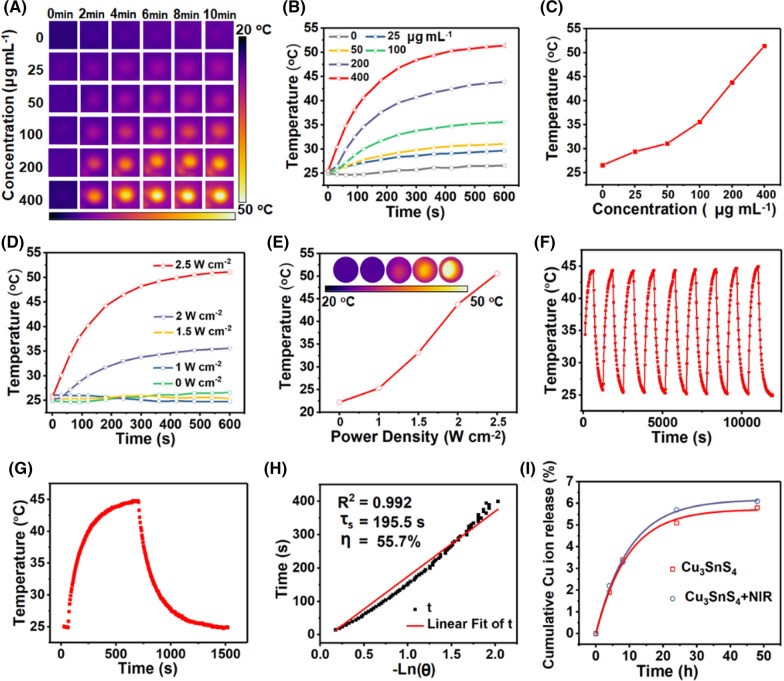
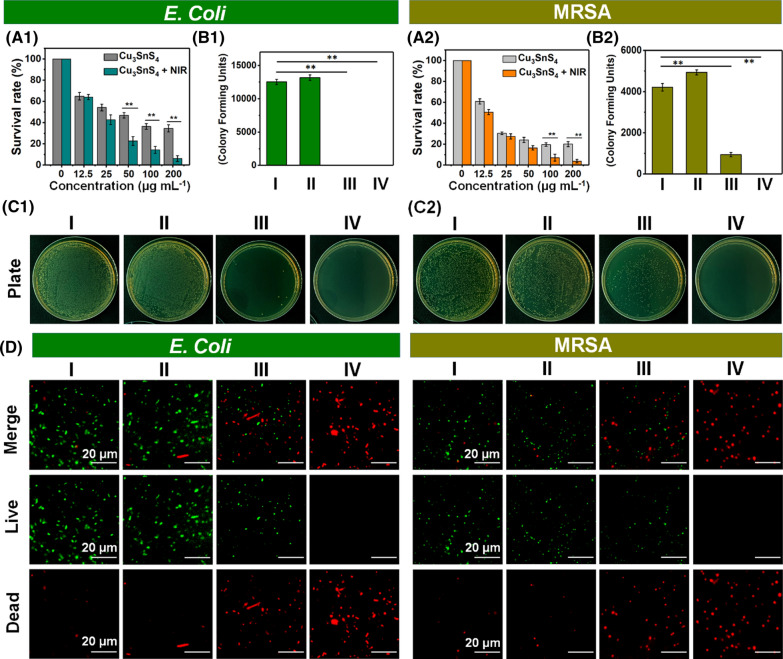
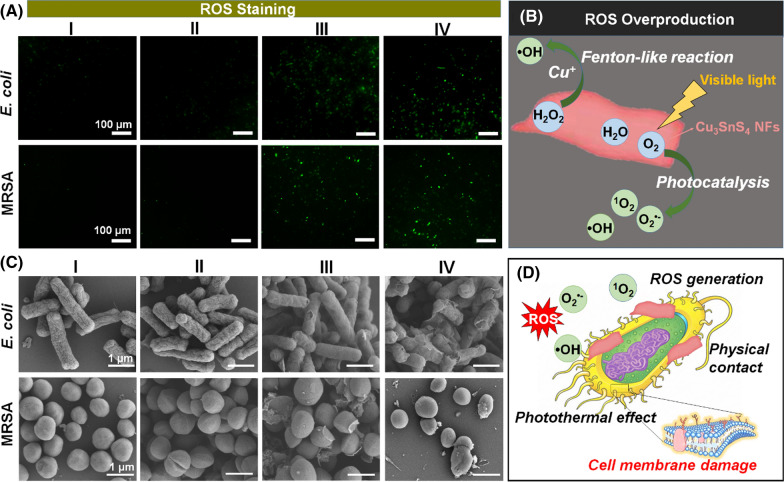
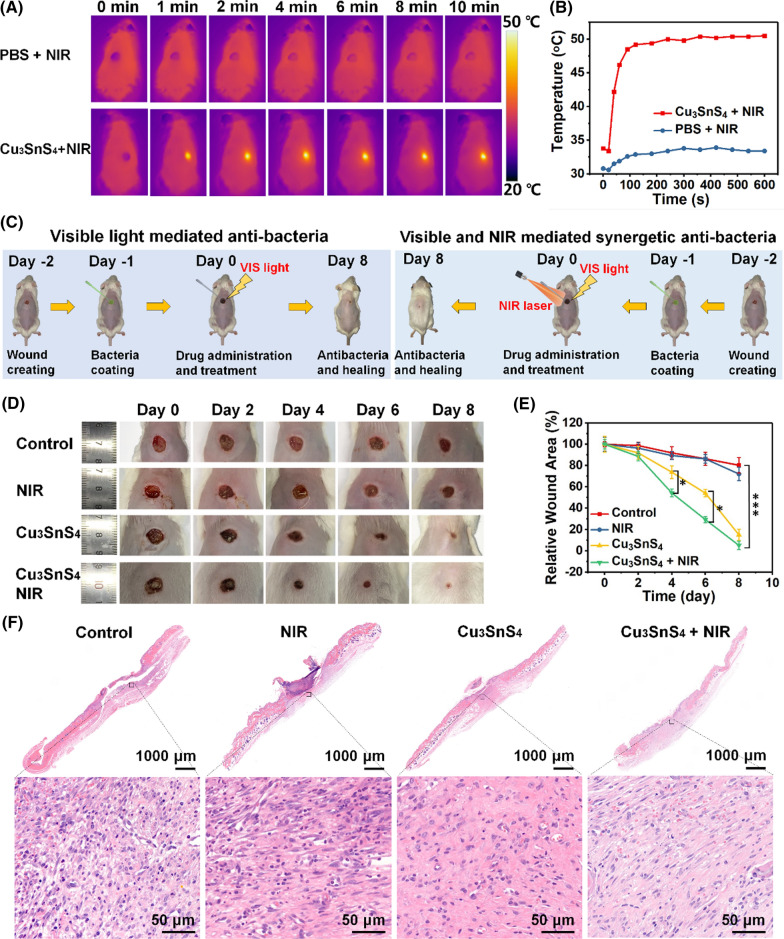
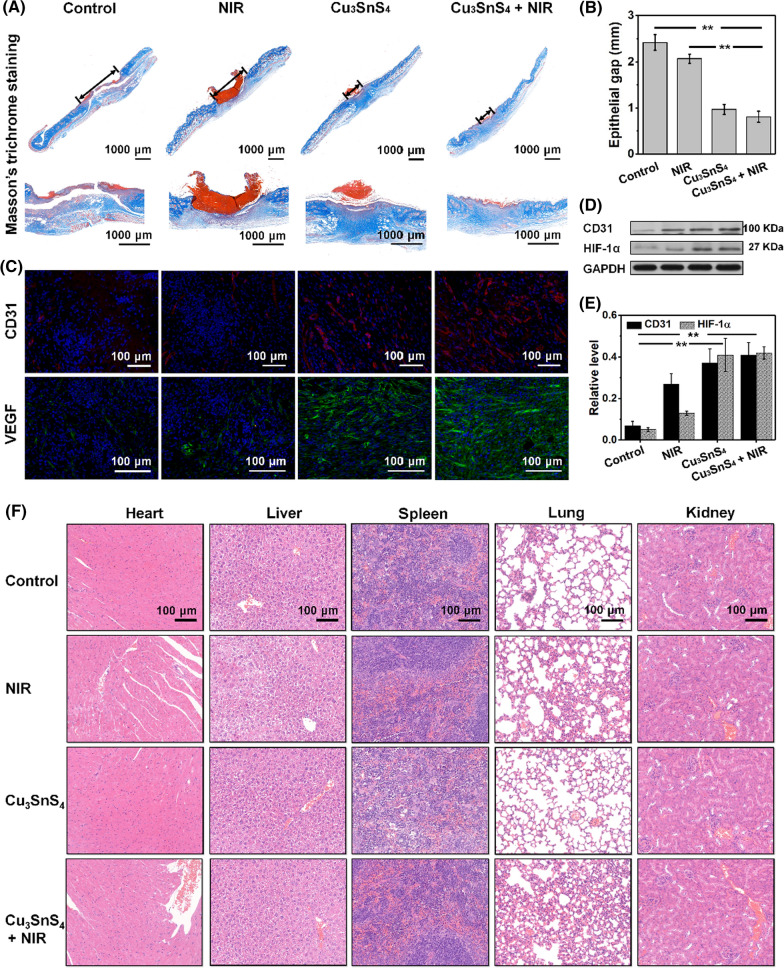
Herein, biocompatible CuSnS nanoflakes (NFs) were prepared by a facile and low-cost fabrication procedure. These CuSnS NFs could be activated by visible light, leading to visible light-mediated photocatalytic generation of a myriad of reactive oxygen species (ROS). Besides, the plasmonic CuSnS NFs exhibit strong near infrared (NIR) absorption and a high photothermal conversion efficiency of 55.7%. The ROS mediated cellular oxidative damage and the NIR mediated photothermal disruption of bacterial membranes collaboratively contributed to the advanced antibacterial therapy, which has been validated by the efficient eradication of both Gram-negative Escherichia coli and Gram-positive methicillin-resistant Staphylococcus aureus strains in vitro and in vivo. Meanwhile, the exogenous copper ions metabolism from the CuSnS NFs facilitated the endothelial cell angiogenesis and collagen deposition, thus expediting the wound healing. Importantly, the inherent localized surface plasmon resonance effect of CuSnS NFs empowered them as an active substrate for surface-enhanced Raman scattering (SERS) imaging and SERS-labeled bacteria detection.
The low cost and biocompatibility together with the solar-driven broad-spectrum photocatalytic/photothermal antibacterial property of CuSnS NFs make them a candidate for sensitive bacteria detection and effective antibacterial treatment.
传染性细菌的迅速传播给公共卫生带来了巨大挑战。探索具有高生物安全性和广谱抗菌性能的有效且环保的抗菌方式来击败抗生素耐药菌势在必行。
本文通过一种简单且低成本的制备方法制备了生物相容性的 CuSnS 纳米片(NFs)。这些 CuSnS NFs 可以被可见光激活,导致可见光介导的光催化生成大量活性氧物种(ROS)。此外,等离子体 CuSnS NFs 表现出强烈的近红外(NIR)吸收和 55.7%的高光热转换效率。ROS 介导的细胞氧化损伤和 NIR 介导的细菌膜光热破坏协同作用促进了先进的抗菌治疗,这已通过体外和体内有效消除革兰氏阴性大肠杆菌和革兰氏阳性耐甲氧西林金黄色葡萄球菌菌株得到验证。同时,CuSnS NFs 中的外源铜离子代谢促进了内皮细胞的血管生成和胶原蛋白沉积,从而加速了伤口愈合。重要的是,CuSnS NFs 的固有局域表面等离子体共振效应使它们成为表面增强拉曼散射(SERS)成像和 SERS 标记细菌检测的活性基底。
CuSnS NFs 的低成本和生物相容性以及太阳能驱动的广谱光催化/光热抗菌性能使它们成为敏感细菌检测和有效抗菌治疗的候选材料。