Åkesdotter Cecilia, Kenttä Göran, Eloranta Sandra, Håkansson Anders, Franck Johan
Performance and Training, Swedish School of Sport and Health Sciences GIH, Stockholm, Sweden.
Clinical Neuroscience, Karolinska Institutet, Stockholm, Sweden.
BMJ Open Sport Exerc Med. 2022 Mar 29;8(1):e001264. doi: 10.1136/bmjsem-2021-001264. eCollection 2022.
Few studies have evaluated the prevalence of psychiatric disorders among treatment-seeking elite athletes (EA) or high-performance coaches (HPC) in psychiatric outpatient settings.
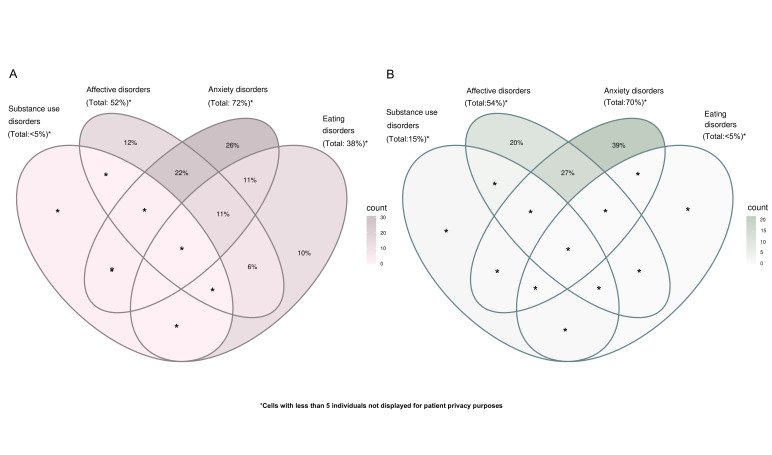
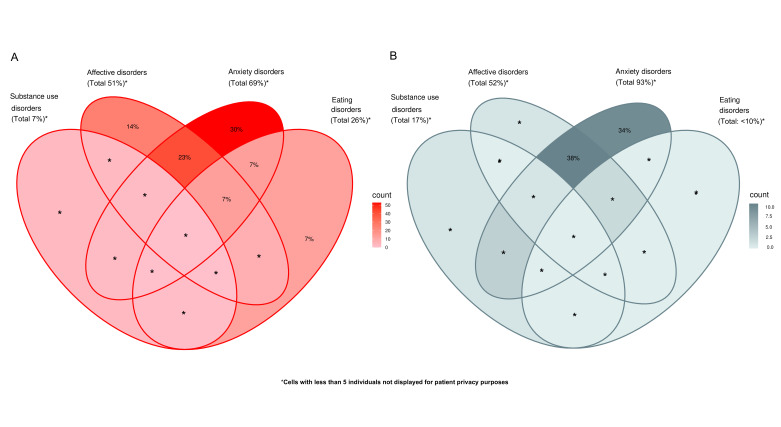
Descriptive overview of EA and HPC with psychiatric disorders at two publicly funded psychiatric outpatient treatment clinics in Stockholm and Malmö, Sweden. Co-occurring psychiatric disorders were illustrated using Venn diagrams for EA and HPC, and male and female EA separately, among patients from the Stockholm clinic (SC) that used standardised diagnostic interviews.
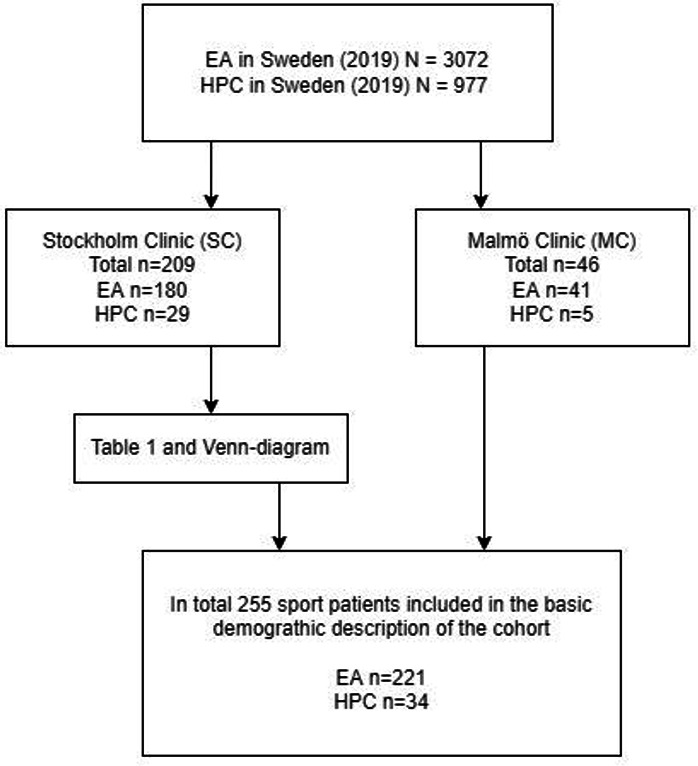
Overall, most patients were EA (n=221) compared with HPC (n=34). The mean age was 23.5 (±5.9) years for EA and 42.8 (±8.8) for HPC. Anxiety disorders were most common at the SC in EA and HPC (69% vs 91%, respectively). Stress-related disorders were found in 72% of HPC compared with 25% of EA. Affective disorders were found in 51% of EA and 52% of HPC. Eating disorders were common among EA (26%), especially females (37%). Substance use disorders were found in 17% of HPC. Comorbidity was generally common between affective and anxiety disorders.
Stress and adjustment disorders were found in nearly three of the four HPC compared with one in four EA. Eating disorders were prevalent in around one in four athletes and about one in six HPC had a substance use disorder.
很少有研究评估在精神科门诊环境中寻求治疗的精英运动员(EA)或高水平教练(HPC)中精神障碍的患病率。
对瑞典斯德哥尔摩和马尔默两家公立精神科门诊治疗诊所中患有精神障碍的EA和HPC进行描述性概述。对于来自斯德哥尔摩诊所(SC)的患者,使用维恩图分别展示EA和HPC以及男性和女性EA中同时存在的精神障碍,这些患者接受了标准化诊断访谈。
总体而言,与HPC(n = 34)相比,大多数患者是EA(n = 221)。EA的平均年龄为23.5(±5.9)岁,HPC为42.8(±8.8)岁。在SC,焦虑症在EA和HPC中最为常见(分别为69%和91%)。72%的HPC存在与压力相关的障碍,而EA中这一比例为25%。51%的EA和52%的HPC存在情感障碍。饮食失调在EA中很常见(26%),尤其是女性(37%)。17%的HPC存在物质使用障碍。情感障碍和焦虑症之间通常共病情况较为常见。
近四分之三的HPC存在压力和适应障碍,而四分之一的EA存在此类障碍。约四分之一的运动员存在饮食失调,约六分之一的HPC存在物质使用障碍。