Department of Biochemistry, University of Washington, Seattle, WA, USA.
Institute for Protein Design, University of Washington, Seattle, WA, USA.
Science. 2022 Apr 22;376(6591):383-390. doi: 10.1126/science.abm1183. Epub 2022 Apr 21.
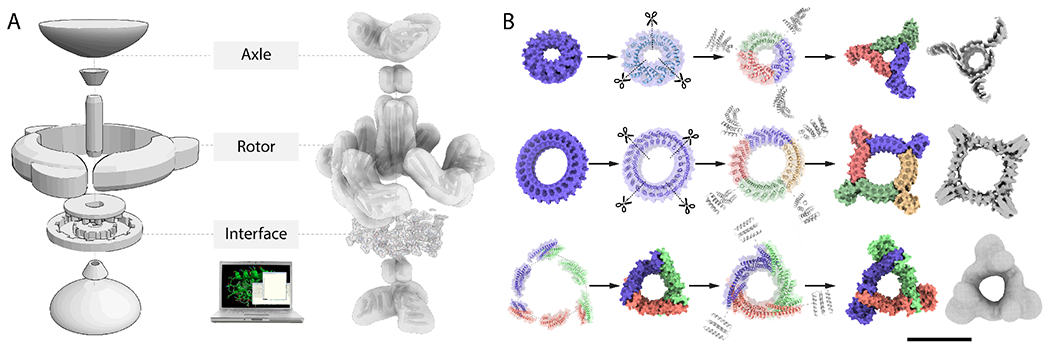
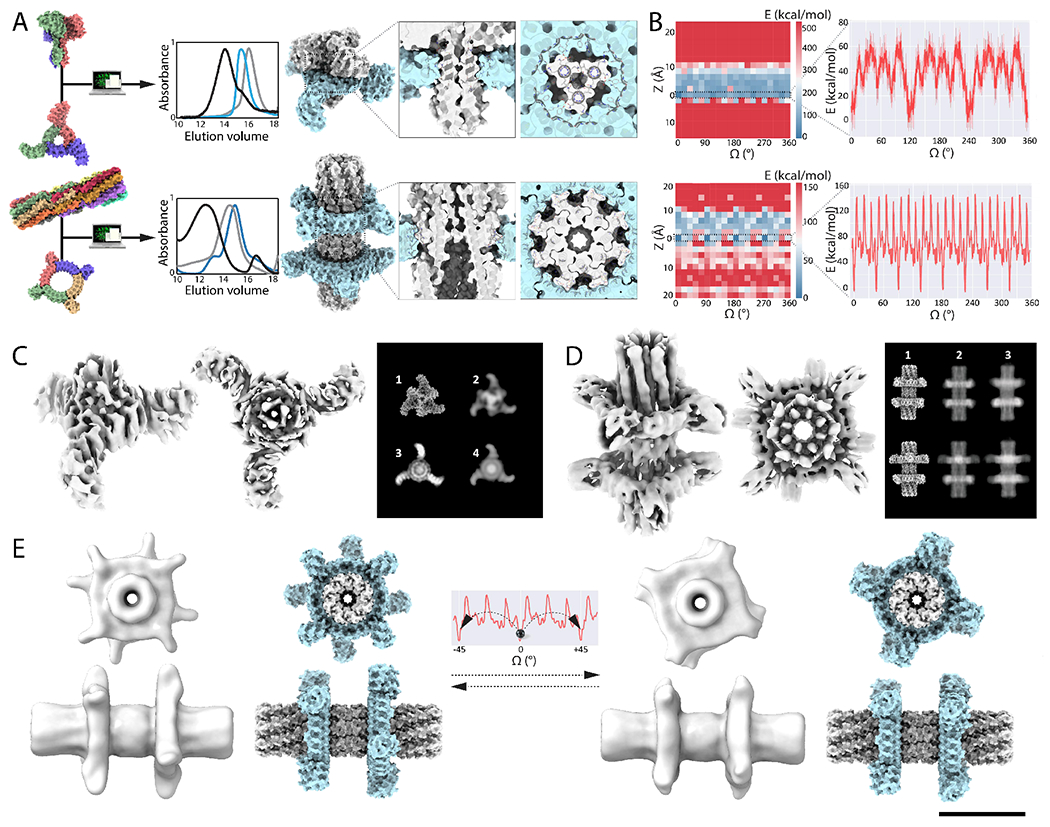
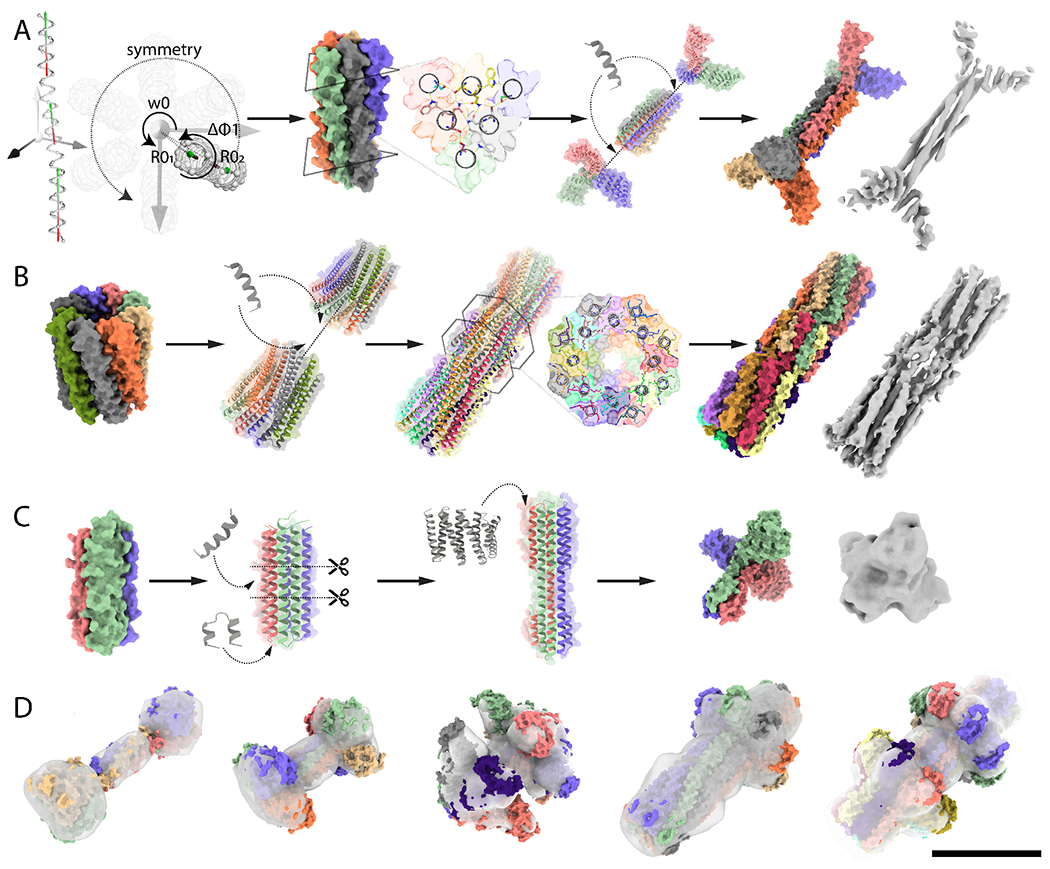
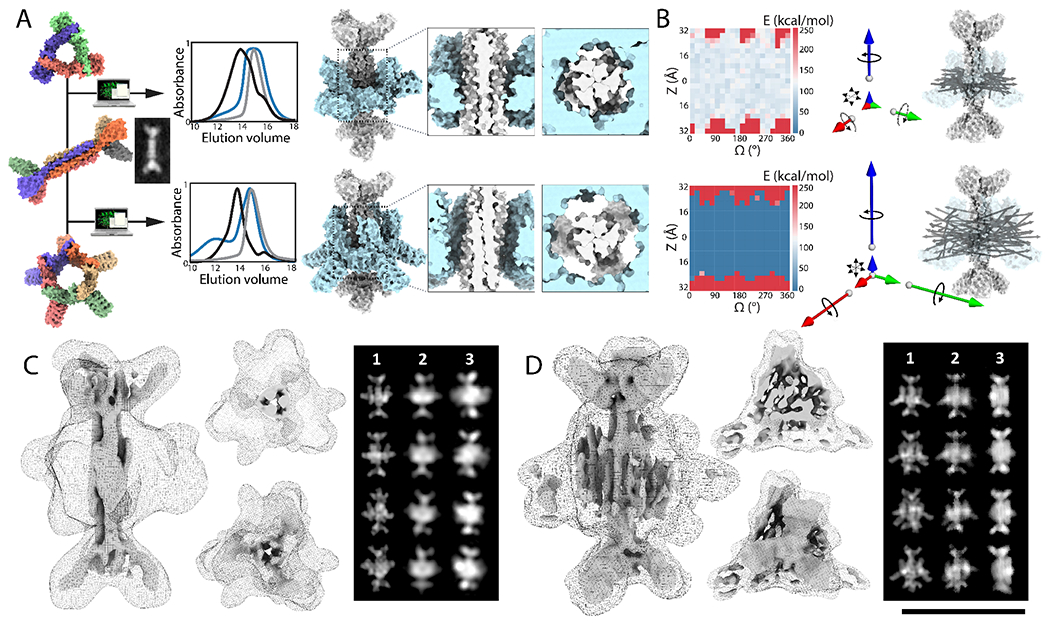
Natural molecular machines contain protein components that undergo motion relative to each other. Designing such mechanically constrained nanoscale protein architectures with internal degrees of freedom is an outstanding challenge for computational protein design. Here we explore the de novo construction of protein machinery from designed axle and rotor components with internal cyclic or dihedral symmetry. We find that the axle-rotor systems assemble in vitro and in vivo as designed. Using cryo-electron microscopy, we find that these systems populate conformationally variable relative orientations reflecting the symmetry of the coupled components and the computationally designed interface energy landscape. These mechanical systems with internal degrees of freedom are a step toward the design of genetically encodable nanomachines.
天然分子机器包含相互之间发生相对运动的蛋白质组件。设计具有内部自由度的这种机械约束的纳米级蛋白质结构是计算蛋白质设计的一个突出挑战。在这里,我们探索了从具有内部循环或二面角对称性的设计轴和转子组件从头构建蛋白质机械的方法。我们发现设计的轴-转子系统在体外和体内按设计组装。通过使用低温电子显微镜,我们发现这些系统呈现出构象可变的相对取向,反映了耦合组件的对称性和计算设计的界面能量景观。这些具有内部自由度的机械系统是朝着设计可遗传编码的纳米机器迈出的一步。