Centre for Research in Functional Materials (CRFM), Jain Global Campus, Jain University, Bengaluru 562112, Karnataka, India.
Agricultural Automation Research Center, Chonnam National University, Gwangju 61186, Korea.
Biosensors (Basel). 2022 Apr 7;12(4):220. doi: 10.3390/bios12040220.
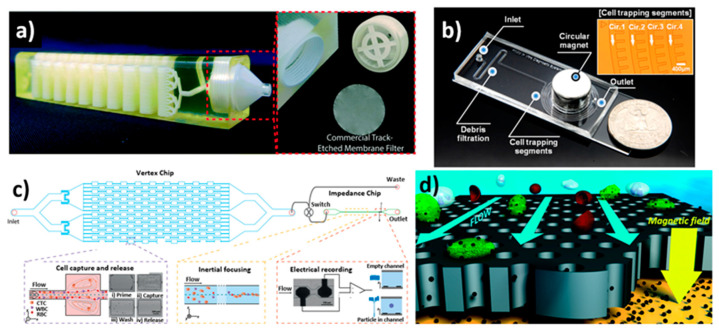
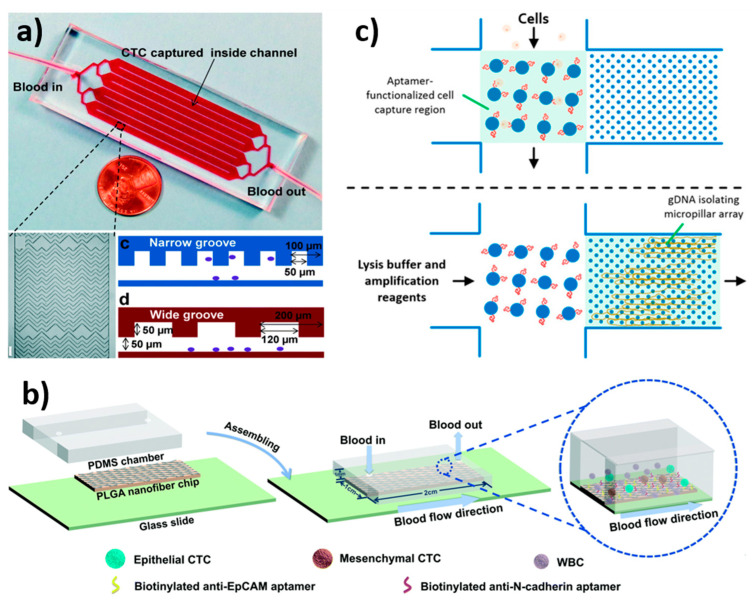
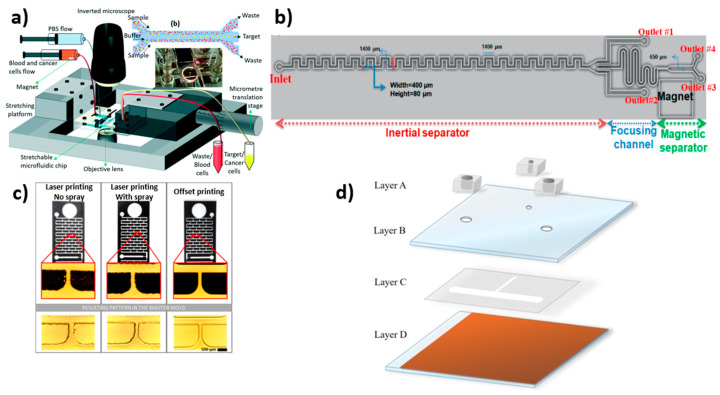
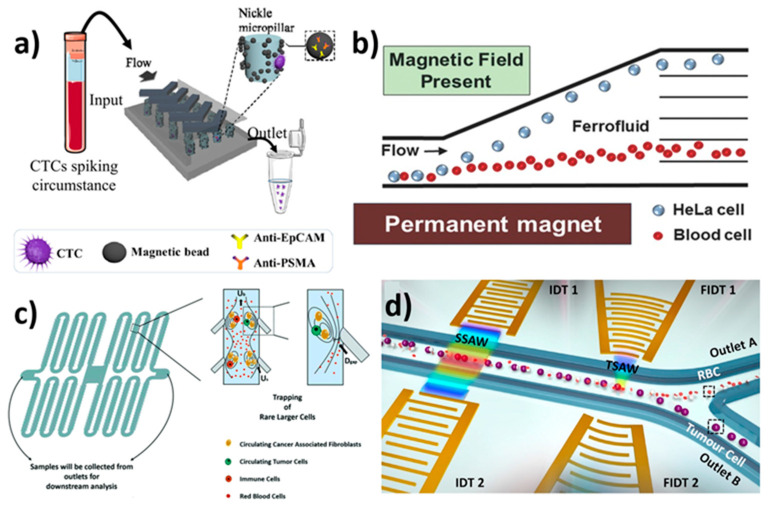
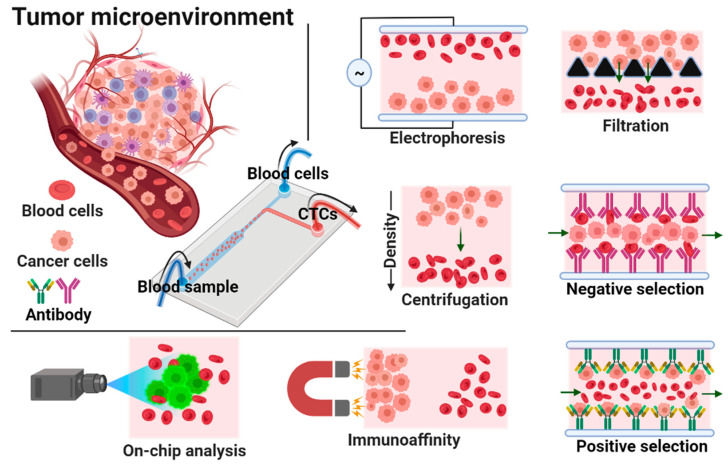
CTCs (circulating tumor cells) are well-known for their use in clinical trials for tumor diagnosis. Capturing and isolating these CTCs from whole blood samples has enormous benefits in cancer diagnosis and treatment. In general, various approaches are being used to separate malignant cells, including immunomagnets, macroscale filters, centrifuges, dielectrophoresis, and immunological approaches. These procedures, on the other hand, are time-consuming and necessitate multiple high-level operational protocols. In addition, considering their low efficiency and throughput, the processes of capturing and isolating CTCs face tremendous challenges. Meanwhile, recent advances in microfluidic devices promise unprecedented advantages for capturing and isolating CTCs with greater efficiency, sensitivity, selectivity and accuracy. In this regard, this review article focuses primarily on the various fabrication methodologies involved in microfluidic devices and techniques specifically used to capture and isolate CTCs using various physical and biological methods as well as their conceptual ideas, advantages and disadvantages.
CTCs(循环肿瘤细胞)在肿瘤诊断的临床试验中被广泛应用。从全血样本中捕获和分离这些 CTCs 在癌症诊断和治疗方面具有巨大的益处。通常,使用各种方法来分离恶性细胞,包括免疫磁铁、宏观过滤器、离心机、介电泳和免疫学方法。然而,这些方法既耗时又需要多个高级别的操作方案。此外,考虑到它们的低效率和通量,捕获和分离 CTCs 的过程面临着巨大的挑战。与此同时,微流控设备的最新进展为更高效、更灵敏、更具选择性和更准确地捕获和分离 CTCs 提供了前所未有的优势。在这方面,本文主要集中讨论微流控设备中涉及的各种制造方法学,以及使用各种物理和生物学方法以及它们的概念性思路来捕获和分离 CTCs 的具体技术,以及它们的优缺点。