Department of Psychiatry & Behavioral Neuroscience, University of Cincinnati Academic Health Center, Cincinnati, OH 45267, USA.
Division of Neurology, Cincinnati Children's Research Foundation, Cincinnati, OH 45229, USA.
Nutrients. 2022 Apr 13;14(8):1619. doi: 10.3390/nu14081619.
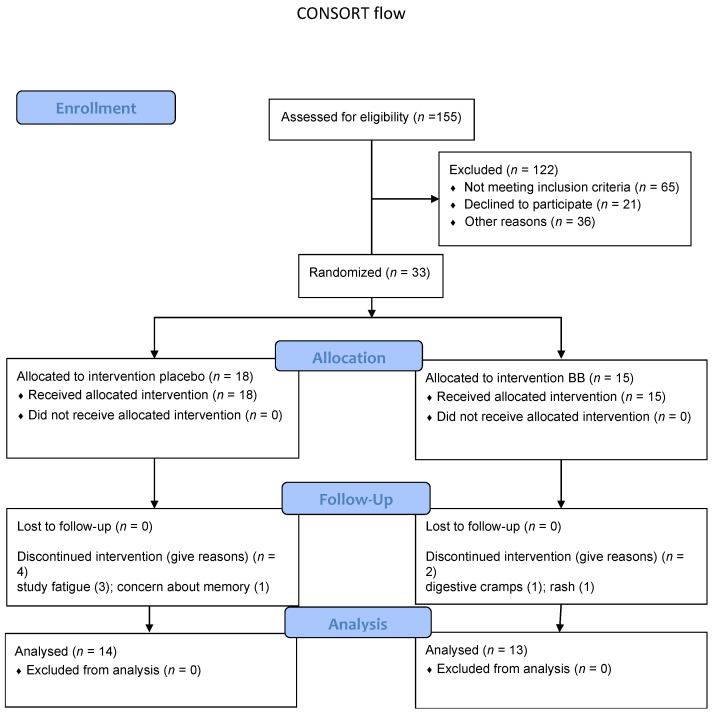
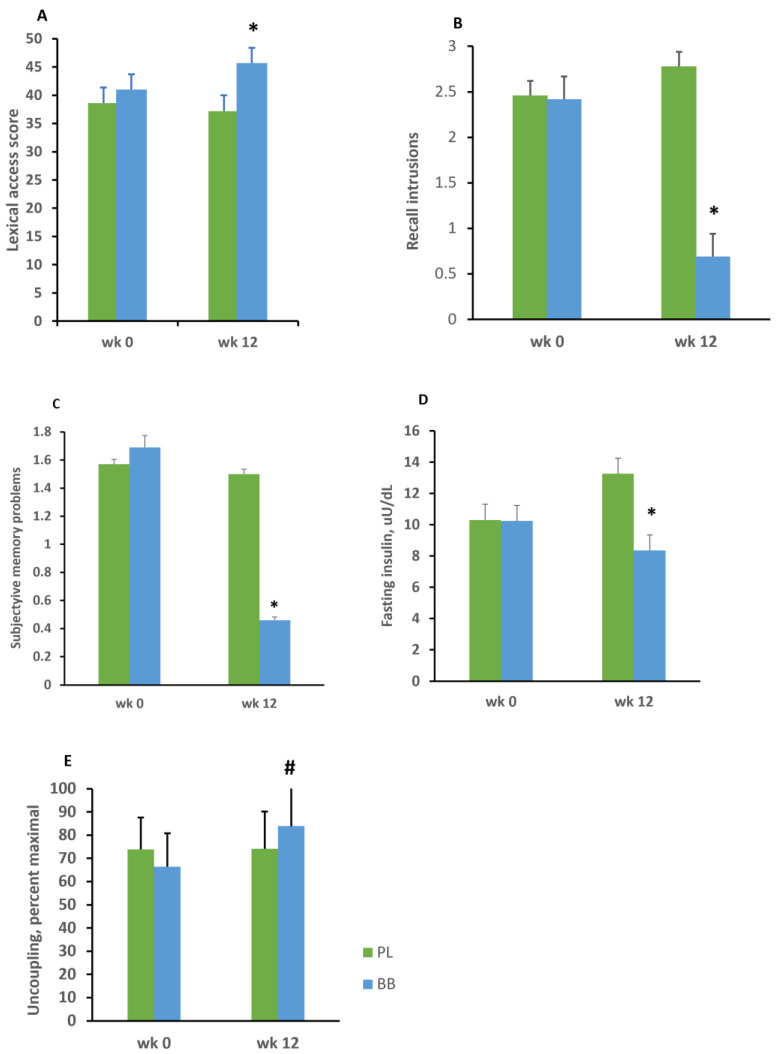
Late-life dementia typically develops over a period of many years beginning in midlife. Prevalence of metabolic disturbance also accelerates in middle age and is a prominent risk factor for dementia. Preliminary studies indicate that blueberry supplementation can improve cognitive performance and influence metabolism and brain function and therefore may have a role in early intervention to prevent neurodegeneration. In a randomized controlled trial, we investigated the effects of daily blueberry supplementation in a middle-aged sample of insulin-resistant participants with elevated risk for future dementia. We enrolled overweight men and women, aged 50 to 65 years, with subjective cognitive decline (SCD) and performed pre- and post-intervention assessments of cognition and metabolism and exploratory measures of peripheral mitochondrial function. We observed improved performances for the blueberry group on measures of lexical access, = 0.003, and memory interference, = 0.04, and blueberry-treated participants reported reduced memory encoding difficulty in daily life activities, = 0.03. The blueberry-treated group also exhibited correction of peripheral hyperinsulinemia, = 0.04, and a modest trend for increased mitochondrial uncoupling, = 0.11. The cognitive findings indicated improved executive ability in this middle-aged sample. In addition, the changes in metabolic and bioenergetic measures imply potential mechanistic factors associated with anthocyanin and proanthocyanidin actions. The demonstration of these benefits in middle-aged individuals with insulin resistance and SCD suggests that ongoing blueberry supplementation may contribute to protection against cognitive decline when implemented early in at-risk individuals.
迟发性痴呆通常在中年开始的多年内逐渐发展。代谢紊乱的患病率也在中年加速,是痴呆的一个突出危险因素。初步研究表明,蓝莓补充剂可以改善认知表现,并影响代谢和大脑功能,因此可能在预防神经退行性变的早期干预中发挥作用。在一项随机对照试验中,我们调查了蓝莓补充剂对具有未来痴呆风险的中年胰岛素抵抗参与者的影响。我们招募了年龄在 50 至 65 岁之间、有主观认知下降(SCD)的超重男性和女性,并对认知和代谢进行了干预前后的评估,以及外周线粒体功能的探索性测量。我们观察到蓝莓组在词汇访问测量上的表现有所改善,=0.003,记忆干扰测量上的表现也有所改善,=0.04,并且蓝莓治疗组报告称日常生活中的记忆编码困难有所减少,=0.03。蓝莓治疗组还表现出外周高胰岛素血症的纠正,=0.04,以及线粒体解偶联的适度趋势,=0.11。认知研究结果表明,中年组的执行能力有所提高。此外,代谢和生物能量测量的变化表明与花青素和原花青素作用相关的潜在机制因素。在具有胰岛素抵抗和 SCD 的中年个体中证明了这些益处表明,持续的蓝莓补充可能有助于在高危个体中预防认知能力下降。