Ulhaq Zulvikar Syambani, Soraya Gita Vita, Dewi Nadia Artha, Wulandari Lely Retno
Research Center for Pre-Clinical and Clinical Medicine, National Research and Innovation Agency Republic of Indonesia, Cibinong, Indonesia.
Department of Biochemistry, Faculty of Medicine, Hasanuddin University, Makassar, Indonesia.
Ther Adv Ophthalmol. 2022 Apr 19;14:25158414221090100. doi: 10.1177/25158414221090100. eCollection 2022 Jan-Dec.
Progressive and irreversible vision loss has been shown to place a patient at risk of mental health problems such as anxiety. However, the reported prevalence of anxiety symptoms and disorders among eye disease patients vary across studies. Thus, this study aims to clarify the estimated prevalence of anxiety symptoms and disorders among ophthalmic disease patients.
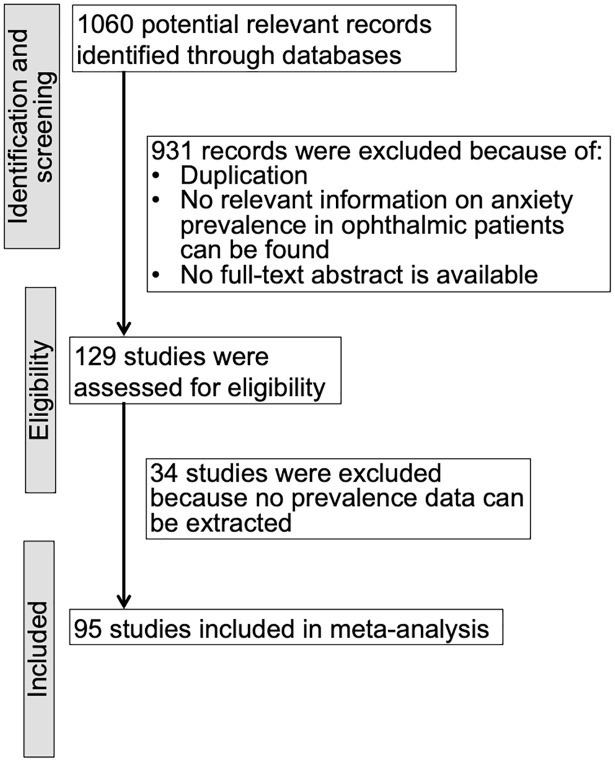
Relevant studies on the prevalence of anxiety symptoms and disorders among eye disease patients were collected through international databases, PubMed, Scopus, and Web of Science. A random-effects model was used to determine the pooled prevalence of anxiety symptoms and disorders among ophthalmic disease patients.
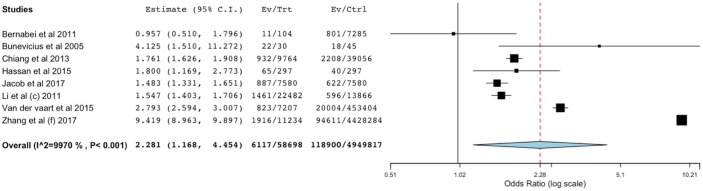
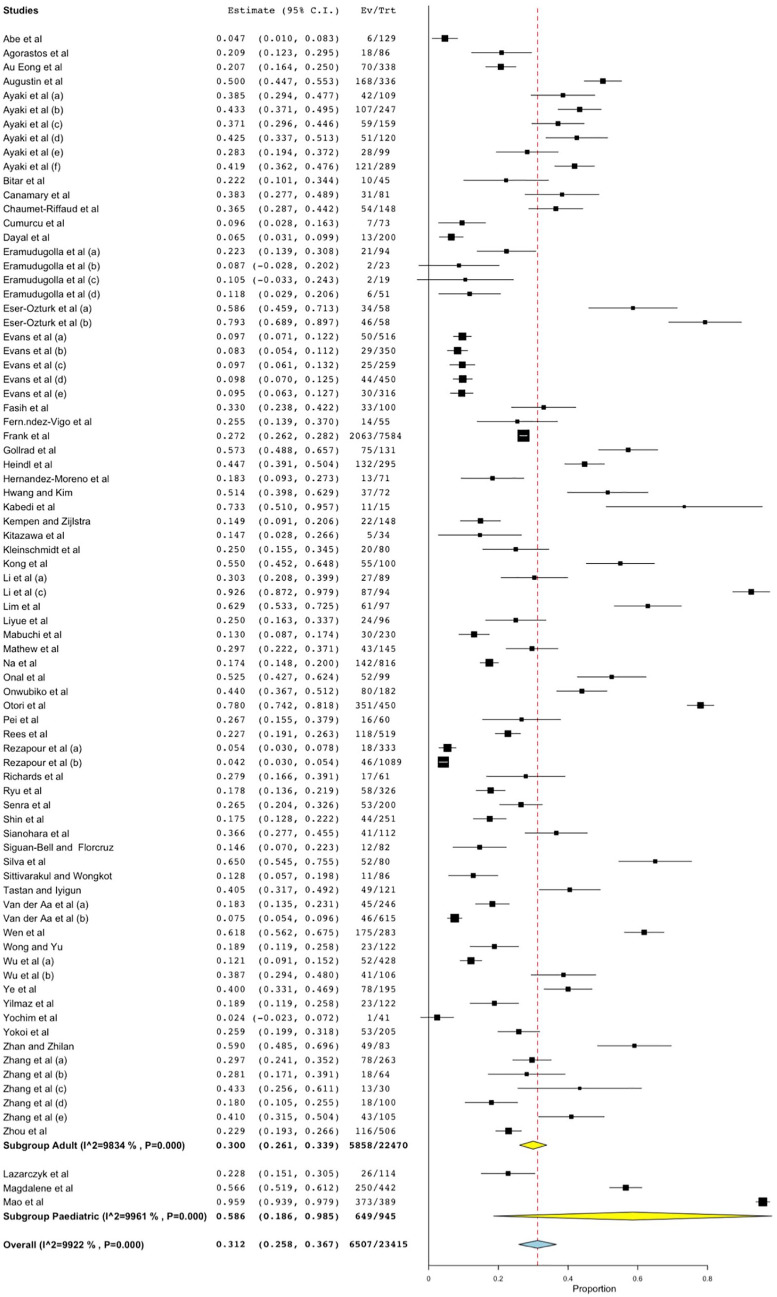
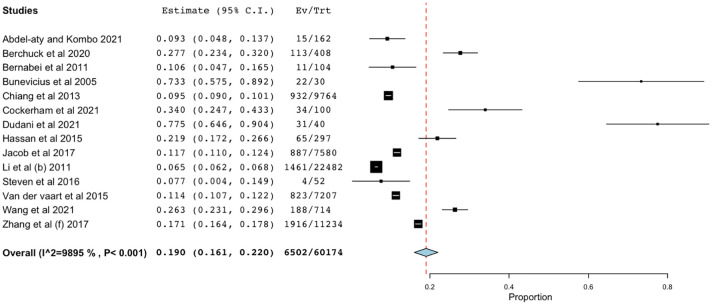
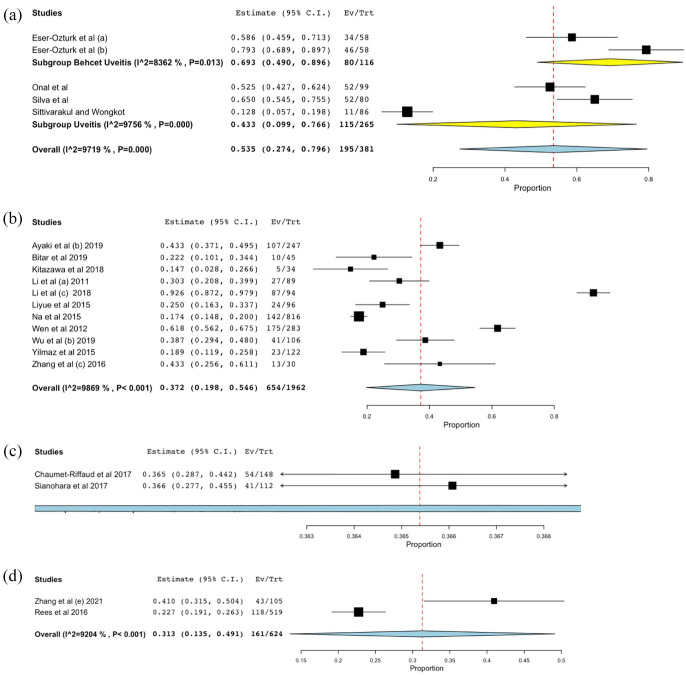
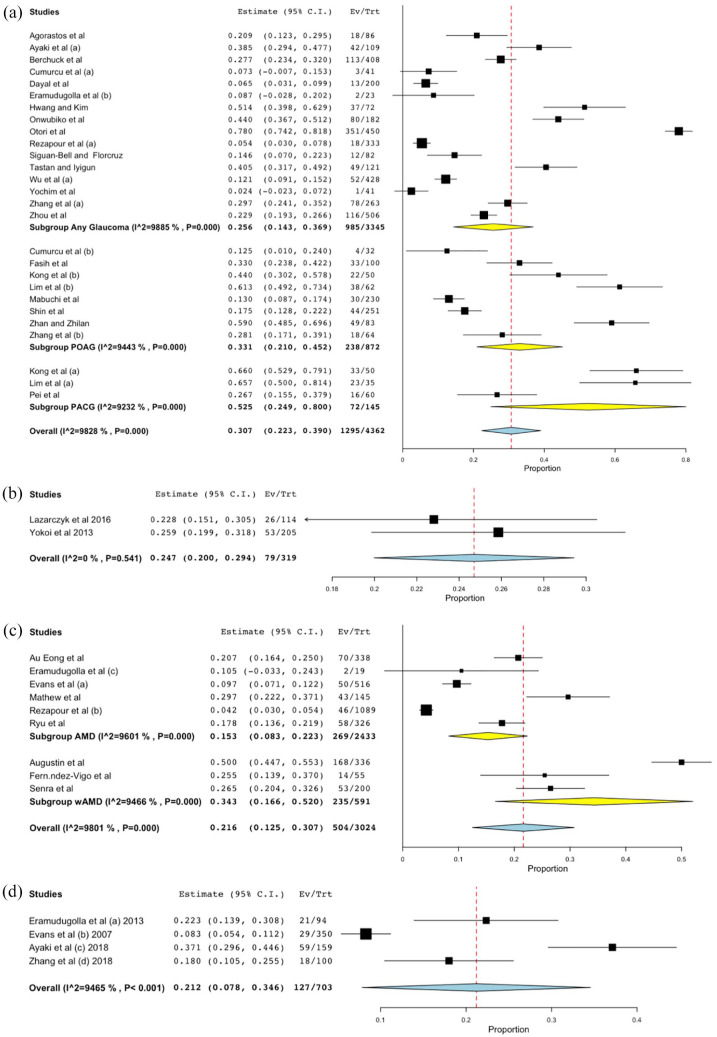
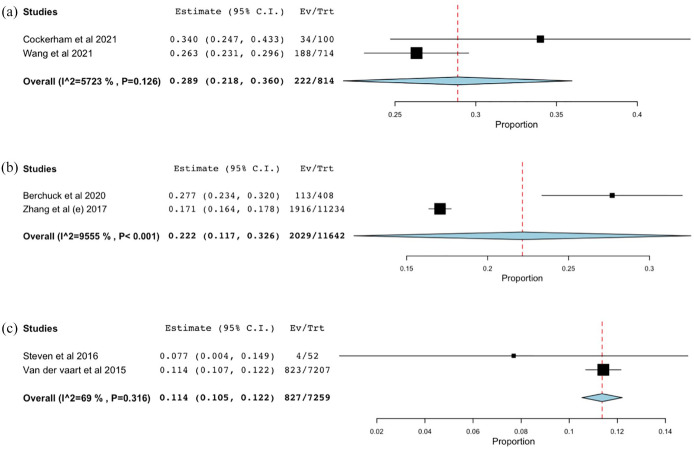
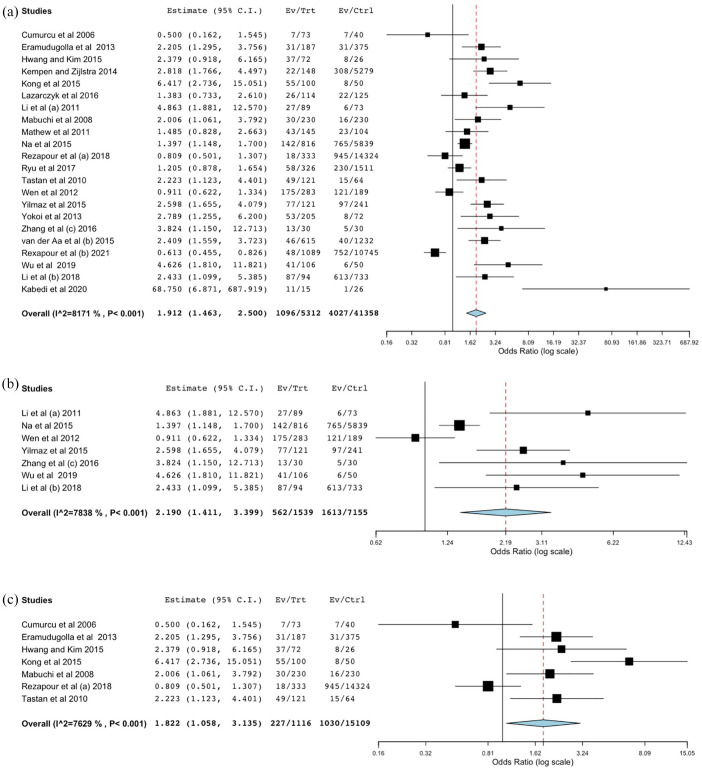
The 95 included studies yielded a pooled prevalence of 31.2% patients with anxiety symptoms and 19.0% with anxiety disorders among subjects with ophthalmic disease. Pediatric patients were more anxious (58.6%) than adults (29%). Anxiety symptoms were most prevalent in uveitis (53.5%), followed by dry eye disease (DED, 37.2%), retinitis pigmentosa (RP, 36.5%), diabetic retinopathy (DR, 31.3%), glaucoma (30.7%), myopia (24.7%), age-related macular degeneration (AMD, 21.6%), and cataract (21.2%) patients. Anxiety disorders were most prevalent in thyroid eye disease (TED, 28.9%), followed by glaucoma (22.2%) and DED (11.4%). When compared with healthy controls, there was a twofold increase on the prevalence of anxiety symptoms (OR = 1.912, 95% CI 1.463-2.5, < 0.001) and anxiety disorders (OR = 2.281, 95% CI 1.168-4.454, = 0.016).
Anxiety symptoms and disorders are common problems associated with ophthalmic disease patients. Thus, comprehensive and appropriate treatments are necessary for treating anxiety symptoms and disorders among ophthalmic disease patients.
进行性且不可逆的视力丧失已被证明会使患者面临心理健康问题的风险,如焦虑。然而,不同研究报告的眼病患者焦虑症状和障碍的患病率存在差异。因此,本研究旨在明确眼病患者焦虑症状和障碍的估计患病率。
通过国际数据库、PubMed、Scopus和Web of Science收集有关眼病患者焦虑症状和障碍患病率的相关研究。采用随机效应模型确定眼病患者焦虑症状和障碍的合并患病率。
纳入的95项研究显示,眼病患者中焦虑症状的合并患病率为31.2%,焦虑障碍的合并患病率为19.0%。儿科患者(58.6%)比成人患者(29%)更焦虑。焦虑症状在葡萄膜炎患者中最为普遍(53.5%),其次是干眼症(DED,37.2%)、视网膜色素变性(RP,36.5%)、糖尿病视网膜病变(DR,31.3%)、青光眼(30.7%)、近视(24.7%)、年龄相关性黄斑变性(AMD,21.6%)和白内障(21.2%)患者。焦虑障碍在甲状腺眼病(TED,28.9%)患者中最为普遍,其次是青光眼(22.2%)和DED(11.4%)。与健康对照相比,焦虑症状(OR = 1.912,95% CI 1.463 - 2.5,P < 0.001)和焦虑障碍(OR = 2.281,95% CI 1.168 - 4.454,P = 0.016)的患病率增加了两倍。
焦虑症状和障碍是与眼病患者相关的常见问题。因此,对眼病患者的焦虑症状和障碍进行全面且适当的治疗是必要的。