Zamora Lagos Sara Isabel, Murillo Salas Jefferson, Valencia Zapata Mayra Eliana, Mina Hernandez José Herminsul, Valencia Carlos Humberto, Rojo Luis, Grande Tovar Carlos David
Escuela de Ingeniería de Materiales, Facultad de Ingeniería, Universidad del Valle Calle 13 No. 100-00 Santiago de Cali 760032 Colombia
Escuela de Odontología, Grupo biomateriales dentales, Universidad del Valle Calle 13 No. 100-00 Santiago de Cali Colombia
RSC Adv. 2020 Aug 21;10(52):31156-31164. doi: 10.1039/d0ra06508k.
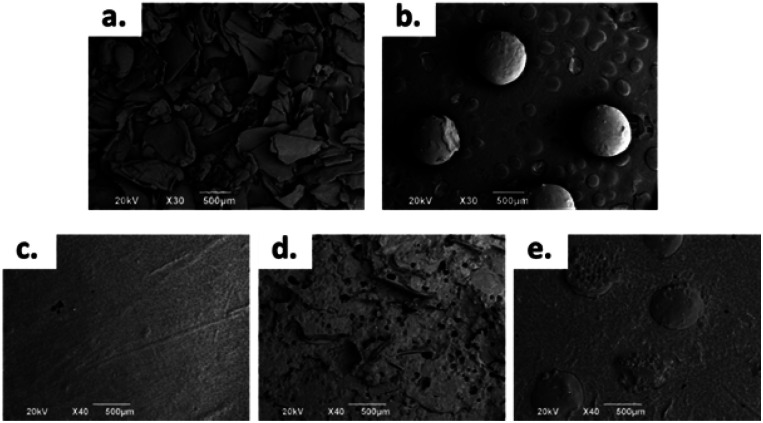
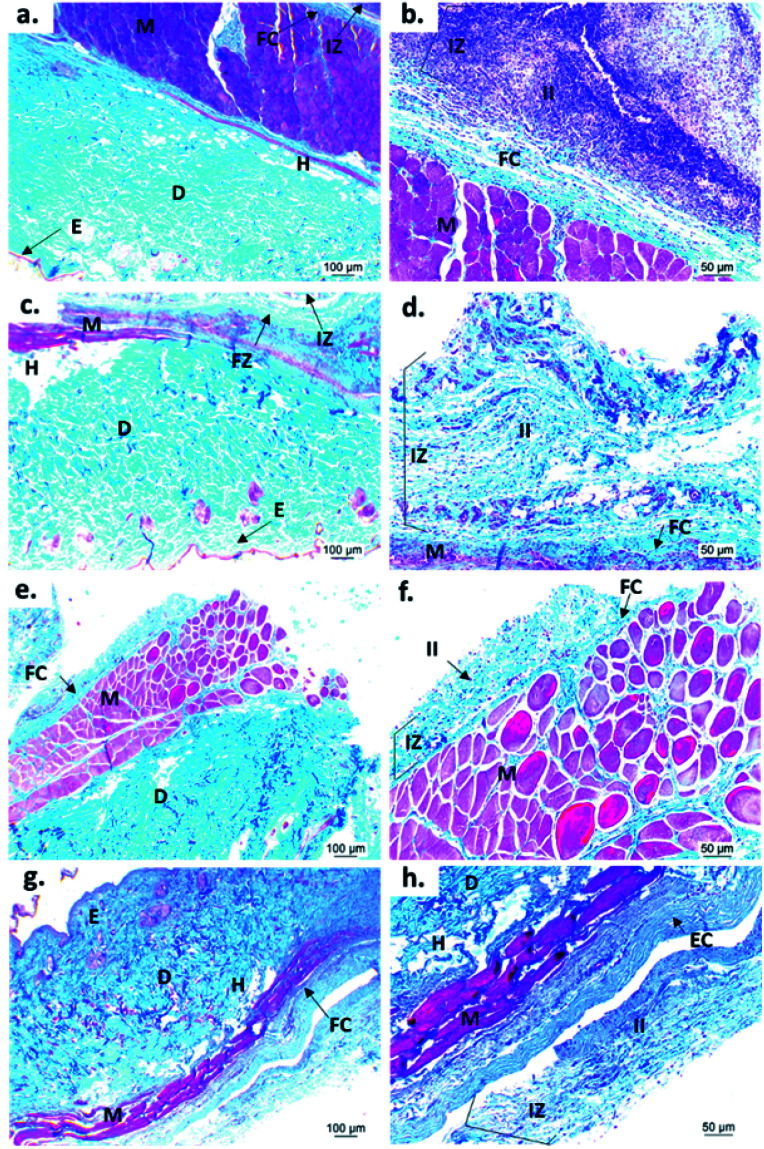
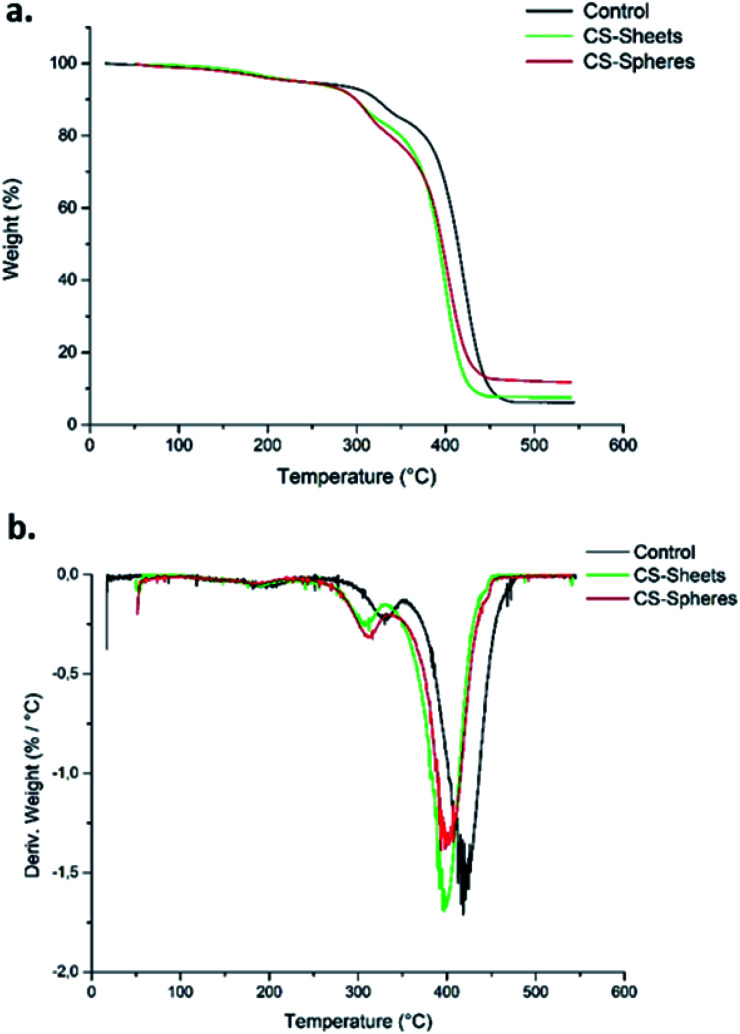
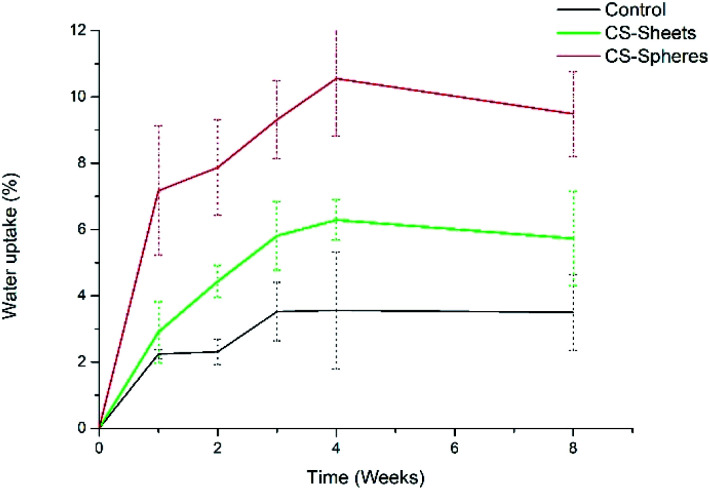
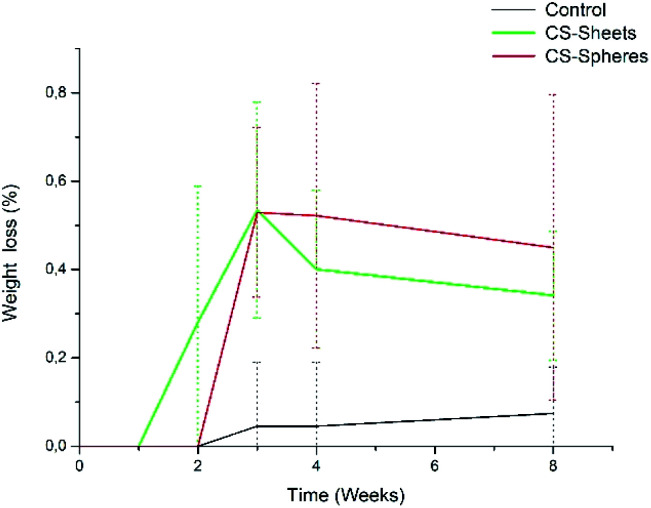
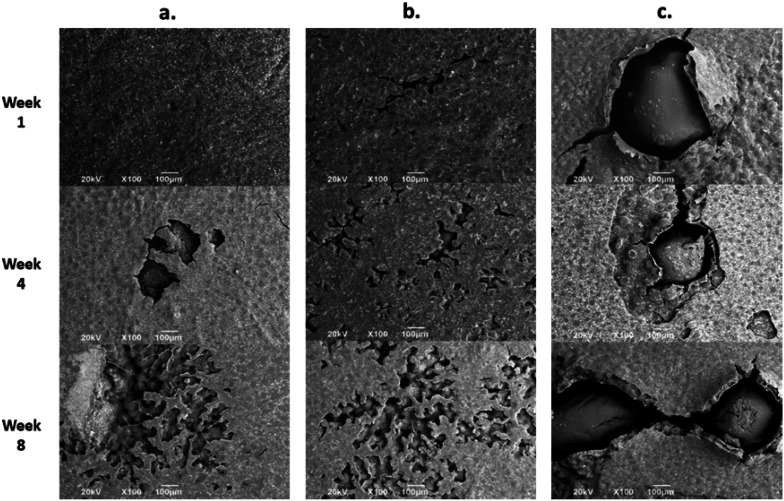
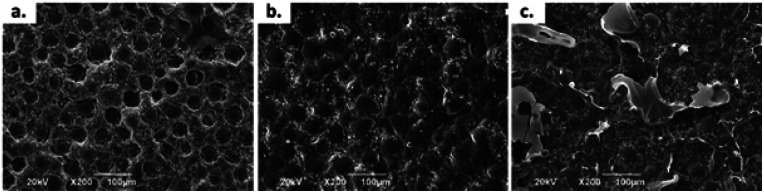
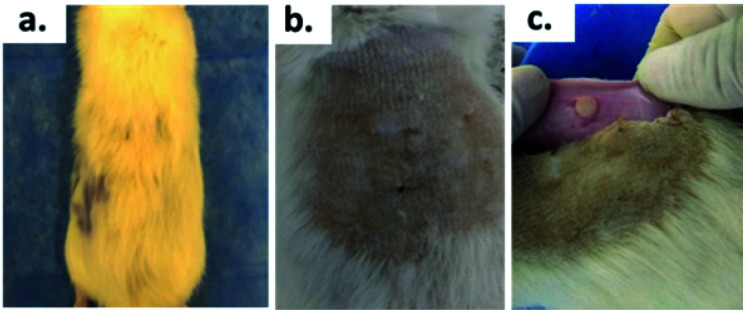
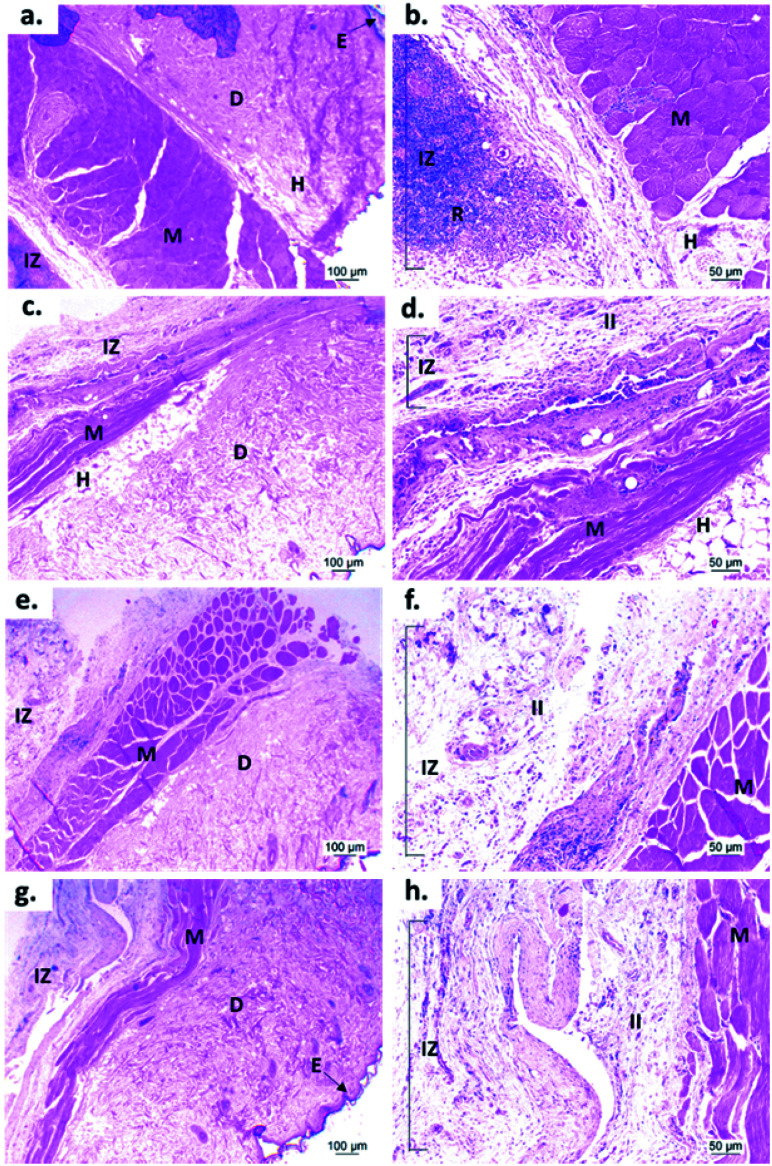
Acrylic bone cements (ABC) are materials widely used in orthopedics and biomedical applications. Several active compounds have been introduced to ABC formulations to improve their mechanical properties and bifunctionality. In this research, we studied the effect of the addition of chitosan (CS) microspheres and chitosan sheets on ABC formulations. For mechanical performance optimization, the compression strength was taken as a response variable using an extreme vertices mixing design with fraction by weight of CS and poly(methyl methacrylate) (PMMA) as the variable factors. According to the statistical analysis, the control samples (without CS), samples with 7% (wt.) of CS sheets, and samples with 17% (wt.) of CS spheres presented the best compression properties: 90.6 MPa and 95.6 MPa, respectively. The study of these formulations confirmed that CS spheres allow a higher amount of loading on the formulation, maintaining comparable compression strength. By H-NMR, it was observed that the residual monomer was similar in all wording. The hydrolytic degradation assay in simulated body fluid (SBF) determined that the sphere incorporation increased by 50% and 35% for the water uptake and weight loss values, respectively, when compared with the reported values with CS sheets. By morphological analysis SEM, it was observed that the porosity increased considerably in the presence of CS spheres throughout the immersion time in SBF. The subdermal implant results demonstrated excellent compatibility between the cement studied and the biological environment.
丙烯酸骨水泥(ABC)是广泛应用于骨科和生物医学领域的材料。几种活性化合物已被引入到ABC配方中,以改善其机械性能和双功能性。在本研究中,我们研究了添加壳聚糖(CS)微球和壳聚糖片对ABC配方的影响。为了优化机械性能,以抗压强度作为响应变量,采用极端顶点混合设计,将CS和聚甲基丙烯酸甲酯(PMMA)的重量分数作为可变因素。根据统计分析,对照样品(不含CS)、含7%(重量)CS片的样品和含17%(重量)CS微球的样品表现出最佳的压缩性能,分别为90.6MPa和95.6MPa。对这些配方的研究证实,CS微球允许在配方上加载更高的量,同时保持相当的抗压强度。通过氢核磁共振(H-NMR)观察到,所有配方中的残留单体相似。在模拟体液(SBF)中的水解降解试验表明,与含CS片的报道值相比,加入微球后吸水率和失重值分别增加了50%和35%。通过扫描电子显微镜(SEM)进行形态分析,发现在SBF中浸泡期间,CS微球的存在使孔隙率显著增加。皮下植入结果表明,所研究的骨水泥与生物环境具有良好的相容性。