Dental Research Center, Dentistry Research Institute, Tehran University of Medical Sciences, Tehran, Iran.
Department of Parasitology and Mycology, School of Medicine, Tonekabon Branch, Islamic Azad University, Tonekabon, Iran.
BMC Microbiol. 2022 May 10;22(1):125. doi: 10.1186/s12866-022-02544-8.
Quorum sensing (QS) system can regulate the expression of virulence factors and biofilm formation in Streptococcus mutans. Antimicrobial photodynamic therapy (aPDT) inhibits quorum quenching (QQ), and can be used to prevent microbial biofilm. We thereby aimed to evaluate the anti-biofilm potency and anti-metabolic activity of nano-quercetin (N-QCT)-mediated aPDT against S. mutans. Also, in silico evaluation of the inhibitory effect of N-QCT on the competence-stimulating peptide (CSP) of S. mutans was performed to elucidate the impact of aPDT on various QS-regulated genes.
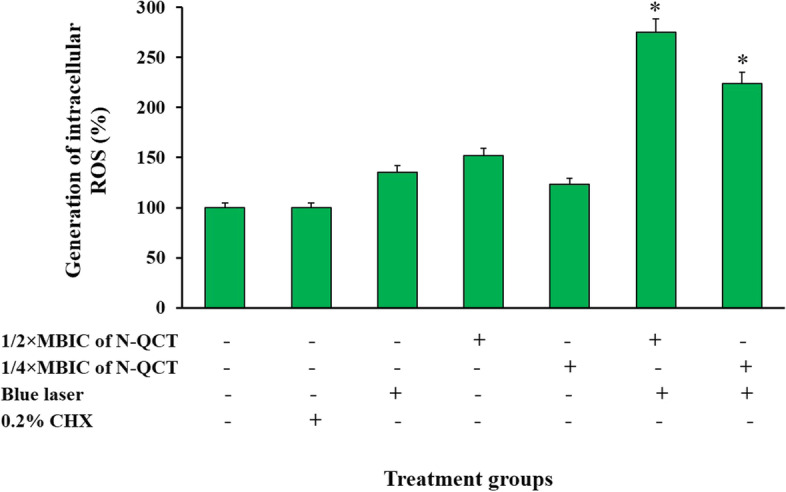
Cytotoxicity and intracellular reactive oxygen species (ROS) generation were assessed following synthesis and confirmation of N-QCT. Subsequently, the minimum biofilm inhibitory concentration (MBIC) of N-QCT against S. mutans and anti-biofilm effects of aPDT were assessed using colorimetric assay and plate counting. Molecular modeling and docking analysis were performed to confirm the connection of QCT to CSP. The metabolic activity of S. mutans and the expression level of various genes involved in QS were evaluated by flow cytometry and reverse transcription quantitative real-time PCR, respectively.
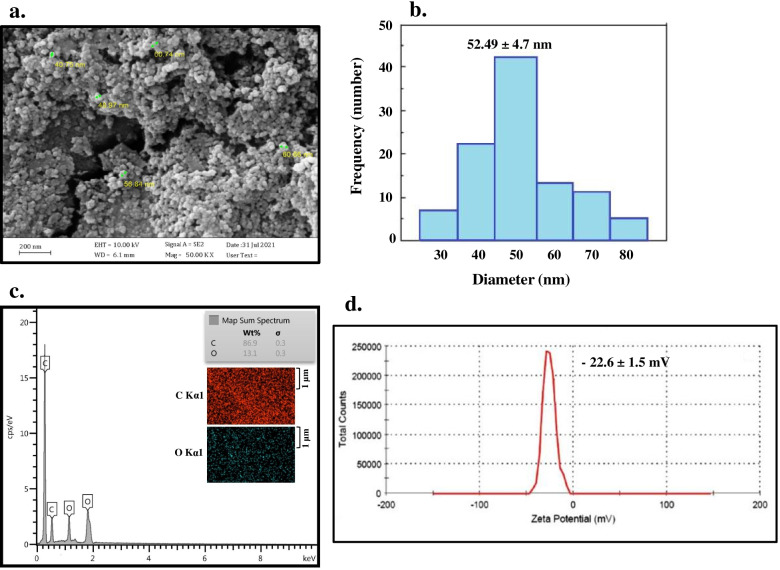
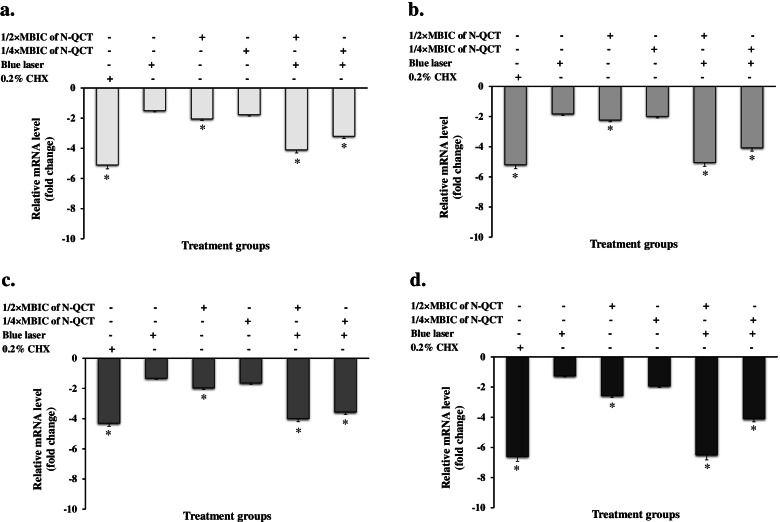
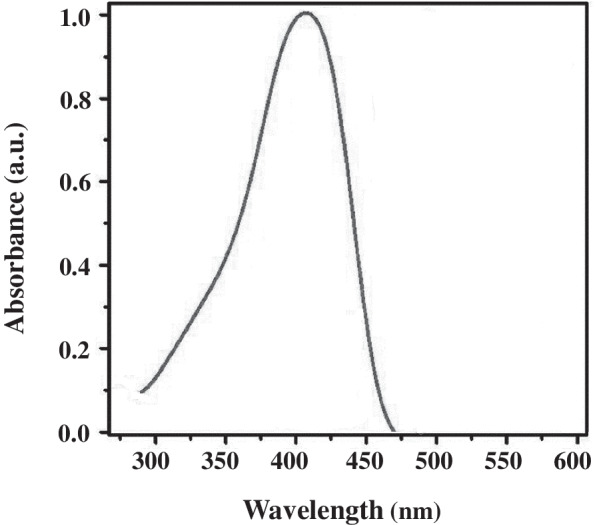
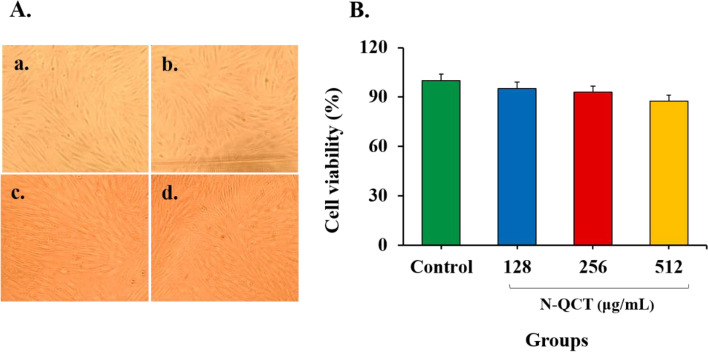
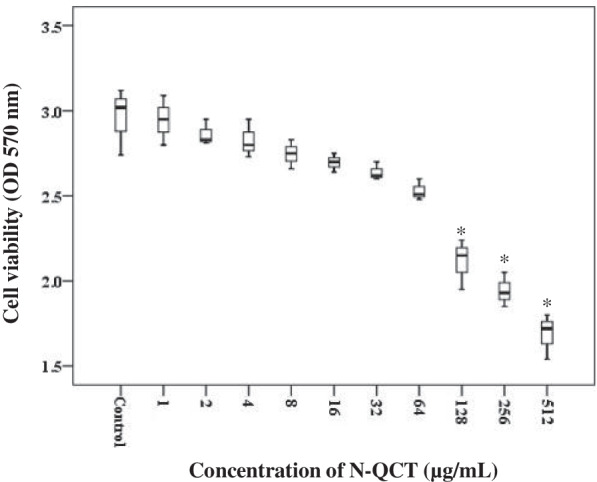
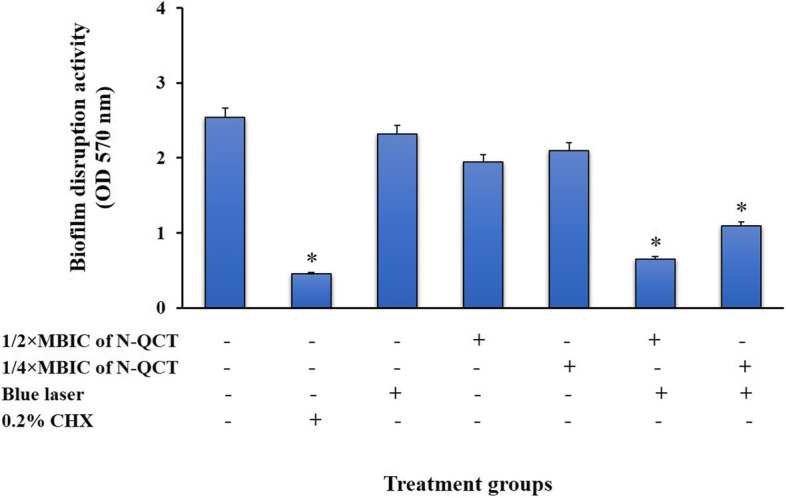
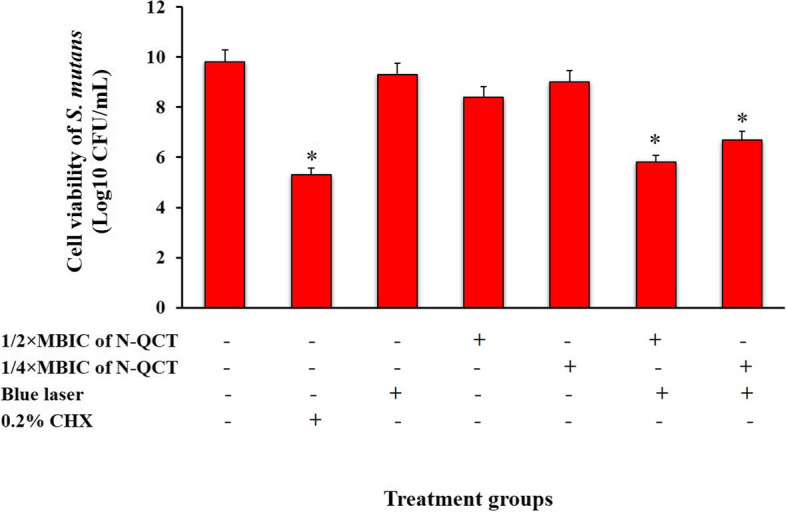
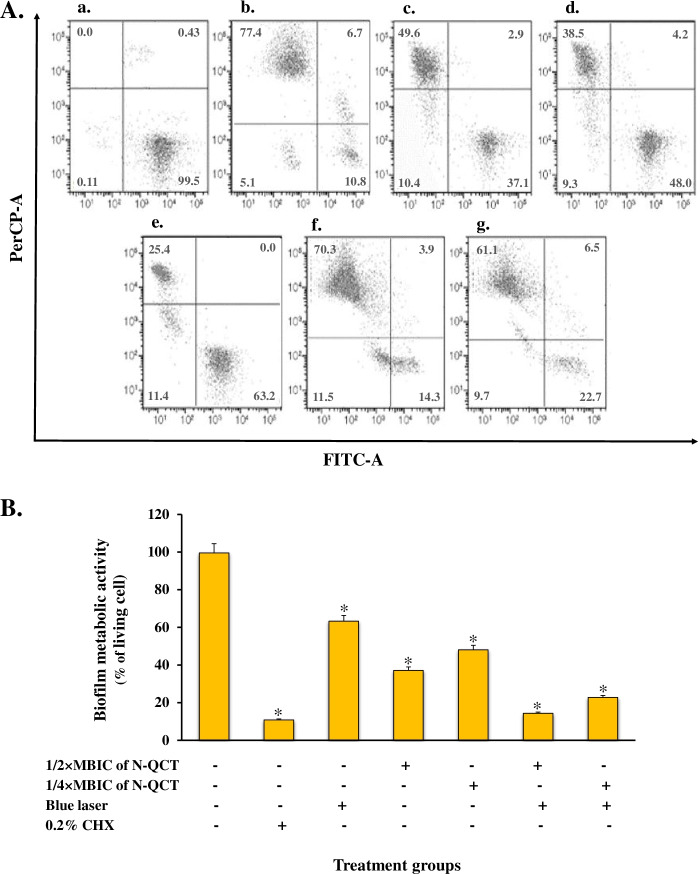
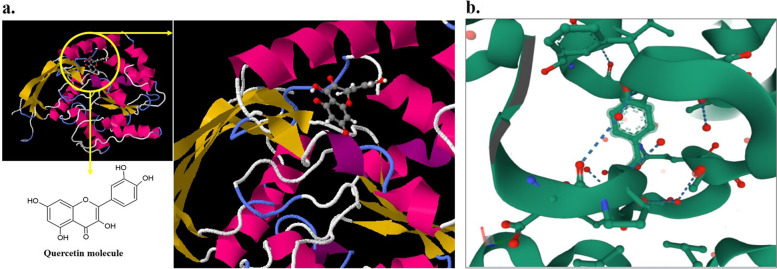
Successful synthesis of non-toxic N-QCT was confirmed through several characterization tests. The MBIC value of N-QCT against S. mutans was 128 μg/mL. Similar to the crystal violet staining, the results log CFU/mL showed a significant degradation of preformed biofilms in the group treated with aPDT compared to the control group (P < 0.05). Following aPDT, metabolic activity of S. mutans also decreased by 85.7% (1/2 × MBIC of N-QCT) and 77.3% (1/4 × MBIC of N-QCT), as compared to the control values (P < 0.05). In silico analysis showed that the QCT molecule was located in the site formed by polypeptide helices of CSP. The relative expression levels of the virulence genes were significantly decreased in the presence of N-QCT-mediated aPDT (P < 0.05).
The combination of N-QCT with blue laser as a QQ-strategy leads to maximum ROS generation, disrupts the microbial biofilm of S. mutans, reduces metabolic activity, and downregulates the expression of genes involved in the QS pathway by targeting genes of the QS signaling system of S. mutans.
群体感应(QS)系统可以调节变形链球菌毒力因子的表达和生物膜的形成。抗菌光动力疗法(aPDT)抑制群体感应淬灭(QQ),可用于预防微生物生物膜。因此,我们旨在评估纳米槲皮素(N-QCT)介导的 aPDT 对变形链球菌的抗生物膜效力和抗代谢活性。此外,通过计算机模拟评估 N-QCT 对变形链球菌的感应刺激肽(CSP)的抑制作用,以阐明 aPDT 对各种 QS 调控基因的影响。
合成并确认 N-QCT 后,评估其细胞毒性和细胞内活性氧(ROS)的产生。随后,通过比色法和平板计数评估 N-QCT 对变形链球菌的最小生物膜抑制浓度(MBIC)和抗生物膜作用。进行分子建模和对接分析以确认 QCT 与 CSP 的连接。通过流式细胞术评估变形链球菌的代谢活性,通过逆转录定量实时 PCR 评估参与 QS 的各种基因的表达水平。
通过多项特征测试证实了无毒 N-QCT 的成功合成。N-QCT 对变形链球菌的 MBIC 值为 128μg/mL。与结晶紫染色一样,用 aPDT 处理的组与对照组相比,预形成生物膜的 log CFU/mL 结果显示出明显的降解(P<0.05)。在用 aPDT 处理后,变形链球菌的代谢活性也分别降低了 85.7%(N-QCT 的 1/2×MBIC)和 77.3%(N-QCT 的 1/4×MBIC),与对照值相比(P<0.05)。计算机模拟分析表明,QCT 分子位于 CSP 多肽螺旋形成的部位。在 N-QCT 介导的 aPDT 存在下,毒力基因的相对表达水平显著降低(P<0.05)。
N-QCT 与蓝激光联合作为 QQ 策略,可导致最大 ROS 生成,破坏变形链球菌的微生物生物膜,降低代谢活性,并通过靶向变形链球菌的 QS 信号系统的基因下调参与 QS 途径的基因表达。