Lv Xue, Liu Chuang, Song Shixin, Qiao Yun, Hu Yuanjiao, Li Pengfei, Li Zhaokun, Sun Shulin
Changchun University of Technology Changchun 130012 China
Beijing Academy of Printing & Packaging Industrial Technology, Beijing Institute of Graphic Communication Beijing 102600 China.
RSC Adv. 2018 Jan 12;8(6):2941-2949. doi: 10.1039/c7ra11001d.
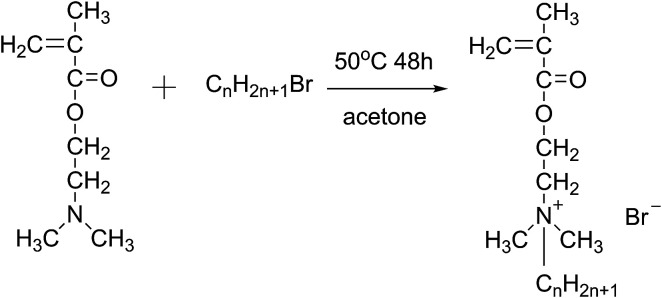
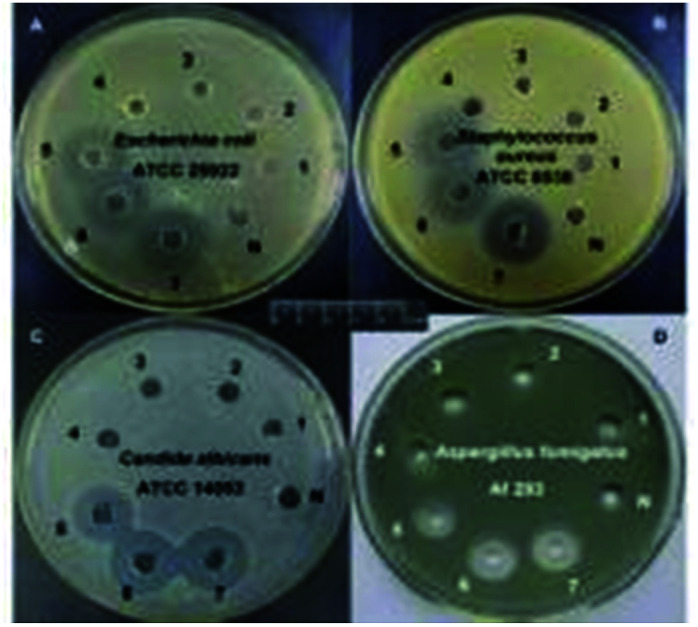
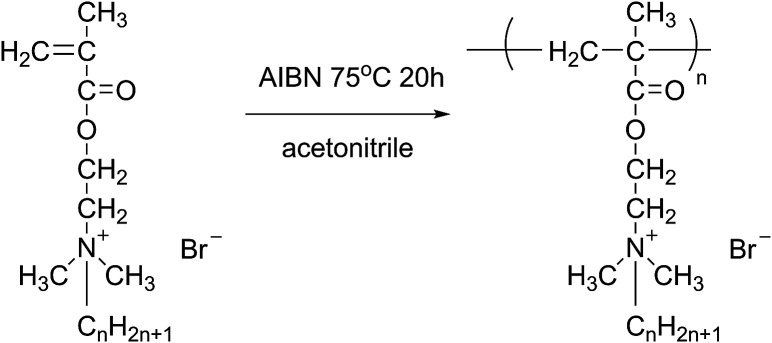
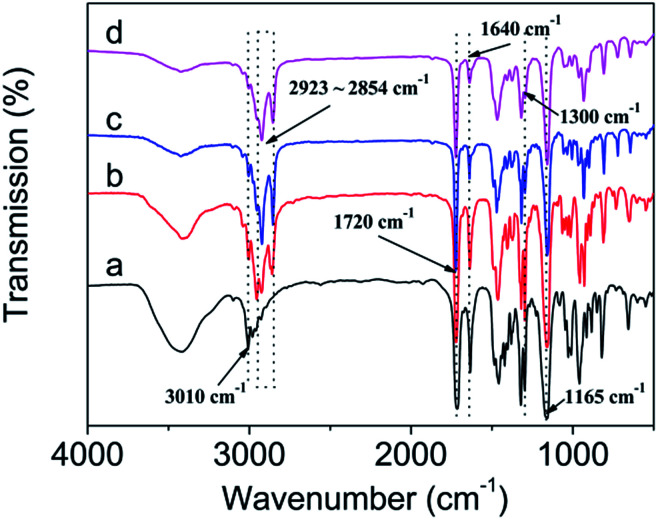
An electrochemical platform was designed using biocompatible quaternary ammonium salts containing alkyl groups with different chain lengths as electrode materials for visible protein immobilization on a glassy carbon (GC) electrode. The electrode was constructed using a simple self-assembly method relying on the electrostatic interaction between negatively charged hemoglobin (Hb) and positively charged quaternary ammonium materials. The Hb/quaternary ammonium salts/GC assembly exhibited excellent catalytic and electrochemical activities. Additionally, the structure-function properties of the quaternary ammonium salts on the electrochemical behavior of Hb was systematically investigated for various alkyl chain lengths between monomer and polymeric structures. Meanwhile, the corresponding bactericidal activities of the monomers and related polymers were evaluated by determining the minimum bactericidal concentration (MBC), minimum inhibitory concentration (MIC), and inhibitory zone diameters against bacteria. The results of these studies demonstrated that the quaternary ammonium monomers not only immobilized more proteins, but also displayed better antibacterial activity as alkyl chain length increased. Moreover, polymers possessed higher antimicrobial activities than their monomeric counterparts. However, the efficiency of the direct electron transfer process and the antibacterial properties of long-chain polymers were limited because they were prone to aggregation and blistering. In summary, the present results provide convenient access to direct electrochemistry using an immobilized redox protein. Furthermore, the potential to use the obtained materials in the construction of third-generation electrochemical biosensors was evaluated.
设计了一种电化学平台,使用含有不同链长烷基的生物相容性季铵盐作为电极材料,用于在玻碳(GC)电极上实现可见蛋白质的固定化。该电极采用简单的自组装方法构建,依赖于带负电荷的血红蛋白(Hb)与带正电荷的季铵材料之间的静电相互作用。Hb/季铵盐/GC组装体表现出优异的催化和电化学活性。此外,针对单体和聚合物结构之间各种烷基链长度,系统研究了季铵盐对Hb电化学行为的结构-功能特性。同时,通过测定对细菌的最低杀菌浓度(MBC)、最低抑菌浓度(MIC)和抑菌圈直径,评估了单体和相关聚合物的相应杀菌活性。这些研究结果表明,随着烷基链长度增加,季铵单体不仅能固定更多蛋白质,还表现出更好的抗菌活性。此外,聚合物比其单体对应物具有更高的抗菌活性。然而,长链聚合物的直接电子转移过程效率和抗菌性能受到限制,因为它们容易聚集和起泡。总之,目前的结果为使用固定化氧化还原蛋白实现直接电化学提供了便利途径。此外,还评估了将所得材料用于构建第三代电化学生物传感器的潜力。