Mathematical Institute, University of Koblenz-Landau, 56070, Koblenz, Germany.
BMC Infect Dis. 2022 May 12;22(1):455. doi: 10.1186/s12879-022-07396-1.
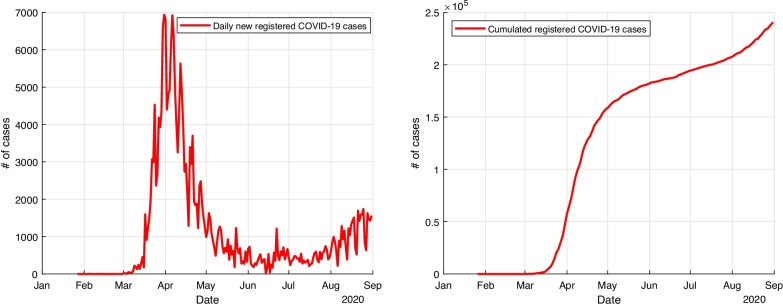
COVID-19 continues to disrupt social lives and the economy of many countries and challenges their healthcare capacities. Looking back at the situation in Germany in 2020, the number of cases increased exponentially in early March. Social restrictions were imposed by closing e.g. schools, shops, cafés and restaurants, as well as borders for travellers. This reaped success as the infection rate descended significantly in early April. In mid July, however, the numbers started to rise again. Of particular reasons was that from mid June onwards, the travel ban has widely been cancelled or at least loosened. We aim to measure the impact of travellers on the overall infection dynamics for the case of (relatively) few infectives and no vaccinations available. We also want to analyse under which conditions political travelling measures are relevant, in particular in comparison to local measures. By travel restrictions in our model we mean all possible measures that equally reduce the possibility of infected returnees to further spread the disease in Germany, e.g. travel bans, lockdown, post-arrival tests and quarantines.
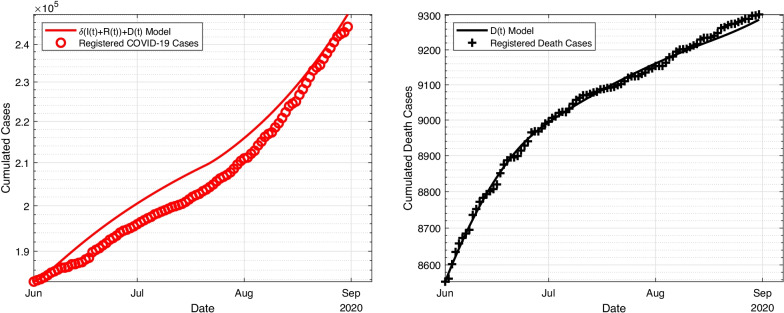
To analyse the impact of travellers, we present three variants of an susceptible-exposed-infected-recovered-deceased model to describe disease dynamics in Germany. Epidemiological parameters such as transmission rate, lethality, and detection rate of infected individuals are incorporated. We compare a model without inclusion of travellers and two models with a rate measuring the impact of travellers incorporating incidence data from the Johns Hopkins University. Parameter estimation was performed with the aid of the Monte-Carlo-based Metropolis algorithm. All models are compared in terms of validity and simplicity. Further, we perform sensitivity analyses of the model to observe on which of the model parameters show the largest influence the results. In particular, we compare local and international travelling measures and identify regions in which one of these shows larger relevance than the other.
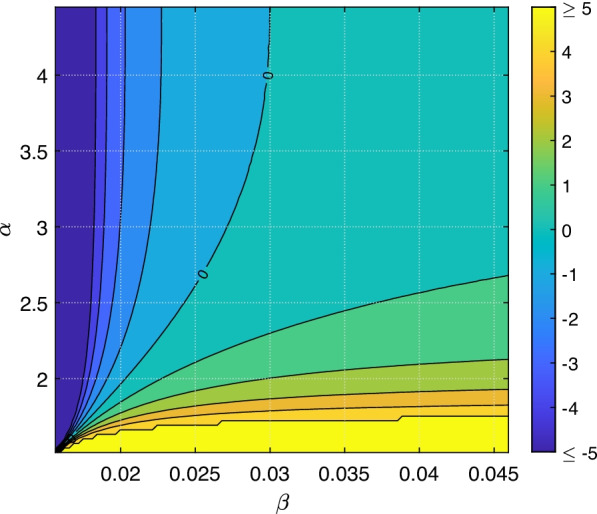
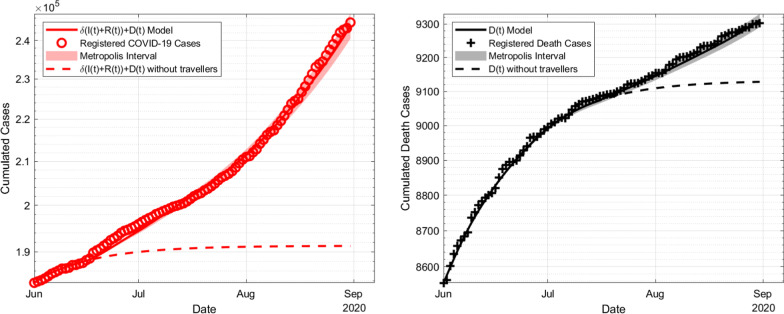
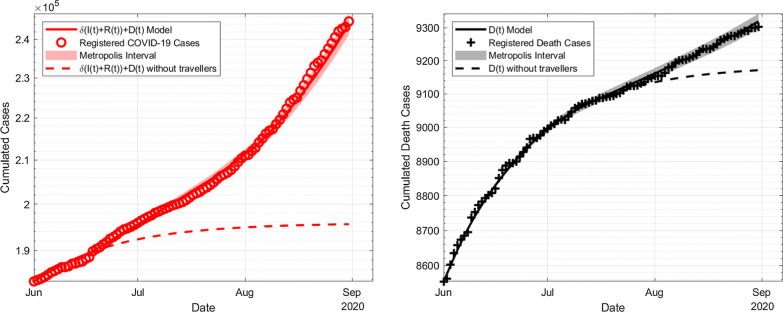
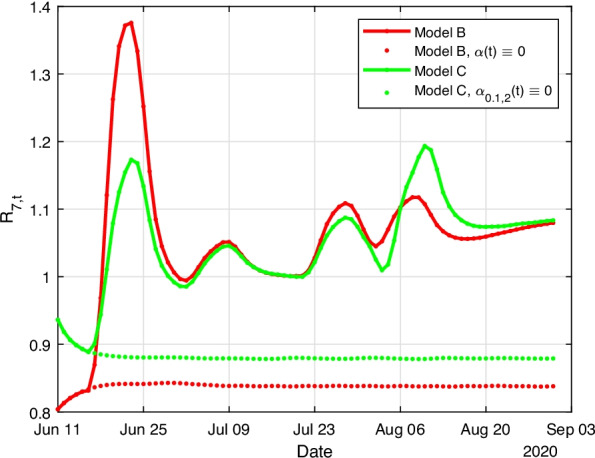
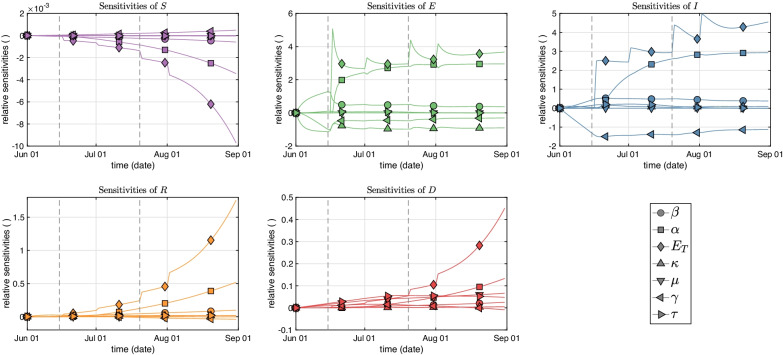
In the comparison of the three models, both models with the traveller impact rate yield significantly better results than the model without this rate. The model including a piecewise constant travel impact rate yields the best results in the sense of maximal likelihood and minimal Bayesian Information Criterion. We synthesize from model simulations and analyses that travellers had a strong impact on the overall infection cases in the considered time interval. By a comparison of the reproductive ratios of the models under traveller/no-traveller scenarios, we found that higher traveller numbers likely induce higher transmission rates and infection cases even in the further course, which is one possible explanation to the start of the second wave in Germany as of autumn 2020. The sensitivity analyses show that the travelling parameter, among others, shows a larger impact on the results. We also found that the relevance of travel measures depends on the value of the transmission parameter: In domains with a lower transmission parameter, caused either by the current variant or local measures, it is found that handling the travel parameters is more relevant than those with lower value of the transmission.
We conclude that travellers is an important factor in controlling infection cases during pandemics. Depending on the current situation, travel restrictions can be part of a policy to reduce infection numbers, especially when case numbers and transmission rate are low. The results of the sensitivity analyses also show that travel measures are more effective when the local transmission is already reduced, so a combination of those two appears to be optimal. In any case, supervision of the influence of travellers should always be undertaken, as another pandemic or wave can happen in the upcoming years and vaccinations and basic hygiene rules alone might not be able to prevent further infection waves.
COVID-19 继续扰乱许多国家的社会生活和经济,挑战其医疗保健能力。回顾 2020 年德国的情况,三月份初病例数量呈指数级增长。通过关闭学校、商店、咖啡馆和餐馆以及边境关闭等措施来实施社会限制。这在四月初显著降低了感染率。然而,到 7 月中旬,病例数量再次开始上升。其中一个特别的原因是,从 6 月中旬开始,旅行禁令已被广泛取消或至少放宽。我们旨在衡量旅行者对(相对)少数感染者和无疫苗接种的情况下的整体感染动态的影响。我们还希望分析在何种情况下政治旅行措施是相关的,特别是与当地措施相比。在我们的模型中,旅行限制是指所有同等减少受感染者返回德国进一步传播疾病的可能性的措施,例如旅行禁令、封锁、抵达后的检测和隔离。
为了分析旅行者的影响,我们提出了三种变体的易感性-暴露-感染-恢复-死亡模型来描述德国的疾病动态。我们纳入了诸如传播率、致死率和感染者检测率等流行病学参数。我们将不包括旅行者的模型与两个模型进行了比较,这两个模型分别用一个衡量旅行者影响的比率来衡量旅行者的影响,纳入了约翰霍普金斯大学的发病率数据。使用基于蒙特卡罗的 Metropolis 算法进行参数估计。我们比较了所有模型的有效性和简单性。此外,我们还对模型进行了敏感性分析,以观察哪些模型参数对结果的影响最大。特别是,我们比较了当地和国际旅行措施,并确定了这些措施中哪一个在其他措施中更相关的区域。
在对三个模型的比较中,包含旅行者影响率的两个模型都比不包含该率的模型产生了更好的结果。在包含分段常数旅行影响率的模型中,根据最大似然和最小贝叶斯信息准则,得到了最好的结果。我们从模型模拟和分析中综合得出,旅行者对所考虑时间段内的总体感染病例有很大的影响。通过比较旅行者/无旅行者情况下模型的繁殖率,我们发现即使在以后的过程中,更高的旅行者数量可能会导致更高的传播率和感染病例,这可能是德国 2020 年秋季开始第二波疫情的一个可能原因。敏感性分析表明,除其他外,旅行参数对结果的影响更大。我们还发现,旅行措施的相关性取决于传播参数的值:在由当前变体或当地措施引起的传播参数较低的区域中,发现处理旅行参数比传播参数值较低的区域更相关。
我们的结论是,旅行者是控制大流行期间感染病例的一个重要因素。根据当前情况,旅行限制可以作为减少感染人数的政策的一部分,尤其是在病例数量和传播率较低的情况下。敏感性分析的结果还表明,当当地传播已经减少时,旅行措施更为有效,因此两者的结合似乎是最佳选择。在任何情况下,都应始终监督旅行者的影响,因为未来几年可能会发生另一场大流行或浪潮,仅靠疫苗接种和基本卫生规则可能无法防止进一步的感染浪潮。