Wightman Raymond
The Sainsbury Laboratory, University of Cambridge, Bateman Street, Cambridge CB2 1LR, UK.
Plants (Basel). 2022 Apr 20;11(9):1113. doi: 10.3390/plants11091113.
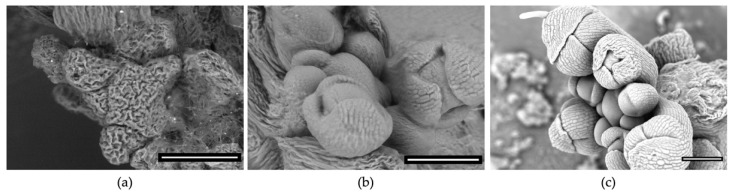
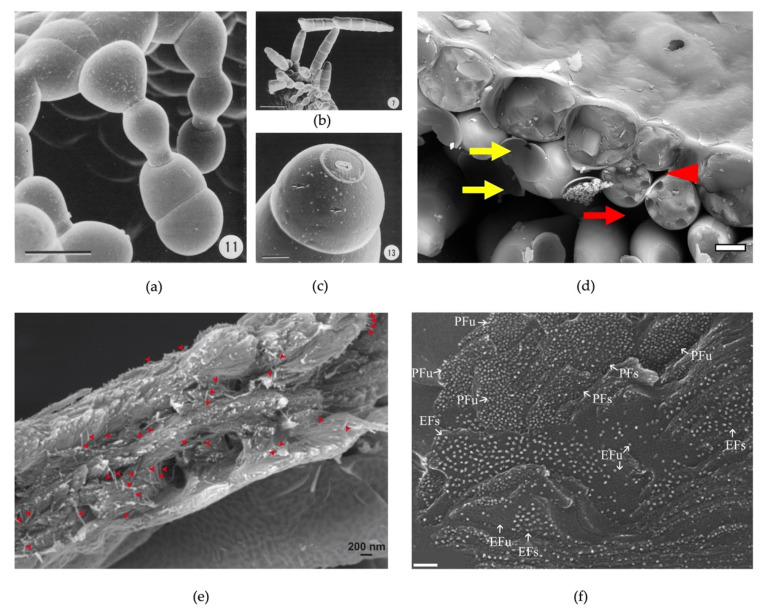
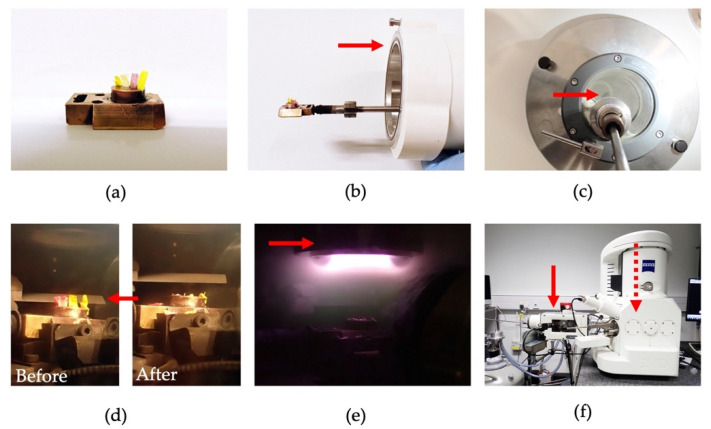
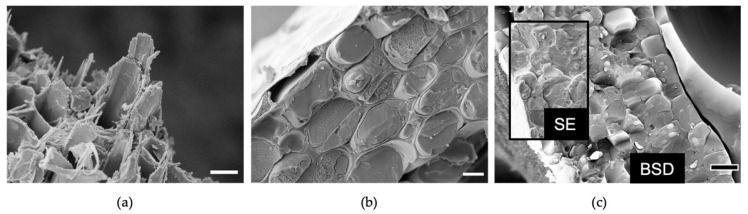
Many research questions require the study of plant morphology, in particular cells and tissues, as close to their native context as possible and without physical deformations from some preparatory chemical reagents or sample drying. Cryo-scanning electron microscopy (cryoSEM) involves rapid freezing and maintenance of the sample at an ultra-low temperature for detailed surface imaging by a scanning electron beam. The data are useful for exploring tissue/cell morphogenesis, plus an additional cryofracture/cryoplaning/milling step gives information on air and water spaces as well as subcellular ultrastructure. This review gives an overview from sample preparation through to imaging and a detailed account of how this has been applied across diverse areas of plant research. Future directions and improvements to the technique are discussed.
许多研究问题需要对植物形态进行研究,特别是细胞和组织,要尽可能接近其原生环境,且不受某些制备用化学试剂或样品干燥导致的物理变形影响。低温扫描电子显微镜(cryoSEM)涉及对样品进行快速冷冻并在超低温下保存,以便通过扫描电子束进行详细的表面成像。这些数据对于探索组织/细胞形态发生很有用,另外,额外的冷冻断裂/冷冻刨平/铣削步骤可提供有关气腔和水腔以及亚细胞超微结构的信息。本文综述了从样品制备到成像的概况,并详细介绍了该技术在植物研究各个领域的应用情况。还讨论了该技术的未来发展方向和改进之处。