Computational Biology Department, School of Computer Science, Carnegie Mellon University, Pittsburgh, United States.
Biological Sciences Department, Mellon College of Science, Carnegie Mellon University, Pittsburgh, United States.
Elife. 2022 May 16;11:e69571. doi: 10.7554/eLife.69571.
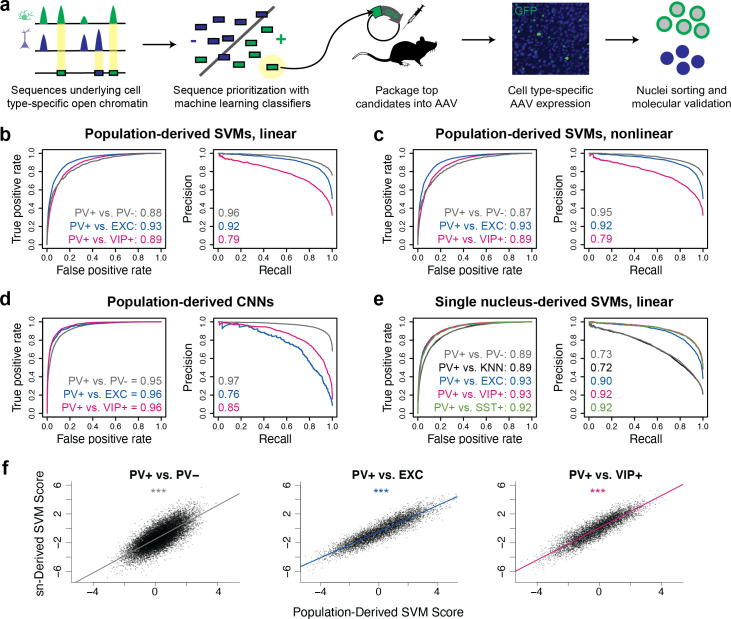
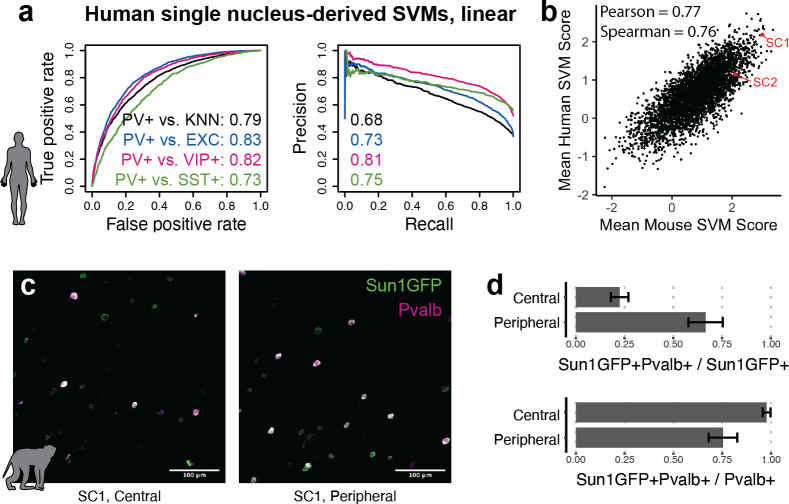
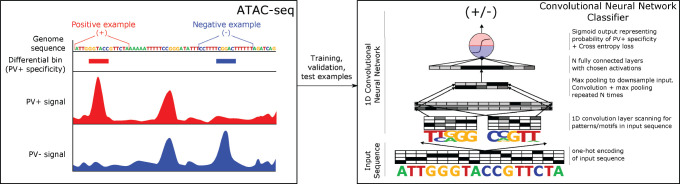
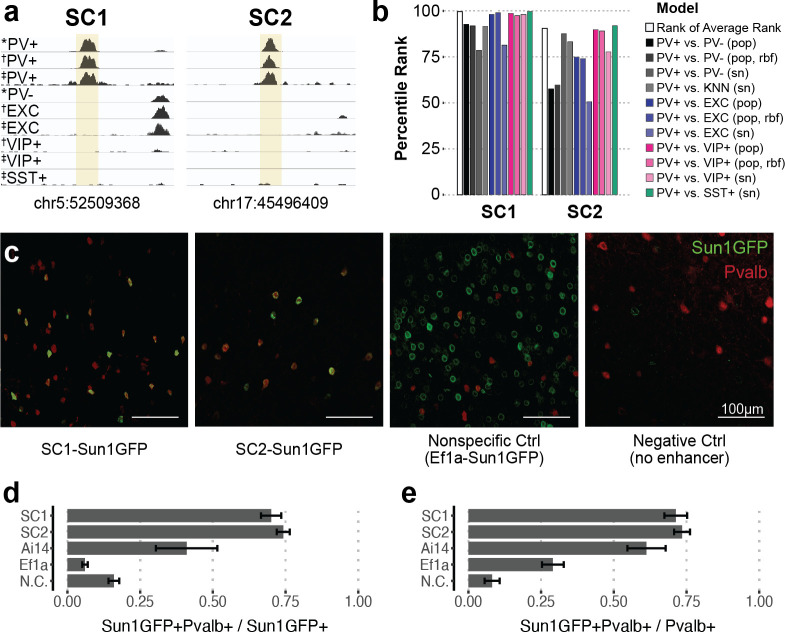
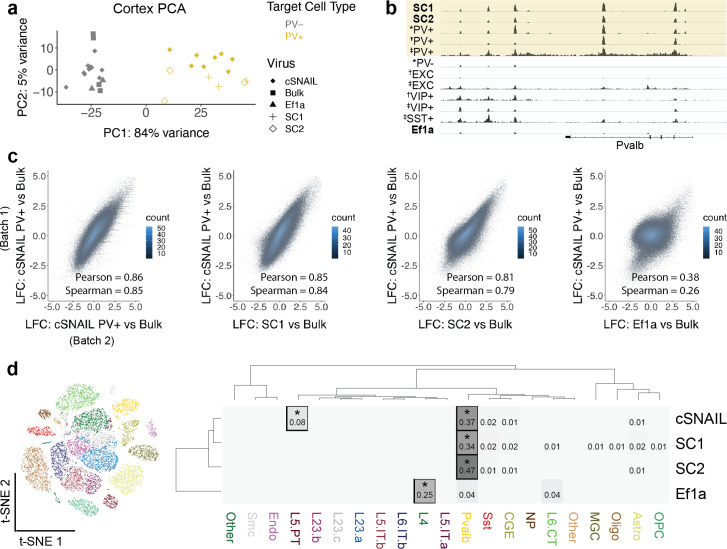
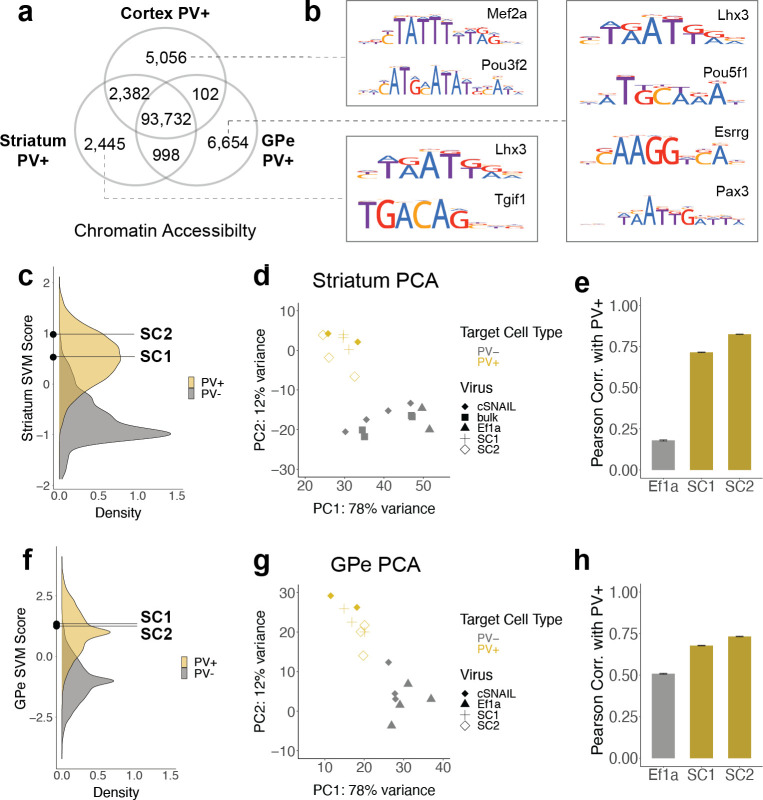
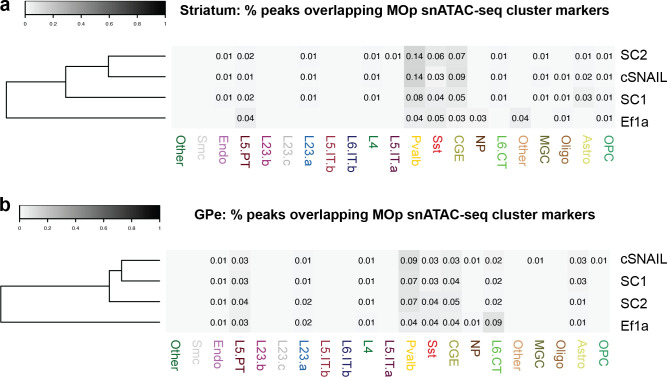
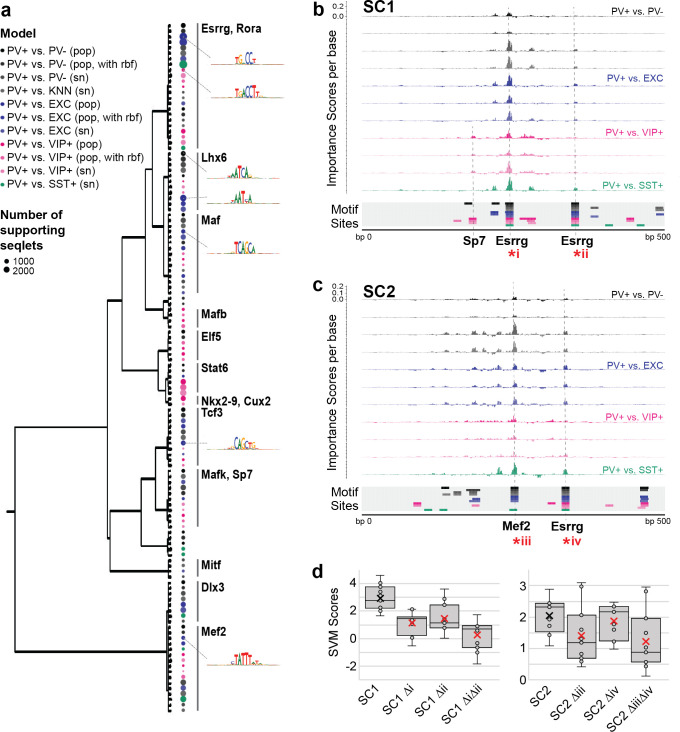
Recent discoveries of extreme cellular diversity in the brain warrant rapid development of technologies to access specific cell populations within heterogeneous tissue. Available approaches for engineering-targeted technologies for new neuron subtypes are low yield, involving intensive transgenic strain or virus screening. Here, we present Specific Nuclear-Anchored Independent Labeling (SNAIL), an improved virus-based strategy for cell labeling and nuclear isolation from heterogeneous tissue. SNAIL works by leveraging machine learning and other computational approaches to identify DNA sequence features that confer cell type-specific gene activation and then make a probe that drives an affinity purification-compatible reporter gene. As a proof of concept, we designed and validated two novel SNAIL probes that target parvalbumin-expressing (PV+) neurons. Nuclear isolation using SNAIL in wild-type mice is sufficient to capture characteristic open chromatin features of PV+ neurons in the cortex, striatum, and external globus pallidus. The SNAIL framework also has high utility for multispecies cell probe engineering; expression from a mouse PV+ SNAIL enhancer sequence was enriched in PV+ neurons of the macaque cortex. Expansion of this technology has broad applications in cell type-specific observation, manipulation, and therapeutics across species and disease models.
最近在大脑中发现了极端的细胞多样性,这需要快速开发技术来访问异质组织中的特定细胞群体。用于新型神经元亚型的工程靶向技术的现有方法产量低,涉及密集的转基因品系或病毒筛选。在这里,我们提出了特异核锚定独立标记(SNAIL),这是一种改进的基于病毒的细胞标记和核分离策略,用于异质组织。SNAIL 通过利用机器学习和其他计算方法来识别赋予细胞类型特异性基因激活的 DNA 序列特征,然后制作一个探针,驱动亲和纯化兼容的报告基因。作为概念验证,我们设计并验证了两种针对表达 parvalbumin 的(PV+)神经元的新型 SNAIL 探针。在野生型小鼠中使用 SNAIL 进行核分离足以捕获皮质、纹状体和外苍白球中 PV+神经元的特征性开放染色质特征。SNAIL 框架在多物种细胞探针工程中也具有很高的实用性;来自小鼠 PV+ SNAIL 增强子序列的表达在猕猴皮质的 PV+神经元中富集。这项技术的扩展在跨物种和疾病模型的细胞类型特异性观察、操作和治疗中有广泛的应用。