Parsa Seyed Masoud, Momeni Saba, Hemmat Ahmadreza, Afrand Masoud
Department of Energy Engineering, Science and Research Branch, Islamic Azad University, Tehran, Iran.
Guilan University of Medical Science, Anzali International Campus, Bandar Anzali, Iran.
J Water Process Eng. 2021 Oct;43:102224. doi: 10.1016/j.jwpe.2021.102224. Epub 2021 Jul 17.
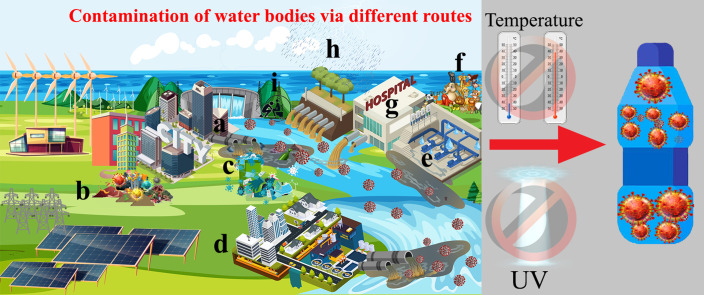
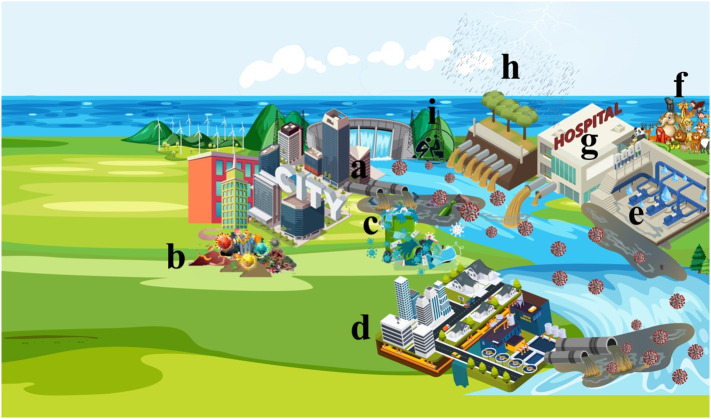
Long is the way and hard, that out of COVID-19 leads up to light. The virus is highly contagious and spread rapidly and the number of infections increases exponentially. The colossal number of infections and presence of the novel coronavirus RNA in human wastes (e.g. Excreta/urine) even after the patients recovered and the RT-PCR tests were negative, results in massive load of the viral in water environments. Numerous studies reported the presence of SARS-CoV-2 in wastewater samples. The risk of contaminating water bodies in the regions which suffer from the lack of proper sanitation system and wastewater treatment plants (mostly in developing countries) is higher. Since solar water disinfection (SODIS) is usually used by people in developing countries, there is a concern about using this method during the pandemic. Because the SARS-CoV-2 can be eliminated by high temperature (>56 °C) and UVC wavelength (100-280 nm) while SODIS systems mainly work at lower temperature (<45 °C) and use the available UVA (315-400 nm). Thus, during a situation like the ongoing pandemic using SODIS method for wastewater treatment (or providing drinking water) is not a reliable method. It should be reminded that the main aim of the present study is not just to give insights about the possibilities and risks of using SODIS during the ongoing pandemic but it has broader prospect for any future outbreak/pandemic that results in biological contamination of water bodies. Nevertheless, some experimental studies seem to be necessary by all researchers under conditions similar to developing countries.
走出新冠疫情之路漫长且艰难。该病毒具有高度传染性且传播迅速,感染人数呈指数级增长。即使患者康复且逆转录聚合酶链反应检测呈阴性后,人类排泄物(如粪便/尿液)中仍存在大量感染病例及新型冠状病毒核糖核酸,这导致水环境中病毒负荷巨大。众多研究报告了污水样本中存在严重急性呼吸综合征冠状病毒2。在缺乏适当卫生系统和污水处理厂的地区(主要是发展中国家),水体受污染的风险更高。由于太阳能水消毒法通常为发展中国家的人们所使用,在疫情期间使用这种方法令人担忧。因为严重急性呼吸综合征冠状病毒2可通过高温(>56°C)和紫外线C波长(100 - 280纳米)消除,而太阳能水消毒系统主要在较低温度(<45°C)下运行,并使用可用的紫外线A(315 - 400纳米)。因此,在当前疫情这样的情况下,使用太阳能水消毒法处理污水(或提供饮用水)并非可靠方法。应当提醒的是,本研究的主要目的不仅仅是深入了解在当前疫情期间使用太阳能水消毒法的可能性和风险,而且对于未来任何导致水体生物污染的疫情/大流行都具有更广泛的前景。尽管如此,所有研究人员在类似于发展中国家的条件下进行一些实验研究似乎是必要的。