Center for Reproductive Medicine, Department of Obstetrics and Gynecology, Peking University Third Hospitalgrid.411642.4, Beijing, China.
National Clinical Research Center for Obstetrics and Gynecology, Peking University Third Hospitalgrid.411642.4, Beijing, China.
Microbiol Spectr. 2022 Jun 29;10(3):e0046222. doi: 10.1128/spectrum.00462-22. Epub 2022 May 23.
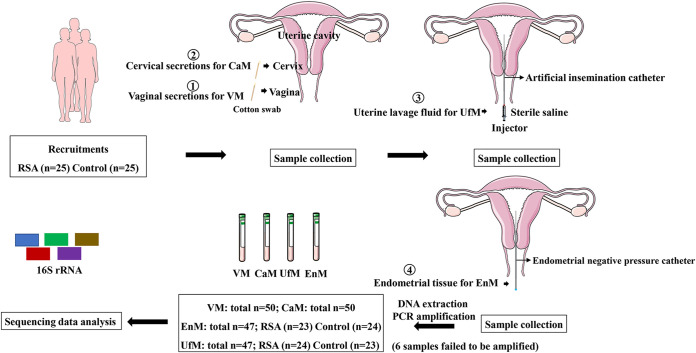
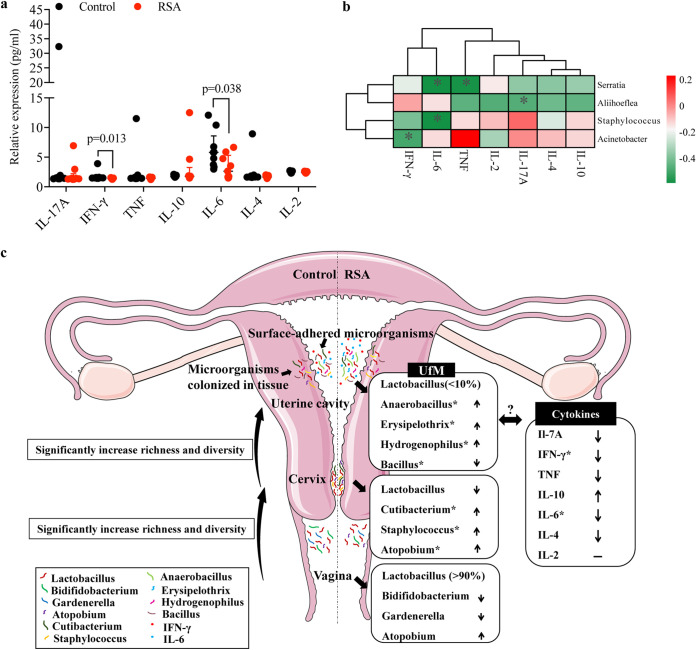
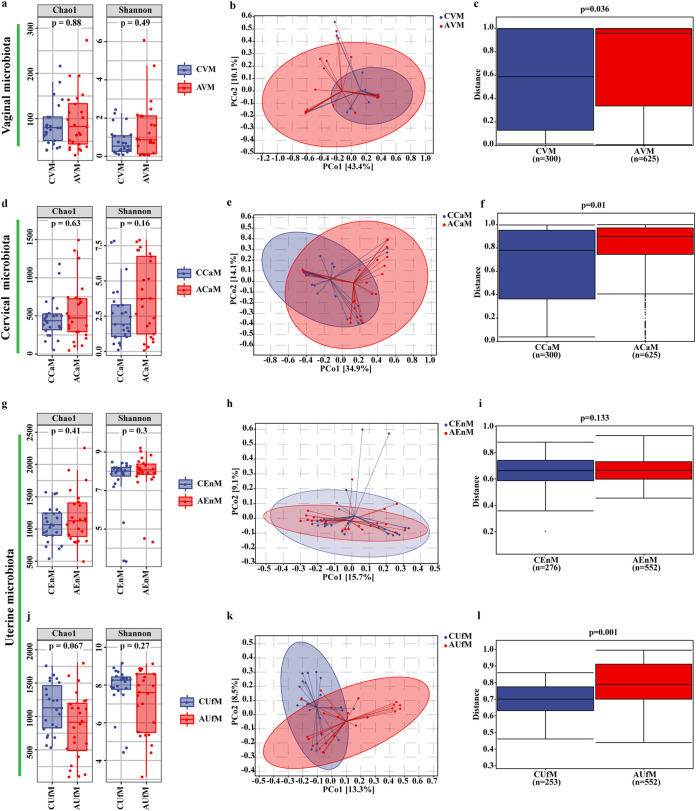
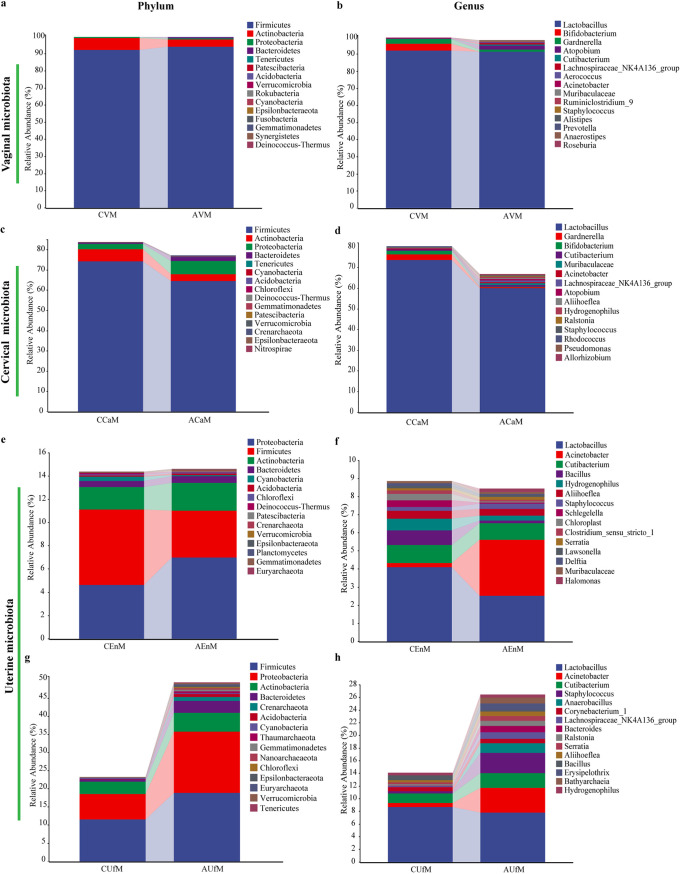
Recurrent spontaneous abortion (RSA) is a complex multifactorial disease. Recently, the microbiota of the female reproductive tract, as an emerging factor in RSA, has gradually attracted the attention of many clinical researchers. Here, we reported that the microbiota of the lower and upper female reproductive tracts from patients with RSA showed no significant differences in alpha diversity compared to that of controls. Beta diversity was significantly higher in the RSA group than in the control group in the vaginal microbiota ( = 0.036), cervical microbiota ( = 0.010) and microbiota from uterine lavage fluid ( = 0.001). In addition, dramatic decreases in gamma interferon and interleukin-6 cytokine levels were observed in the RSA group. In conclusion, our data suggested altered microbial biodiversity in the vagina, cervix and uterine lavage fluid in the RSA group. Alterations in the microbiota in the uterine cavity could be associated with altered cytokine levels, which might be a risk factor for RSA pathogenesis. Moreover, the microbiota composition differed markedly from the lower genital tract to the uterine cavity, and the microbiota in the uterine cavity also distinctly varied between endometrial tissue and uterine lavage fluid in the RSA group. Hence, sampling with these two methods simultaneously allowed a more comprehensive perspective of microbial colonization in the uterine cavity. As an obstacle to pregnancy, recurrent spontaneous abortion (RSA) can be caused by a variety of factors, and a current understanding of the etiology of RSA is still lacking; half of cases have an unknown cause. A substantial fraction of patients show no improvement after treatment. Since the microbiota of the female reproductive tract has been proposed as an emerging factor in RSA patients, further investigation is needed to provide guidance for clinical therapy. In general, this is the first report describing the distinct alterations of the vaginal, cervical, and uterine microbiota in RSA, not just that in the vagina. Furthermore, another major strength of this study derived from the further in-depth investigation and analysis of the characteristics of the microbiota colonizing the upper female genital tract in RSA, which provided a more comprehensive view for investigating the uterine microbiota.
复发性自然流产(RSA)是一种复杂的多因素疾病。最近,女性生殖道微生物群作为 RSA 的一个新兴因素逐渐引起了许多临床研究人员的关注。在这里,我们报道 RSA 患者的下生殖道和上生殖道的微生物群在 α 多样性方面与对照组相比没有显著差异。阴道微生物群( = 0.036)、宫颈微生物群( = 0.010)和子宫灌洗液微生物群( = 0.001)中,RSA 组的β多样性显著高于对照组。此外,在 RSA 组中观察到γ干扰素和白细胞介素-6 细胞因子水平显著降低。总之,我们的数据表明 RSA 组阴道、宫颈和子宫灌洗液中的微生物多样性发生了改变。子宫腔中的微生物群改变可能与细胞因子水平的改变有关,这可能是 RSA 发病机制的一个危险因素。此外,子宫腔中的微生物群组成与下生殖道明显不同,而且 RSA 组的子宫内膜组织和子宫灌洗液中的微生物群也明显不同。因此,同时采用这两种方法采样可以更全面地了解子宫腔中的微生物定植情况。
作为妊娠的障碍,复发性自然流产(RSA)可由多种因素引起,目前对 RSA 的病因仍缺乏了解;一半的病例原因不明。相当一部分患者治疗后没有改善。由于女性生殖道微生物群被认为是 RSA 患者的一个新兴因素,因此需要进一步研究以提供临床治疗指导。总的来说,这是第一个描述 RSA 患者阴道、宫颈和子宫微生物群明显改变的报告,而不仅仅是阴道中的微生物群。此外,本研究的另一个主要优势来自于对 RSA 患者上生殖道定植微生物群特征的进一步深入调查和分析,为研究子宫微生物群提供了更全面的视角。