Zhao Changying, Wei Zefeng, Yang Junjie, Zhang Jiaming, Yu Chunna, Yang Aijun, Zhang Min, Zhang Lin, Wang Ye, Mu Xiaofeng, Heng Xueyuan, Yang Huijun, Gai Zhongtao, Wang Xuenan, Zhang Lei
Shandong Children's Microbiome Center, Research Institute of Pediatrics, Qilu Children's Hospital, Cheeloo College of Medicine, Shandong University, Jinan, China.
Institute for Medical Dataology, Cheeloo College of Medicine, Shandong University, Jinan, China.
mSystems. 2020 Jul 14;5(4):e00450-20. doi: 10.1128/mSystems.00450-20.
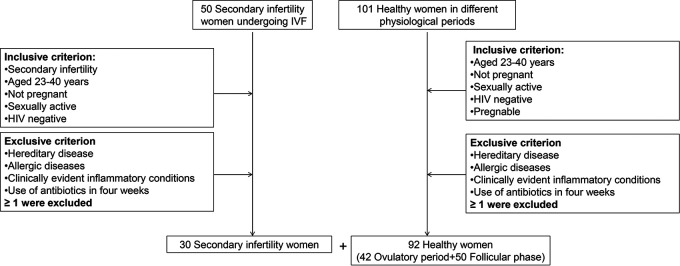
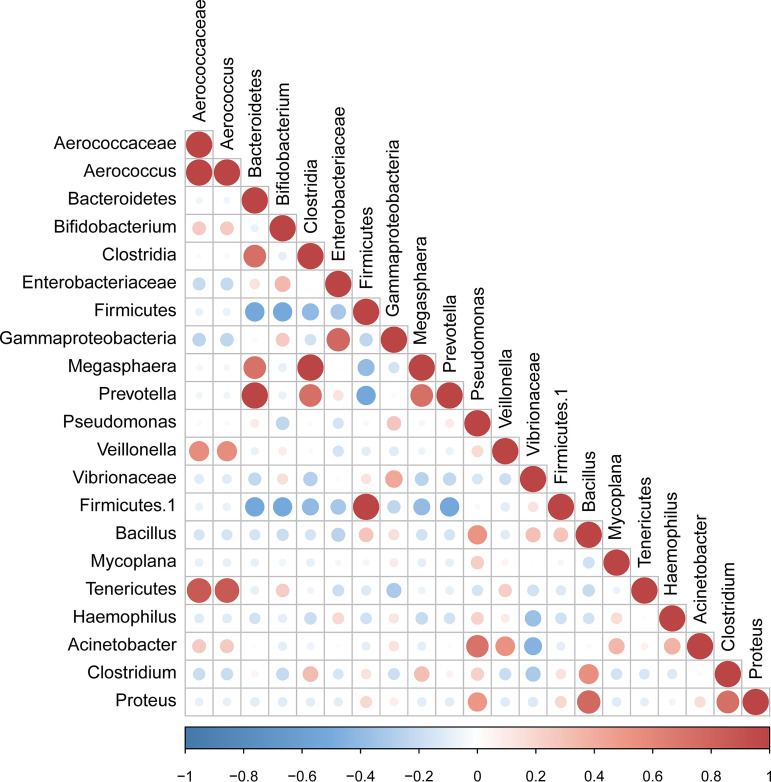
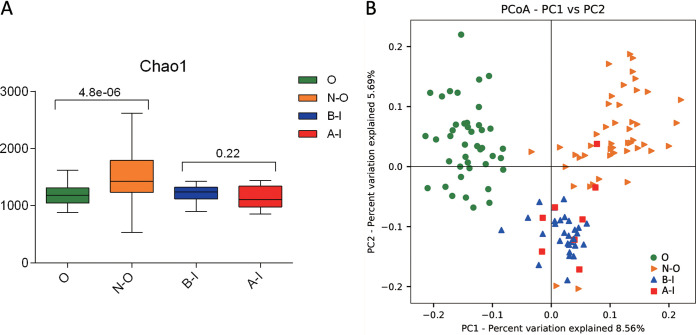
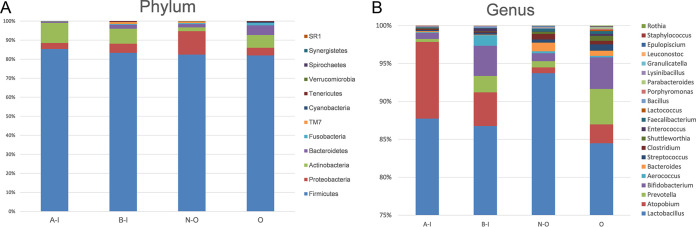
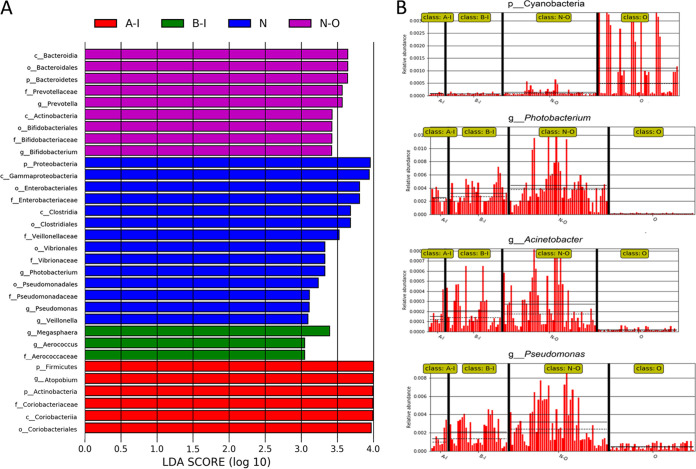
Perturbation of vaginal microbiome of reproductive-age women influences all the phases of a woman's reproductive life. Although studies have shown that dynamic changes in vaginal microbiome can affect pregnancy, its role in secondary infertility (i.e., inability to become pregnant or to carry a pregnancy successfully after previous success in delivering a child) and ertilization (IVF) remains to be unraveled. To determine the vaginal microbiome in women undergoing ertilization and mbryo ransfer (IVF-ET) and investigate its potential correlations with hormone stimulation, we recruited 30 patients with secondary infertility and receiving IVF and 92 matched healthy women and analyzed their vaginal microbiome composition using 16S rRNA gene sequencing. Our results show that women suffering from infertility (infertile women) exhibit a significant decrease in microbiome diversity and richness compared with healthy women during the nonovulation period (follicular phase) (0.01), whereas vaginal microbiome of healthy women reveals dramatic fluctuations during ovulation (0.05). Interestingly, infertility patients show no change of the vaginal microbiome under conditions of oadotropin-eleasing ormone (GnRH) agonist and ecombinant uman horionic onadotropin (r-hCG) induction (0.05). Moreover, our results indicate that infertile women show characteristic variations in vaginal microbiome, such as increased abundance , and and decreased abundance of and The microbiome had been hypothesized to be involved in the physiology and pathophysiology of assisted reproduction before the first success in IVF, while the data supporting or refuting this hypothesis were less than conclusive. Thanks to sequencing data from the 16S rRNA subunit, we characterized the microbiome in the reproductive tract of infertile women, and we found that changes in the vaginal microbiome are related to female infertility. We also found that the characteristic microbiome bacteria are mainly members of several genera and that the vaginal microbiome of infertile women is not sensitive to hormonal changes during IVF. In conclusion, our report provides data that can be used for discovering the role of the vaginal microbiome in patients suffering from secondary infertility.
育龄女性阴道微生物群的扰动会影响女性生殖生活的各个阶段。尽管研究表明阴道微生物群的动态变化会影响妊娠,但其在继发性不孕(即先前成功分娩后无法怀孕或成功孕育胎儿)和体外受精(IVF)中的作用仍有待阐明。为了确定接受体外受精和胚胎移植(IVF-ET)的女性的阴道微生物群,并研究其与激素刺激的潜在相关性,我们招募了30名继发性不孕且接受IVF的患者和92名匹配的健康女性,并使用16S rRNA基因测序分析了她们的阴道微生物群组成。我们的结果表明,与健康女性相比,不孕女性在非排卵期(卵泡期)的微生物群多样性和丰富度显著降低(P<0.01),而健康女性的阴道微生物群在排卵期则呈现出显著波动(P<0.05)。有趣的是,不孕患者在促性腺激素释放激素(GnRH)激动剂和重组人绒毛膜促性腺激素(r-hCG)诱导条件下,阴道微生物群没有变化(P>0.05)。此外,我们的结果表明,不孕女性的阴道微生物群表现出特征性变化,如 、 和 的丰度增加,以及 和 的丰度降低。在IVF首次成功之前,微生物群就被假设参与辅助生殖的生理和病理生理过程,而支持或反驳这一假设的数据并不确凿。借助来自16S rRNA亚基的测序数据,我们对不孕女性生殖道中的微生物群进行了特征分析,发现阴道微生物群的变化与女性不孕有关。我们还发现,特征性微生物群细菌主要是几个属的成员,并且不孕女性的阴道微生物群在IVF期间对激素变化不敏感。总之,我们的报告提供了可用于发现阴道微生物群在继发性不孕患者中作用的数据。