Department of Biochemistry, School of Medicine, Urmia University of Medical Sciences, Urmia, Iran.
Department of Biotechnology, School of Engineering and Applied Sciences, Bennett University, Greater Noida, Uttar Pradesh, 201310, India.
Cell Commun Signal. 2022 May 23;20(1):69. doi: 10.1186/s12964-022-00889-1.
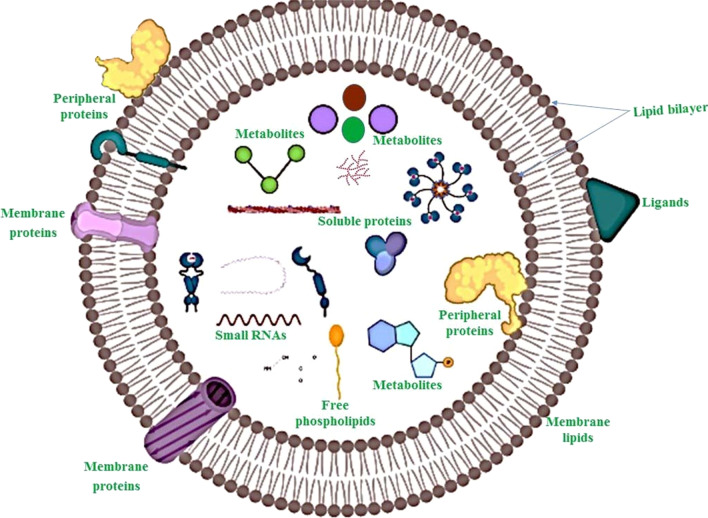
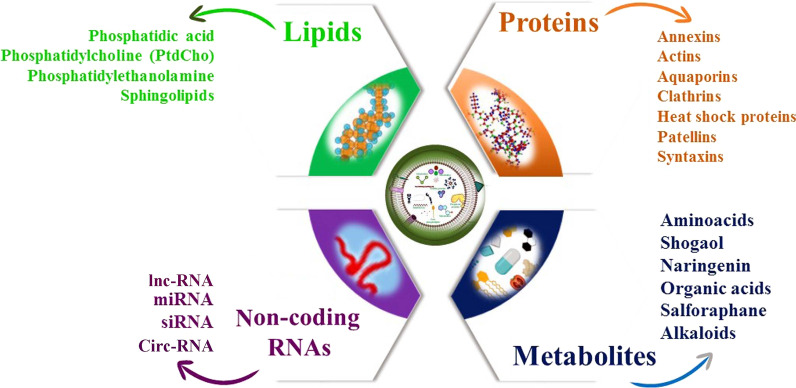
Many eukaryote cells produce membrane-enclosed extracellular vesicles (EVs) to establish cell-to-cell communication. Plant-derived EVs (P-EVs) contain proteins, RNAs, lipids, and other metabolites that can be isolated from the juice, the flesh, and roots of many species.
In the present review study, we studied numerous articles over the past two decades published on the role of P-EVs in plant physiology as well as on the application of these vesicles in different diseases.
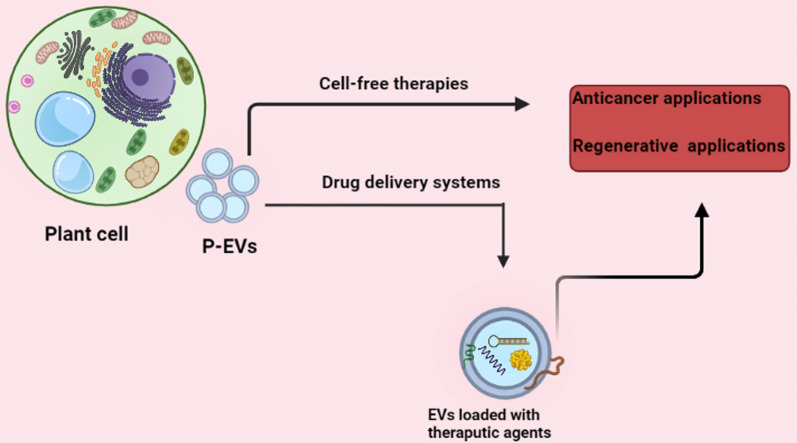
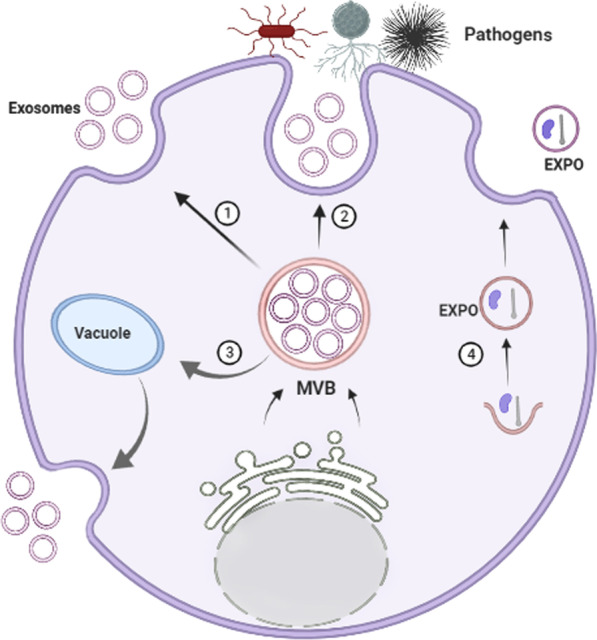
Different types of EVs have been identified in plants that have multiple functions including reorganization of cell structure, development, facilitating crosstalk between plants and fungi, plant immunity, defense against pathogens. Purified from several edible species, these EVs are more biocompatible, biodegradable, and extremely available from many plants, making them useful for cell-free therapy. Emerging evidence of clinical and preclinical studies suggest that P-EVs have numerous benefits over conventional synthetic carriers, opening novel frontiers for the novel drug-delivery system. Exciting new opportunities, including designing drug-loaded P-EVs to improve the drug-delivery systems, are already being examined, however clinical translation of P-EVs-based therapies faces challenges.
P-EVs hold great promise for clinical application in the treatment of different diseases. In addition, despite enthusiastic results, further scrutiny should focus on unravelling the detailed mechanism behind P-EVs biogenesis and trafficking as well as their therapeutic applications. Video Abstract.
许多真核细胞产生膜封闭的细胞外囊泡(EVs)以建立细胞间通讯。植物来源的 EVs(P-EVs)包含蛋白质、RNA、脂质和其他代谢物,可以从许多物种的汁液、果肉和根部中分离出来。
在本综述研究中,我们研究了过去二十年来发表的许多关于 P-EVs 在植物生理学中的作用以及这些囊泡在不同疾病中的应用的文章。
不同类型的 EVs 已在植物中被鉴定出来,它们具有多种功能,包括细胞结构的重组、发育、促进植物和真菌之间的串扰、植物免疫、抵御病原体。从几种可食用的物种中纯化出来的这些 EVs 具有更好的生物相容性、可生物降解性和极高的可用性,使它们成为无细胞治疗的有用工具。越来越多的临床前和临床研究证据表明,P-EVs 比传统的合成载体具有更多的益处,为新型药物输送系统开辟了新的前沿。令人兴奋的新机遇,包括设计载药 P-EVs 以改善药物输送系统,已经在研究中,然而 P-EVs 为基础的治疗方法的临床转化面临挑战。
P-EVs 在治疗各种疾病的临床应用中具有很大的潜力。此外,尽管取得了令人兴奋的结果,但进一步的研究应集中在揭示 P-EVs 生物发生和运输的详细机制以及它们的治疗应用上。视频摘要。