• 文献检索
  • 文档翻译
  • 深度研究
  • 学术资讯
  • Suppr Zotero 插件Zotero 插件
  • 邀请有礼
  • 套餐&价格
  • 历史记录
应用&插件
Suppr Zotero 插件Zotero 插件浏览器插件Mac 客户端Windows 客户端微信小程序
定价
高级版会员购买积分包购买API积分包
服务
文献检索文档翻译深度研究API 文档MCP 服务
关于我们
关于 Suppr公司介绍联系我们用户协议隐私条款
关注我们

Suppr 超能文献

核心技术专利:CN118964589B侵权必究
粤ICP备2023148730 号-1Suppr @ 2026

文献检索

告别复杂PubMed语法,用中文像聊天一样搜索,搜遍4000万医学文献。AI智能推荐,让科研检索更轻松。

立即免费搜索

文件翻译

保留排版,准确专业,支持PDF/Word/PPT等文件格式,支持 12+语言互译。

免费翻译文档

深度研究

AI帮你快速写综述,25分钟生成高质量综述,智能提取关键信息,辅助科研写作。

立即免费体验

偏好 elicitation 技术在评估儿童健康相关生活质量中的应用:系统综述。

Preference Elicitation Techniques Used in Valuing Children's Health-Related Quality-of-Life: A Systematic Review.

机构信息

Health Economics Unit, Melbourne School of Population and Global Health, University of Melbourne, Carlton, Melbourne, VIC, Australia.

School of Public Health, Faculty of Medicine and Health, University of Sydney, Sydney, NSW, Australia.

出版信息

Pharmacoeconomics. 2022 Jul;40(7):663-698. doi: 10.1007/s40273-022-01149-3. Epub 2022 May 27.

DOI:10.1007/s40273-022-01149-3
PMID:35619044
原文链接:https://pmc.ncbi.nlm.nih.gov/articles/PMC9270310/
Abstract

BACKGROUND AND OBJECTIVES

Valuing children's health states for use in economic evaluations is globally relevant and is of particular relevance in jurisdictions where a cost-utility analysis is the preferred form of analysis for decision making. Despite this, the challenges with valuing child health mean that there are many remaining questions for debate about the approach to elicitation of values. The aim of this paper was to identify and describe the methods used to value children's health states and the specific issues that arise in the use of these methods.

METHODS

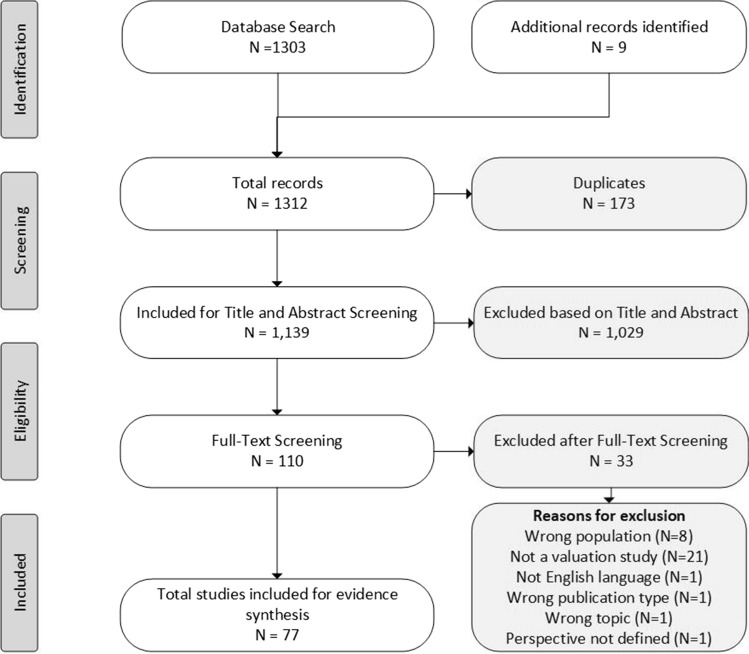
We conducted a systematic search of electronic databases to identify studies published in English since 1990 that used preference elicitation methods to value child and adolescent (under 18 years of age) health states. Eligibility criteria comprised valuation studies concerning both child-specific patient-reported outcome measures and child health states defined in other ways, and methodological studies of valuation approaches that may or may not have yielded a value set algorithm.

RESULTS

A total of 77 eligible studies were identified from which data on country setting, aims, condition (general population or clinically specific), sample size, age of respondents, the perspective that participants were asked to adopt, source of values (respondents who completed the preference elicitation tasks) and methods questions asked were extracted. Extracted data were classified and evaluated using narrative synthesis methods. The studies were classified into three groups: (1) studies comparing elicitation methods (n = 30); (2) studies comparing perspectives (n = 23); and (3) studies where no comparisons were presented (n = 26); selected studies could fall into more than one group. Overall, the studies varied considerably both in methods used and in reporting. The preference elicitation tasks included time trade-off, standard gamble, visual analogue scaling, rating/ranking, discrete choice experiments, best-worst scaling and willingness to pay elicited through a contingent valuation. Perspectives included adults' considering the health states from their own perspective, adults taking the perspective of a child (own, other, hypothetical) and a child/adolescent taking their own or the perspective of another child. There was some evidence that children gave lower values for comparable health states than did adults that adopted their own perspective or adult/parents that adopted the perspective of children.

CONCLUSIONS

Differences in reporting limited the conclusions that can be formed about which methods are most suitable for eliciting preferences for children's health and the influence of differing perspectives and values. Difficulties encountered in drawing conclusions from the data (such as lack of consensus and poor reporting making it difficult for users to choose and interpret available values) suggest that reporting guidelines are required to improve the consistency and quality of reporting of studies that value children's health using preference-based techniques.

摘要

背景与目的

在全球范围内,对儿童健康状况进行货币价值评估对于经济评估具有重要意义,在那些将成本效用分析作为决策首选分析形式的司法管辖区,这种评估更是具有重要意义。尽管如此,由于儿童健康状况的货币价值评估存在诸多挑战,因此在评估方法的选择上仍有许多问题需要进一步讨论。本文旨在确定并描述用于评估儿童健康状况的方法,并确定在使用这些方法时出现的具体问题。

方法

我们系统地检索了电子数据库,以确定自 1990 年以来以偏好评估方法评估儿童和青少年(18 岁以下)健康状况的英文出版物。纳入标准包括评估特定儿童患者报告结局指标和其他方式定义的儿童健康状况的估值研究,以及可能或可能未产生价值集算法的估值方法的方法学研究。

结果

从 77 项符合条件的研究中提取了有关国家背景、目的、状况(一般人群或临床特定)、样本量、受访者年龄、参与者被要求采用的视角、价值来源(完成偏好评估任务的受访者)和方法问题的数据。提取的数据采用叙述性综合方法进行分类和评估。这些研究分为三组:(1)比较评估方法的研究(n=30);(2)比较视角的研究(n=23);(3)未呈现比较的研究(n=26);所选研究可能属于多个组。总体而言,这些研究在方法使用和报告方面差异很大。偏好评估任务包括时间权衡、标准博弈、视觉模拟评分、评分/排名、离散选择实验、最佳最差评分和通过意愿支付调查得出的条件价值。视角包括成年人从自己的角度考虑健康状况、成年人从儿童的角度(自己、其他、假设)考虑健康状况以及儿童/青少年从自己或其他儿童的角度考虑健康状况。有证据表明,对于可比的健康状况,儿童的价值低于采用自己视角的成年人或采用儿童视角的成人/父母。

结论

报告方面的差异限制了可以得出关于哪种方法最适合评估儿童健康状况的偏好的结论,以及不同视角和价值观的影响。从数据中得出结论时遇到的困难(例如缺乏共识和报告质量差,使用户难以选择和解释可用价值)表明,需要报告指南来提高使用偏好技术评估儿童健康状况的研究报告的一致性和质量。
https://cdn.ncbi.nlm.nih.gov/pmc/blobs/f300/9270310/8c78ebb0d285/40273_2022_1149_Fig2_HTML.jpg
https://cdn.ncbi.nlm.nih.gov/pmc/blobs/f300/9270310/15b74c1e9435/40273_2022_1149_Fig1_HTML.jpg
https://cdn.ncbi.nlm.nih.gov/pmc/blobs/f300/9270310/8c78ebb0d285/40273_2022_1149_Fig2_HTML.jpg
https://cdn.ncbi.nlm.nih.gov/pmc/blobs/f300/9270310/15b74c1e9435/40273_2022_1149_Fig1_HTML.jpg
https://cdn.ncbi.nlm.nih.gov/pmc/blobs/f300/9270310/8c78ebb0d285/40273_2022_1149_Fig2_HTML.jpg

相似文献

1
Preference Elicitation Techniques Used in Valuing Children's Health-Related Quality-of-Life: A Systematic Review.偏好 elicitation 技术在评估儿童健康相关生活质量中的应用:系统综述。
Pharmacoeconomics. 2022 Jul;40(7):663-698. doi: 10.1007/s40273-022-01149-3. Epub 2022 May 27.
2
Folic acid supplementation and malaria susceptibility and severity among people taking antifolate antimalarial drugs in endemic areas.在流行地区,服用抗叶酸抗疟药物的人群中,叶酸补充剂与疟疾易感性和严重程度的关系。
Cochrane Database Syst Rev. 2022 Feb 1;2(2022):CD014217. doi: 10.1002/14651858.CD014217.
3
How do Health State Values Differ When Respondents Consider Adults Versus Children Living in Those States? A Systematic Review.当受访者考虑生活在这些州的成年人与儿童时,健康状态值有何不同?一项系统综述。
Pharmacoeconomics. 2025 Apr 22. doi: 10.1007/s40273-025-01493-0.
4
Quality-adjusted life-years lack quality in pediatric care: a critical review of published cost-utility studies in child health.质量调整生命年在儿科护理中缺乏质量:对已发表的儿童健康成本效用研究的批判性综述。
Pediatrics. 2005 May;115(5):e600-14. doi: 10.1542/peds.2004-2127.
5
Valuing Child Health Utility 9D health states with a young adolescent sample: a feasibility study to compare best-worst scaling discrete-choice experiment, standard gamble and time trade-off methods.用青少年样本评估儿童健康效用值 9D 健康状态:比较最佳最差标度离散选择实验、标准博弈和时间权衡方法的可行性研究。
Appl Health Econ Health Policy. 2011;9(1):15-27. doi: 10.2165/11536960-000000000-00000.
6
Patient preferences for the treatment of type 2 diabetes: a scoping review.患者对 2 型糖尿病治疗的偏好:综述
Pharmacoeconomics. 2013 Oct;31(10):877-92. doi: 10.1007/s40273-013-0089-7.
7
Valuing child and adolescent health: a qualitative study on different perspectives and priorities taken by the adult general public.重视儿童和青少年健康:一项关于普通成年人群不同观点和优先事项的定性研究。
Health Qual Life Outcomes. 2021 Sep 23;19(1):222. doi: 10.1186/s12955-021-01858-x.
8
'Like holding the axe on who should live or not': adolescents' and adults' perceptions of valuing children's health states using a standardised valuation protocol for the EQ-5D-Y-3L.“就像拿着斧头决定谁该活谁该死”:青少年和成年人使用 EQ-5D-Y-3L 标准化估值协议评估儿童健康状况的价值观。
Qual Life Res. 2022 Jul;31(7):2133-2142. doi: 10.1007/s11136-022-03107-0. Epub 2022 Feb 24.
9
The future of Cochrane Neonatal.考克兰新生儿协作网的未来。
Early Hum Dev. 2020 Nov;150:105191. doi: 10.1016/j.earlhumdev.2020.105191. Epub 2020 Sep 12.
10
Challenges in health state valuation in paediatric economic evaluation: are QALYs contraindicated?儿科经济评价中健康状态估值的挑战:QALYs 是否被禁止?
Pharmacoeconomics. 2011 Aug;29(8):641-52. doi: 10.2165/11591570-000000000-00000.

引用本文的文献

1
Valuing health states for infants and toddlers: challenges and methodological considerations in EQ-TIPS preference elicitation.评估婴幼儿的健康状态:EQ-TIPS偏好诱导中的挑战与方法学考量
Eur J Health Econ. 2025 Jul 18. doi: 10.1007/s10198-025-01789-0.
2
An Australian Value Set for the EQ-5D-Y-3L.EQ-5D-Y-3L的澳大利亚价值集。
Health Qual Life Outcomes. 2025 Jul 15;23(1):72. doi: 10.1186/s12955-025-02402-x.
3
Do the Age of Children and Parental Status Matter in Valuing the Child Health Utility 9D (CHU9D)?儿童年龄和父母状况对儿童健康效用9D(CHU9D)估值有影响吗?

本文引用的文献

1
Systematic Review of Conceptual, Age, Measurement and Valuation Considerations for Generic Multidimensional Childhood Patient-Reported Outcome Measures.系统评价:通用多维儿童患者报告结局测量的概念、年龄、测量和评估考虑因素。
Pharmacoeconomics. 2022 Apr;40(4):379-431. doi: 10.1007/s40273-021-01128-0. Epub 2022 Jan 24.
2
Psychometric Performance of HRQoL Measures: An Australian Paediatric Multi-Instrument Comparison Study Protocol (P-MIC).健康相关生活质量测量工具的心理测量性能:一项澳大利亚儿科多工具比较研究方案(P-MIC)。
Children (Basel). 2021 Aug 20;8(8):714. doi: 10.3390/children8080714.
3
What drives differences in preferences for health states between patients and the public? A qualitative investigation of respondents' thought processes.
Pharmacoeconomics. 2025 Apr 23. doi: 10.1007/s40273-025-01494-z.
4
Modernizing Newborn Screening in the Genomic Era: Importance of Health-Related Quality of Life.基因组时代新生儿筛查的现代化:健康相关生活质量的重要性。
Pharmacoecon Open. 2024 Nov;8(6):787-792. doi: 10.1007/s41669-024-00528-0. Epub 2024 Oct 3.
5
The development of a capability wellbeing measure in economic evaluation for children and young people aged 11-15.儿童和青少年(11-15 岁)经济评估中能力福利衡量标准的制定。
Soc Sci Med. 2024 Nov;360:117311. doi: 10.1016/j.socscimed.2024.117311. Epub 2024 Sep 8.
6
Meeting the Challenges of Preference-Weighted Health-Related Quality-of-Life Measurement in Children.应对儿童偏好加权健康相关生活质量测量的挑战
Pharmacoeconomics. 2024 Jun;42(Suppl 1):3-8. doi: 10.1007/s40273-024-01383-x. Epub 2024 May 9.
7
The RETRIEVE Checklist for Studies Reporting the Elicitation of Stated Preferences for Child Health-Related Quality of Life.报告儿童健康相关生活质量既定偏好引出情况的研究的检索清单。
Pharmacoeconomics. 2024 Apr;42(4):435-446. doi: 10.1007/s40273-023-01333-z. Epub 2024 Jan 13.
8
Child-Parent Agreement in the Assessment of Health-Related Quality of Life Using the CHU9D and the PedsQL.采用 CHU9D 和 PedsQL 评估健康相关生活质量时的儿童-家长协议。
Appl Health Econ Health Policy. 2023 Nov;21(6):937-947. doi: 10.1007/s40258-023-00831-7. Epub 2023 Sep 29.
9
Patient Preferences in Diagnostic Imaging: A Scoping Review.诊断成像中的患者偏好:一项范围综述
Patient. 2023 Nov;16(6):579-591. doi: 10.1007/s40271-023-00646-7. Epub 2023 Sep 4.
10
Understanding the valuation of paediatric health-related quality of life: a qualitative study protocol.理解儿童健康相关生活质量的评估:一项定性研究方案。
BMJ Open. 2023 Aug 2;13(8):e073039. doi: 10.1136/bmjopen-2023-073039.
患者与公众对健康状态的偏好差异受何驱动?对受访者思维过程的定性调查。
Soc Sci Med. 2021 Aug;282:114150. doi: 10.1016/j.socscimed.2021.114150. Epub 2021 Jun 18.
4
Evaluating the conduct and application of health utility studies: a review of critical appraisal tools and reporting checklists.评估健康效用研究的实施和应用:评价工具和报告清单综述。
Eur J Health Econ. 2021 Jul;22(5):723-733. doi: 10.1007/s10198-021-01286-0. Epub 2021 Apr 11.
5
Discrete choice experiments or best-worst scaling? A qualitative study to determine the suitability of preference elicitation tasks in research with children and young people.离散选择实验还是最佳-最差尺度法?一项定性研究,以确定在针对儿童和年轻人的研究中偏好诱导任务的适用性。
J Patient Rep Outcomes. 2021 Mar 10;5(1):26. doi: 10.1186/s41687-021-00302-4.
6
Vision-related quality-of-life estimates in adolescent youths.青少年与视觉相关的生活质量评估。
Can J Ophthalmol. 2021 Dec;56(6):385-390. doi: 10.1016/j.jcjo.2021.01.012. Epub 2021 Feb 13.
7
EQ-5D-Y Value Set for Slovenia.斯洛文尼亚 EQ-5D-Y 值集。
Pharmacoeconomics. 2021 Apr;39(4):463-471. doi: 10.1007/s40273-020-00994-4. Epub 2021 Feb 10.
8
Utility Outcome Measures for the Treatment of Ameloblastomas during Childhood.儿童成釉细胞瘤治疗的效用结果测量
Plast Reconstr Surg Glob Open. 2021 Jan 22;9(1):e3311. doi: 10.1097/GOX.0000000000003311. eCollection 2021 Jan.
9
Utility Values for the CP-6D, a Cerebral Palsy-Specific Multi-Attribute Utility Instrument, Using a Discrete Choice Experiment.CP-6D 效用值:基于离散选择实验的脑瘫专用多维效用工具
Patient. 2021 Jan;14(1):129-138. doi: 10.1007/s40271-020-00468-x. Epub 2020 Oct 19.
10
A Review of the Methods Used to Generate Utility Values in NICE Technology Assessments for Children and Adolescents.《NICE 儿童和青少年技术评估中效用值生成方法的综述》
Value Health. 2020 Jul;23(7):907-917. doi: 10.1016/j.jval.2020.02.011. Epub 2020 May 7.