• 文献检索
  • 文档翻译
  • 深度研究
  • 学术资讯
  • Suppr Zotero 插件Zotero 插件
  • 邀请有礼
  • 套餐&价格
  • 历史记录
应用&插件
Suppr Zotero 插件Zotero 插件浏览器插件Mac 客户端Windows 客户端微信小程序
定价
高级版会员购买积分包购买API积分包
服务
文献检索文档翻译深度研究API 文档MCP 服务
关于我们
关于 Suppr公司介绍联系我们用户协议隐私条款
关注我们

Suppr 超能文献

核心技术专利:CN118964589B侵权必究
粤ICP备2023148730 号-1Suppr @ 2026

文献检索

告别复杂PubMed语法,用中文像聊天一样搜索,搜遍4000万医学文献。AI智能推荐,让科研检索更轻松。

立即免费搜索

文件翻译

保留排版,准确专业,支持PDF/Word/PPT等文件格式,支持 12+语言互译。

免费翻译文档

深度研究

AI帮你快速写综述,25分钟生成高质量综述,智能提取关键信息,辅助科研写作。

立即免费体验

运用机器学习方法识别新冠病毒的甲基化特征及规律。

Identifying Methylation Signatures and Rules for COVID-19 With Machine Learning Methods.

作者信息

Li Zhandong, Mei Zi, Ding Shijian, Chen Lei, Li Hao, Feng Kaiyan, Huang Tao, Cai Yu-Dong

机构信息

College of Biological and Food Engineering, Jilin Engineering Normal University, Changchun, China.

Shanghai Institute of Nutrition and Health, Chinese Academy of Sciences, Shanghai, China.

出版信息

Front Mol Biosci. 2022 May 10;9:908080. doi: 10.3389/fmolb.2022.908080. eCollection 2022.

DOI:10.3389/fmolb.2022.908080
PMID:35620480
原文链接:https://pmc.ncbi.nlm.nih.gov/articles/PMC9127386/
Abstract

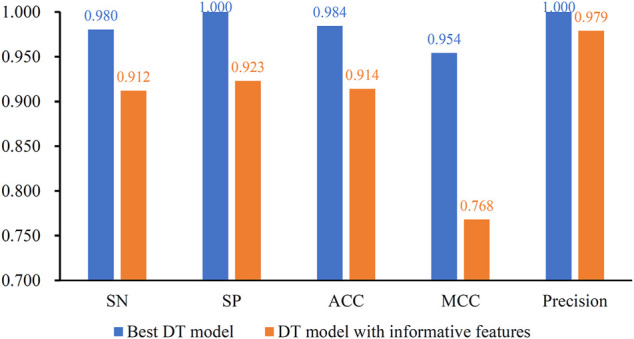
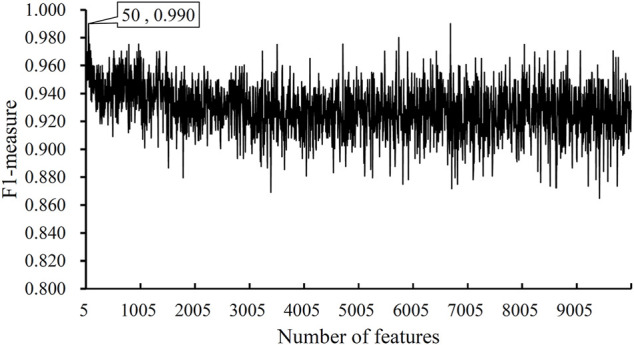
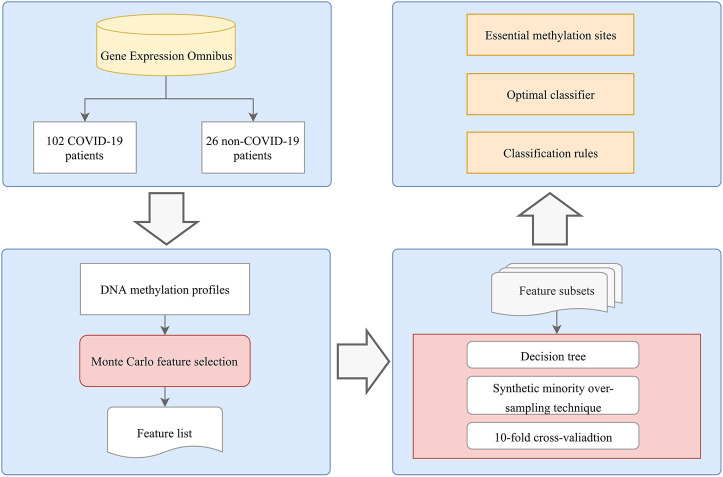
The occurrence of coronavirus disease 2019 (COVID-19) has become a serious challenge to global public health. Definitive and effective treatments for COVID-19 are still lacking, and targeted antiviral drugs are not available. In addition, viruses can regulate host innate immunity and antiviral processes through the epigenome to promote viral self-replication and disease progression. In this study, we first analyzed the methylation dataset of COVID-19 using the Monte Carlo feature selection method to obtain a feature list. This feature list was subjected to the incremental feature selection method combined with a decision tree algorithm to extract key biomarkers, build effective classification models and classification rules that can remarkably distinguish patients with or without COVID-19. EPSTI1, NACAP1, SHROOM3, C19ORF35, and MX1 as the essential features play important roles in the infection and immune response to novel coronavirus. The six significant rules extracted from the optimal classifier quantitatively explained the expression pattern of COVID-19. Therefore, these findings validated that our method can distinguish COVID-19 at the methylation level and provide guidance for the diagnosis and treatment of COVID-19.

摘要

2019冠状病毒病(COVID-19)的出现已成为全球公共卫生面临的严峻挑战。目前仍缺乏针对COVID-19的确切有效治疗方法,且尚无靶向抗病毒药物。此外,病毒可通过表观基因组调节宿主固有免疫和抗病毒过程,以促进病毒自身复制和疾病进展。在本研究中,我们首先使用蒙特卡洛特征选择方法分析COVID-19的甲基化数据集,以获得一个特征列表。该特征列表采用增量特征选择方法结合决策树算法,以提取关键生物标志物,构建能够显著区分COVID-19患者和非COVID-19患者的有效分类模型和分类规则。EPSTI1、NACAP1、SHROOM3、C19ORF35和MX1作为关键特征,在新型冠状病毒的感染和免疫反应中发挥重要作用。从最优分类器中提取的六条重要规则定量解释了COVID-19的表达模式。因此,这些发现证实我们的方法能够在甲基化水平上区分COVID-19,并为COVID-19的诊断和治疗提供指导。
https://cdn.ncbi.nlm.nih.gov/pmc/blobs/640a/9127386/95609f624736/fmolb-09-908080-g003.jpg
https://cdn.ncbi.nlm.nih.gov/pmc/blobs/640a/9127386/ccf2845f68f3/fmolb-09-908080-g001.jpg
https://cdn.ncbi.nlm.nih.gov/pmc/blobs/640a/9127386/d3d9baded688/fmolb-09-908080-g002.jpg
https://cdn.ncbi.nlm.nih.gov/pmc/blobs/640a/9127386/95609f624736/fmolb-09-908080-g003.jpg
https://cdn.ncbi.nlm.nih.gov/pmc/blobs/640a/9127386/ccf2845f68f3/fmolb-09-908080-g001.jpg
https://cdn.ncbi.nlm.nih.gov/pmc/blobs/640a/9127386/d3d9baded688/fmolb-09-908080-g002.jpg
https://cdn.ncbi.nlm.nih.gov/pmc/blobs/640a/9127386/95609f624736/fmolb-09-908080-g003.jpg

相似文献

1
Identifying Methylation Signatures and Rules for COVID-19 With Machine Learning Methods.运用机器学习方法识别新冠病毒的甲基化特征及规律。
Front Mol Biosci. 2022 May 10;9:908080. doi: 10.3389/fmolb.2022.908080. eCollection 2022.
2
Identification of methylation signatures and rules for predicting the severity of SARS-CoV-2 infection with machine learning methods.利用机器学习方法识别甲基化特征及预测新型冠状病毒2019感染严重程度的规则。
Front Microbiol. 2022 Sep 23;13:1007295. doi: 10.3389/fmicb.2022.1007295. eCollection 2022.
3
Identification of DNA Methylation Signature and Rules for SARS-CoV-2 Associated with Age.鉴定与年龄相关的 SARS-CoV-2 的 DNA 甲基化特征和规律。
Front Biosci (Landmark Ed). 2022 Jun 27;27(7):204. doi: 10.31083/j.fbl2707204.
4
Identification of Whole-Blood DNA Methylation Signatures and Rules Associated with COVID-19 Severity.全血DNA甲基化特征及与新冠病毒疾病严重程度相关规则的鉴定
Front Biosci (Landmark Ed). 2023 Nov 8;28(11):284. doi: 10.31083/j.fbl2811284.
5
Analysis of Expression Pattern of snoRNAs in Different Cancer Types with Machine Learning Algorithms.基于机器学习算法的 snoRNAs 在不同癌症类型中的表达模式分析。
Int J Mol Sci. 2019 May 2;20(9):2185. doi: 10.3390/ijms20092185.
6
Identifying Transcriptomic Signatures and Rules for SARS-CoV-2 Infection.确定新型冠状病毒感染的转录组特征和规律
Front Cell Dev Biol. 2021 Jan 11;8:627302. doi: 10.3389/fcell.2020.627302. eCollection 2020.
7
Detecting Blood Methylation Signatures in Response to Childhood Cancer Radiotherapy via Machine Learning Methods.通过机器学习方法检测儿童癌症放疗反应中的血液甲基化特征。
Biology (Basel). 2022 Apr 15;11(4):607. doi: 10.3390/biology11040607.
8
Identification of COVID-19 severity biomarkers based on feature selection on single-cell RNA-Seq data of CD8 T cells.基于CD8 T细胞单细胞RNA测序数据特征选择的新型冠状病毒肺炎严重程度生物标志物的鉴定
Front Genet. 2022 Nov 9;13:1053772. doi: 10.3389/fgene.2022.1053772. eCollection 2022.
9
Predicting Heart Cell Types by Using Transcriptome Profiles and a Machine Learning Method.利用转录组图谱和机器学习方法预测心脏细胞类型
Life (Basel). 2022 Jan 31;12(2):228. doi: 10.3390/life12020228.
10
Recognition of Immune Cell Markers of COVID-19 Severity with Machine Learning Methods.利用机器学习方法识别 COVID-19 严重程度的免疫细胞标志物。
Biomed Res Int. 2022 Apr 28;2022:6089242. doi: 10.1155/2022/6089242. eCollection 2022.

引用本文的文献

1
Unveiling Epigenetic Regulatory Elements Associated with Breast Cancer Development.揭示与乳腺癌发展相关的表观遗传调控元件。
Int J Mol Sci. 2025 Jul 8;26(14):6558. doi: 10.3390/ijms26146558.
2
Unveiling epigenetic regulatory elements associated with breast cancer development.揭示与乳腺癌发展相关的表观遗传调控元件。
bioRxiv. 2024 Nov 15:2024.11.12.623187. doi: 10.1101/2024.11.12.623187.
3
Exploring TSPAN4 promoter methylation as a diagnostic biomarker for tuberculosis.探索TSPAN4启动子甲基化作为结核病的诊断生物标志物。

本文引用的文献

1
Similarity-Based Method with Multiple-Feature Sampling for Predicting Drug Side Effects.基于相似性的多特征采样方法预测药物副作用。
Comput Math Methods Med. 2022 Apr 1;2022:9547317. doi: 10.1155/2022/9547317. eCollection 2022.
2
Identification of protein functions in mouse with a label space partition method.用标签空间划分方法鉴定小鼠中的蛋白质功能。
Math Biosci Eng. 2022 Feb 10;19(4):3820-3842. doi: 10.3934/mbe.2022176.
3
Exploring the Genomic Patterns in Human and Mouse Cerebellums Via Single-Cell Sequencing and Machine Learning Method.
Front Genet. 2024 Apr 12;15:1380828. doi: 10.3389/fgene.2024.1380828. eCollection 2024.
4
Identification of biomarkers and pathways for the SARS-CoV-2 infections in obstructive sleep apnea patients based on machine learning and proteomic analysis.基于机器学习和蛋白质组学分析鉴定阻塞性睡眠呼吸暂停患者中 SARS-CoV-2 感染的生物标志物和途径。
BMC Pulm Med. 2024 Mar 5;24(1):112. doi: 10.1186/s12890-024-02921-1.
5
Systems biology approaches to identify driver genes and drug combinations for treating COVID-19.用于识别治疗新冠肺炎驱动基因和药物组合的系统生物学方法。
Sci Rep. 2024 Jan 26;14(1):2257. doi: 10.1038/s41598-024-52484-8.
6
Immune responses of different COVID-19 vaccination strategies by analyzing single-cell RNA sequencing data from multiple tissues using machine learning methods.通过使用机器学习方法分析来自多个组织的单细胞RNA测序数据,研究不同新冠疫苗接种策略的免疫反应。
Front Genet. 2023 Mar 17;14:1157305. doi: 10.3389/fgene.2023.1157305. eCollection 2023.
7
Identification of dynamic gene expression profiles during sequential vaccination with ChAdOx1/BNT162b2 using machine learning methods.使用机器学习方法鉴定ChAdOx1/BNT162b2序贯接种过程中的动态基因表达谱。
Front Microbiol. 2023 Mar 17;14:1138674. doi: 10.3389/fmicb.2023.1138674. eCollection 2023.
通过单细胞测序和机器学习方法探索人类和小鼠小脑的基因组模式。
Front Genet. 2022 Mar 4;13:857851. doi: 10.3389/fgene.2022.857851. eCollection 2022.
4
Predicting Heart Cell Types by Using Transcriptome Profiles and a Machine Learning Method.利用转录组图谱和机器学习方法预测心脏细胞类型
Life (Basel). 2022 Jan 31;12(2):228. doi: 10.3390/life12020228.
5
Predicting RNA 5-Methylcytosine Sites by Using Essential Sequence Features and Distributions.基于关键序列特征和分布预测 RNA 5-甲基胞嘧啶位点
Biomed Res Int. 2022 Jan 13;2022:4035462. doi: 10.1155/2022/4035462. eCollection 2022.
6
iMPT-FDNPL: Identification of Membrane Protein Types with Functional Domains and a Natural Language Processing Approach.iMPT-FDNPL:基于功能域和自然语言处理方法识别膜蛋白类型。
Comput Math Methods Med. 2021 Oct 11;2021:7681497. doi: 10.1155/2021/7681497. eCollection 2021.
7
Identifying Lung Cancer Cell Markers with Machine Learning Methods and Single-Cell RNA-Seq Data.利用机器学习方法和单细胞RNA测序数据识别肺癌细胞标志物
Life (Basel). 2021 Sep 9;11(9):940. doi: 10.3390/life11090940.
8
Blood DNA methylation and COVID-19 outcomes.血液 DNA 甲基化与 COVID-19 结局。
Clin Epigenetics. 2021 May 25;13(1):118. doi: 10.1186/s13148-021-01102-9.
9
Determining protein-protein functional associations by functional rules based on gene ontology and KEGG pathway.基于基因本体论和 KEGG 通路的功能规则确定蛋白质-蛋白质功能关联。
Biochim Biophys Acta Proteins Proteom. 2021 Jun;1869(6):140621. doi: 10.1016/j.bbapap.2021.140621. Epub 2021 Feb 6.
10
Identifying Transcriptomic Signatures and Rules for SARS-CoV-2 Infection.确定新型冠状病毒感染的转录组特征和规律
Front Cell Dev Biol. 2021 Jan 11;8:627302. doi: 10.3389/fcell.2020.627302. eCollection 2020.