Chang Xiaoqing, Tan Yu-Mei, Allen David G, Bell Shannon, Brown Paul C, Browning Lauren, Ceger Patricia, Gearhart Jeffery, Hakkinen Pertti J, Kabadi Shruti V, Kleinstreuer Nicole C, Lumen Annie, Matheson Joanna, Paini Alicia, Pangburn Heather A, Petersen Elijah J, Reinke Emily N, Ribeiro Alexandre J S, Sipes Nisha, Sweeney Lisa M, Wambaugh John F, Wange Ronald, Wetmore Barbara A, Mumtaz Moiz
Inotiv-RTP, 601 Keystone Park Drive, Suite 200, Morrisville, NC 27560, USA.
U.S. Environmental Protection Agency, Office of Pesticide Programs, 109 T.W. Alexander Drive, Durham, NC 27709, USA.
Toxics. 2022 May 1;10(5):232. doi: 10.3390/toxics10050232.
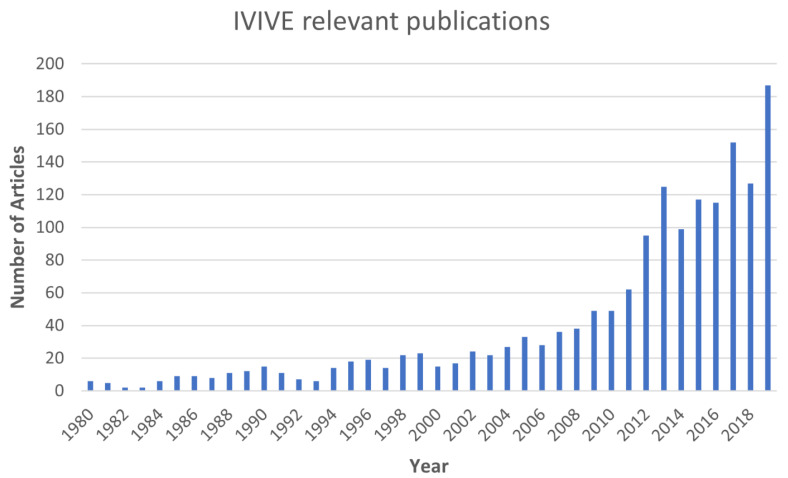
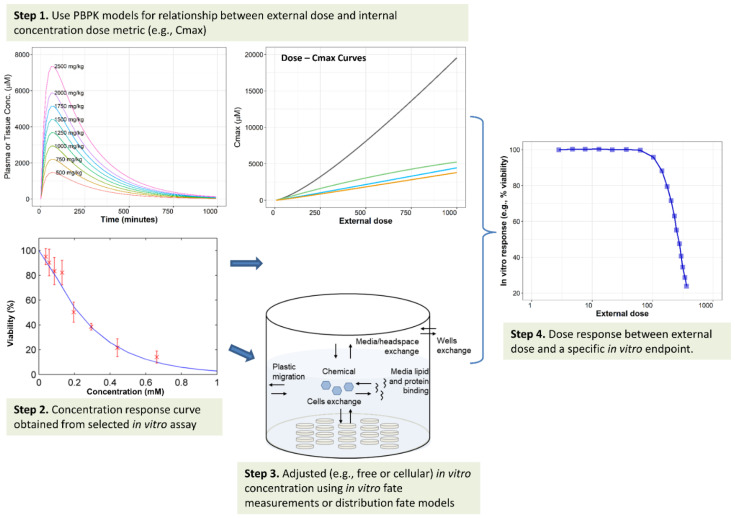
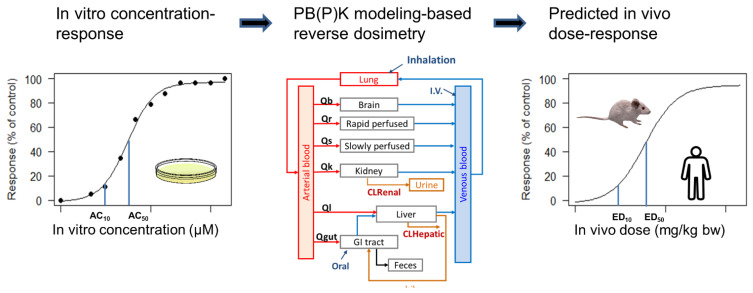
During the past few decades, the science of toxicology has been undergoing a transformation from observational to predictive science. New approach methodologies (NAMs), including assays, models, read-across, and to extrapolation (IVIVE), are being developed to reduce, refine, or replace whole animal testing, encouraging the judicious use of time and resources. Some of these methods have advanced past the exploratory research stage and are beginning to gain acceptance for the risk assessment of chemicals. A review of the recent literature reveals a burst of IVIVE publications over the past decade. In this review, we propose operational definitions for IVIVE, present literature examples for several common toxicity endpoints, and highlight their implications in decision-making processes across various federal agencies, as well as international organizations, including those in the European Union (EU). The current challenges and future needs are also summarized for IVIVE. In addition to refining and reducing the number of animals in traditional toxicity testing protocols and being used for prioritizing chemical testing, the goal to use IVIVE to facilitate the replacement of animal models can be achieved through their continued evolution and development, including a strategic plan to qualify IVIVE methods for regulatory acceptance.
在过去几十年里,毒理学科学正经历着从观察性科学到预测性科学的转变。新方法学(NAMs),包括检测、模型、类推和体外到体内外推法(IVIVE),正在被开发出来以减少、优化或替代整体动物试验,鼓励明智地使用时间和资源。其中一些方法已经过了探索性研究阶段,并开始在化学品风险评估中获得认可。对近期文献的回顾显示,在过去十年里IVIVE的出版物激增。在本综述中,我们提出了IVIVE的操作定义,并给出了几个常见毒性终点的文献实例,强调了它们在各个联邦机构以及包括欧盟(EU)在内的国际组织的决策过程中的意义。还总结了IVIVE当前面临的挑战和未来需求。除了优化和减少传统毒性试验方案中的动物数量以及用于确定化学品测试的优先级外,通过IVIVE的持续发展,包括制定使IVIVE方法获得监管认可的战略计划,利用IVIVE促进动物模型替代的目标是可以实现的。