Mohamed Hanaa K, Mobasher Maysa A, Ebiya Rasha A, Hassen Marwa T, Hagag Howaida M, El-Sayed Radwa, Abdel-Ghany Shaimaa, Said Manal M, Awad Nabil S
Department of Zoology, Faculty of Women for Arts, Science and Education, Ain Shams University, Cairo 11757, Egypt.
Department of Pathology, Biochemistry Division, College of Medicine, Jouf University, Sakaka 41412, Saudi Arabia.
Antioxidants (Basel). 2022 May 23;11(5):1029. doi: 10.3390/antiox11051029.
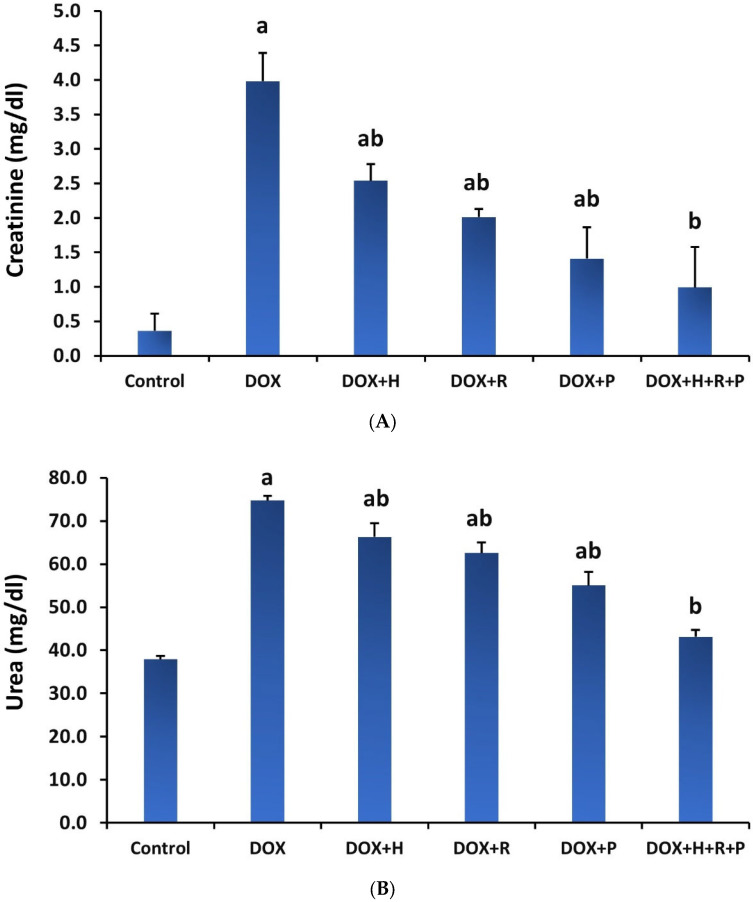
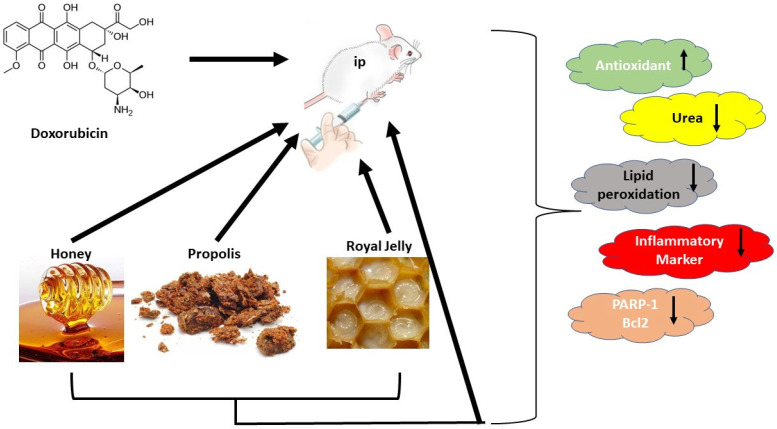
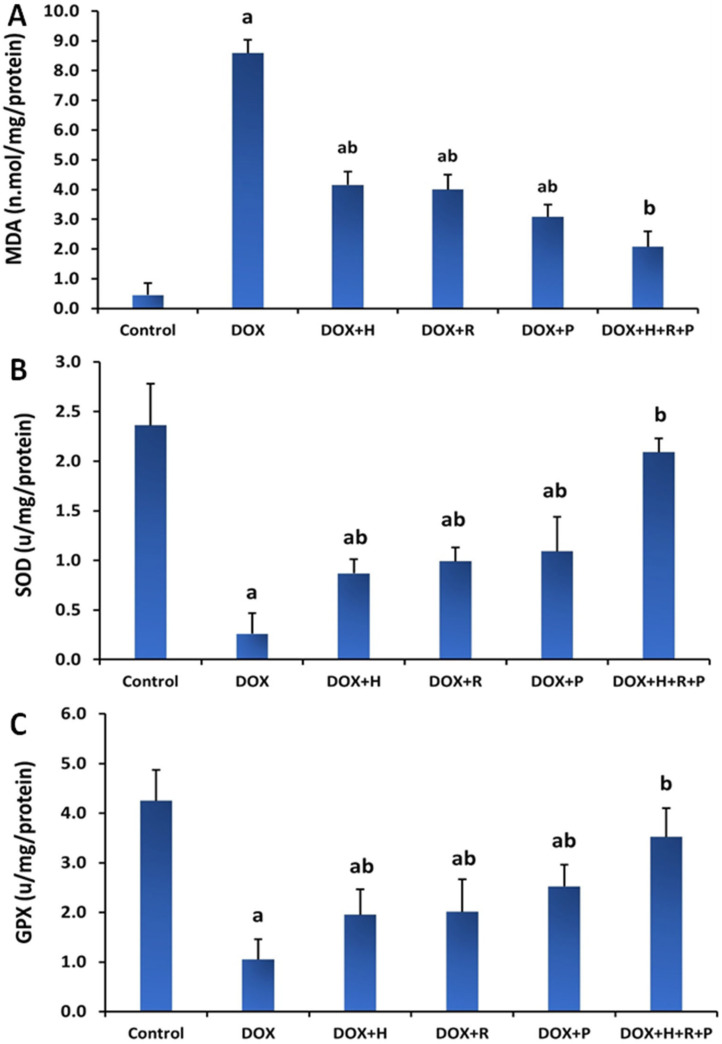
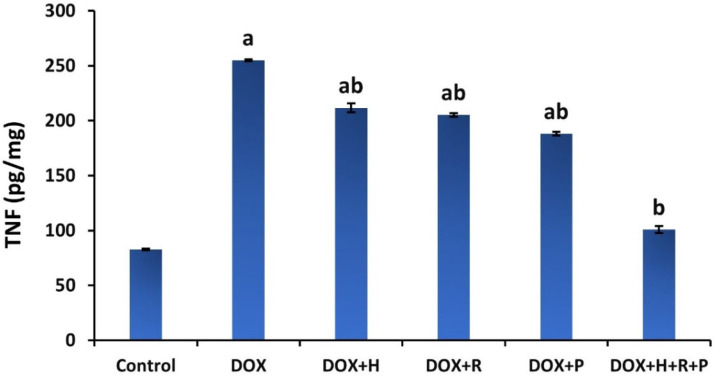
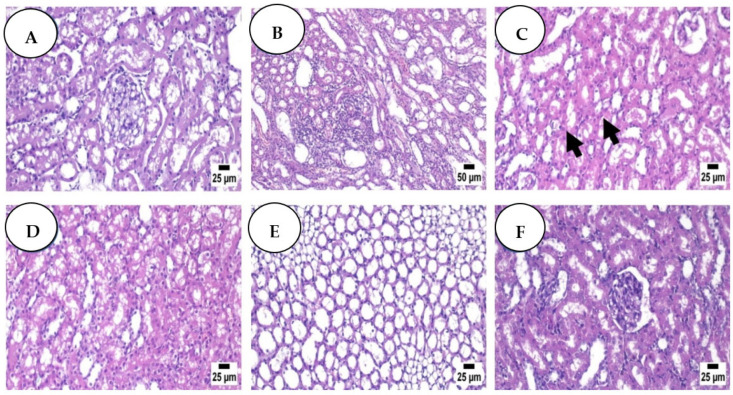
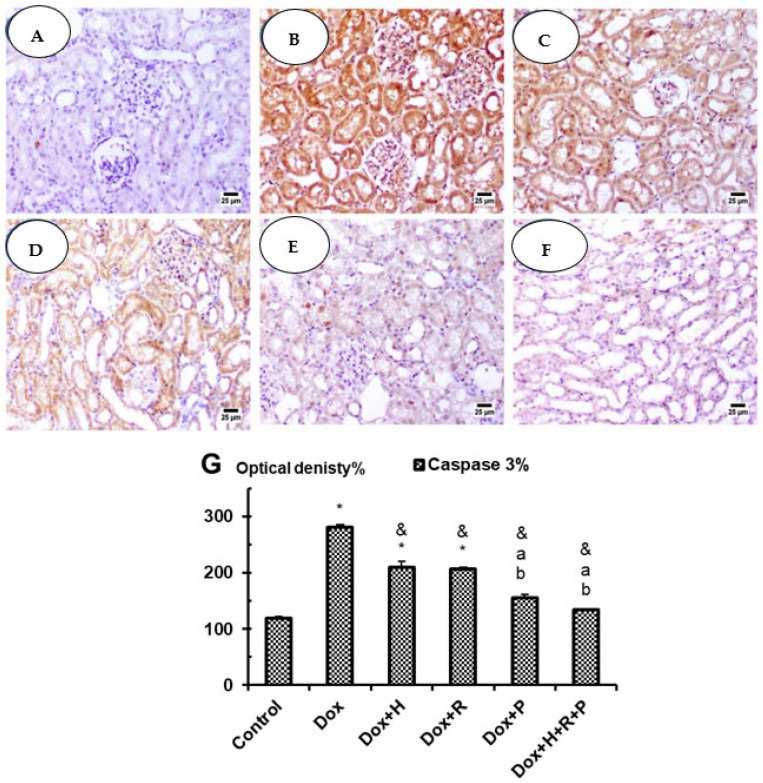
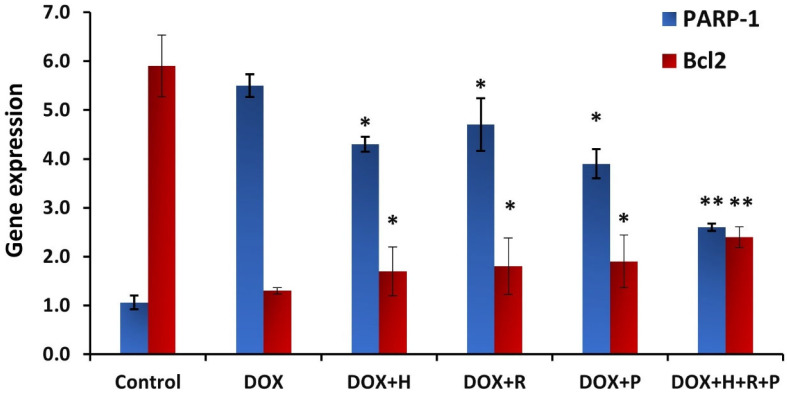
Nephrotoxicity is one of the limiting factors for using doxorubicin (DOX). Honey, propolis, and royal jelly were evaluated for their ability to protect against nephrotoxicity caused by DOX. Forty-two adult albino rats were divided into control groups. The DOX group was injected i.p. with a weekly dose of 3 mg/kg of DOX for six weeks. The DOX plus honey treated group was injected with DOX and on the next day, received 500 mg/kg/day of honey orally for 21 days. The DOX plus royal jelly treated group was injected with DOX and on the following day, received 100 mg/kg/day of royal jelly orally for 21 days. The DOX plus propolis treated group received DOX and on the following day, was treated orally with 50 mg/kg/day of propolis for 21 days. The DOX plus combined treatment group received DOX and on the following day, was treated with a mix of honey, royal jelly, and propolis orally for 21 days. Results confirmed that DOX raised creatinine, urea, MDA, and TNF-α while decreasing GPX and SOD. Damages and elevated caspase-3 expression were discovered during renal tissue's histopathological and immunohistochemical studies. Combined treatment with honey, royal jelly, and propolis improved biochemical, histological, and immunohistochemical studies in the renal tissue. qRT-PCR revealed increased expression of poly (ADP-Ribose) polymerase-1 (PARP-1) and a decline of Bcl-2 in the DOX group. However, combined treatment induced a significant decrease in the PARP-1 gene and increased Bcl-2 expression levels. In addition, the combined treatment led to significant improvement in the expression of both PARP-1 and Bcl-2 genes. In conclusion, the combined treatment effectively inhibited nephrotoxicity induced by DOX.
肾毒性是使用阿霉素(DOX)的限制因素之一。对蜂蜜、蜂胶和蜂王浆预防DOX所致肾毒性的能力进行了评估。将42只成年白化大鼠分为对照组。DOX组腹腔注射,每周剂量为3 mg/kg的DOX,共六周。DOX加蜂蜜治疗组注射DOX,次日口服500 mg/kg/天的蜂蜜,持续21天。DOX加蜂王浆治疗组注射DOX,次日口服100 mg/kg/天的蜂王浆,持续21天。DOX加蜂胶治疗组接受DOX,次日口服50 mg/kg/天的蜂胶,持续21天。DOX加联合治疗组接受DOX,次日口服蜂蜜、蜂王浆和蜂胶的混合物,持续21天。结果证实,DOX可使肌酐、尿素、丙二醛(MDA)和肿瘤坏死因子-α(TNF-α)升高,同时使谷胱甘肽过氧化物酶(GPX)和超氧化物歧化酶(SOD)降低。在肾脏组织的组织病理学和免疫组织化学研究中发现了损伤和半胱天冬酶-3表达升高。蜂蜜、蜂王浆和蜂胶联合治疗改善了肾脏组织的生化、组织学和免疫组织化学研究。定量逆转录聚合酶链反应(qRT-PCR)显示,DOX组聚(ADP-核糖)聚合酶-1(PARP-1)表达增加,Bcl-2表达下降。然而,联合治疗使PARP-1基因显著降低,Bcl-2表达水平升高。此外,联合治疗使PARP-1和Bcl-2基因的表达均有显著改善。总之,联合治疗有效抑制了DOX诱导的肾毒性。