Koledenkova Kseniia, Esmaeel Qassim, Jacquard Cédric, Nowak Jerzy, Clément Christophe, Ait Barka Essaid
Université de Reims Champagne Ardenne, RIBP EA4707 USC INRAE 1488, SFR Condorcet FR CNRS 3417, Reims, France.
School of Plant and Environmental Sciences, Virginia Polytechnic Institute and State University, Saunders Hall, Blacksburg, VA, United States.
Front Microbiol. 2022 May 11;13:889472. doi: 10.3389/fmicb.2022.889472. eCollection 2022.
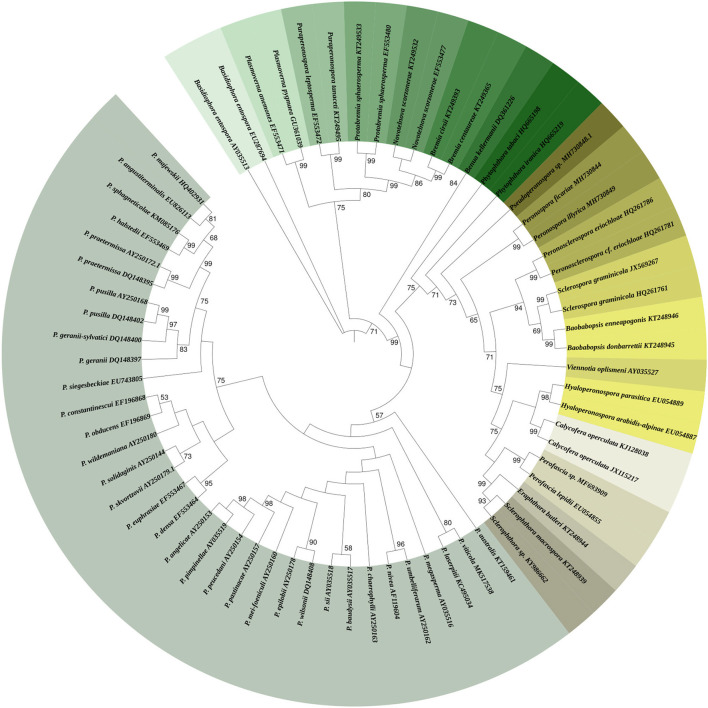
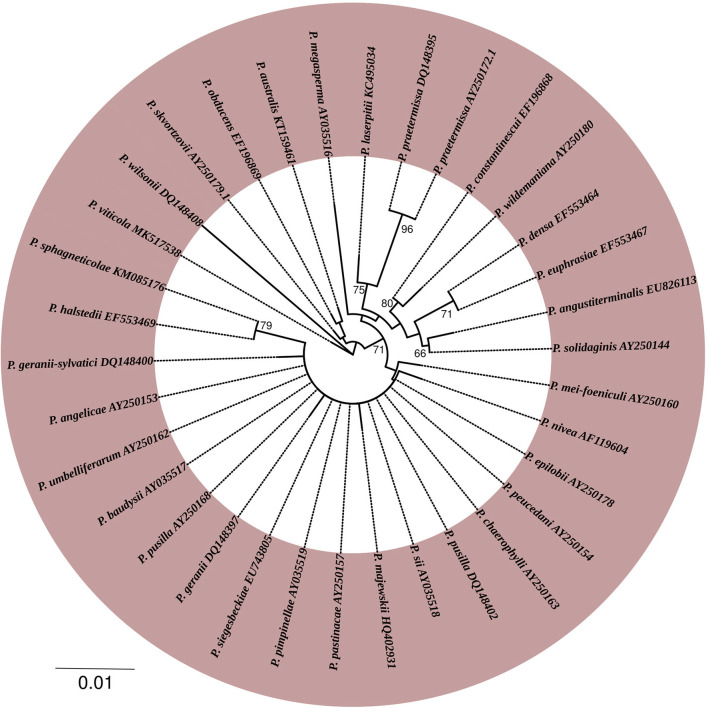
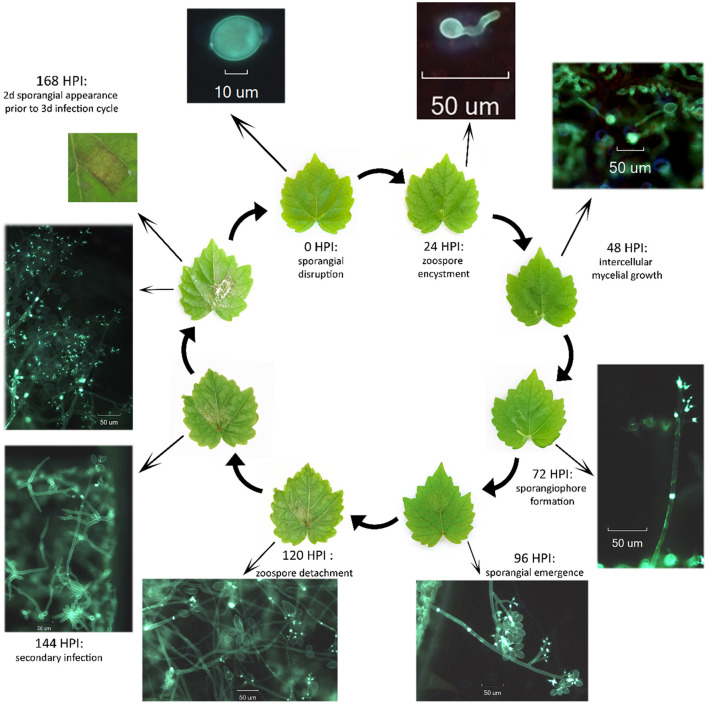
(, Berk. & M. A. Curtis; Berl. & De Toni) causing grapevine downy mildew is one of the most damaging pathogens to viticulture worldwide. Since its recognition in the middle of nineteenth century, this disease has spread from America to Europe and then to all grapevine-growing countries, leading to significant economic losses due to the lack of efficient disease control. In 1885 copper was found to suppress many pathogens, and is still the most effective way to control downy mildews. During the twentieth century, contact and penetrating single-site fungicides have been developed for use against plant pathogens including downy mildews, but wide application has led to the appearance of pathogenic strains resistant to these treatments. Additionally, due to the negative environmental impact of chemical pesticides, the European Union restricted their use, triggering a rush to develop alternative tools such as resistant cultivars breeding, creation of new active ingredients, search for natural products and biocontrol agents that can be applied alone or in combination to kill the pathogen or mitigate its effect. This review summarizes data about the history, distribution, epidemiology, taxonomy, morphology, reproduction and infection mechanisms, symptoms, host-pathogen interactions, host resistance and control of the , with a focus on sustainable methods, especially the use of biocontrol agents.
(伯克氏菌属与柯蒂斯氏菌属;贝氏菌属与德托尼氏菌属)引起葡萄霜霉病,是全球葡萄栽培中最具破坏性的病原体之一。自19世纪中叶被发现以来,这种疾病已从美洲传播到欧洲,然后蔓延到所有葡萄种植国家,由于缺乏有效的病害控制措施,导致了重大的经济损失。1885年发现铜能抑制许多病原体,至今仍是控制霜霉病最有效的方法。在20世纪,人们开发了接触性和内吸性单作用位点杀菌剂来对抗包括霜霉病在内的植物病原体,但广泛应用导致了对这些处理产生抗性的致病菌株的出现。此外,由于化学农药对环境的负面影响,欧盟限制了它们的使用,引发了人们急于开发替代工具,如培育抗性品种、开发新的活性成分、寻找可单独或联合使用以杀死病原体或减轻其影响的天然产物和生物防治剂。本综述总结了有关葡萄霜霉病的历史、分布、流行病学、分类学、形态学、繁殖和感染机制、症状、寄主-病原体相互作用、寄主抗性和防治的数据,重点是可持续方法,特别是生物防治剂的使用。