Subramony Mahesh, Golubovskaya Maria, Keating Byron, Solnet David, Field Joy, Witheriff Melissa
College of Business, Northern Illinois University, BH245F, Dekalb, IL 60115, United States.
Business School, University of Queensland, St Lucia, QLD 4072, Australia.
J Bus Res. 2022 Oct;149:363-374. doi: 10.1016/j.jbusres.2022.05.040. Epub 2022 May 25.
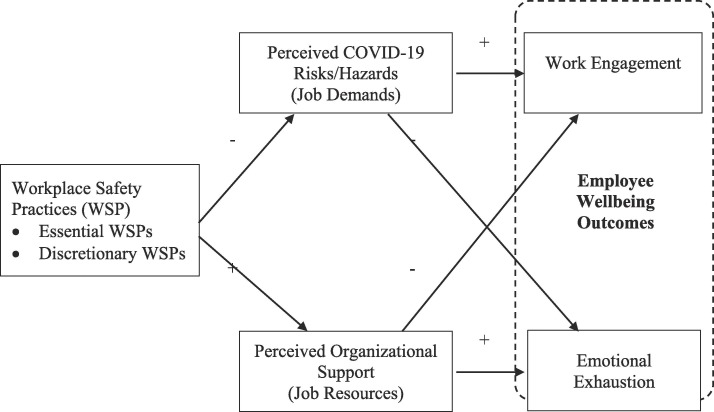
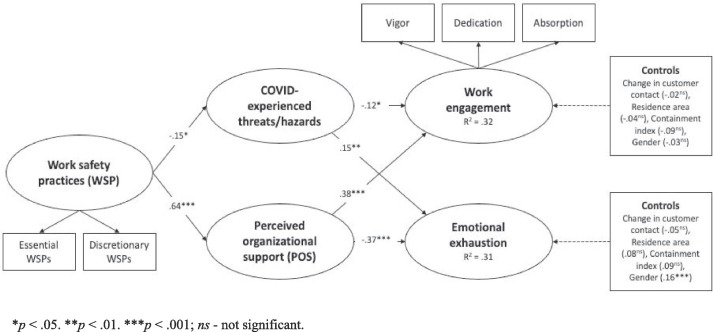
The COVID-19 pandemic has exposed the vulnerability of frontline employee (FLEs) to infections and other hazards and highlighted the importance of workplace safety practices (WSP) for service organizations. In response to the critical issue of service safety, we developed and empirically tested a model proposing that WSPs negatively influence FLE perceptions of pandemic related threats and positively influence their perceptions of organizational supportiveness (POS). In turn, these perceptions have time-lagged effects on two aspects of FLE wellbeing-reduced emotional exhaustion and increased work engagement. Utilizing data from a two-wave (separated by a month) survey panel consisting of 310 FLEs across the United States, we found evidence for all hypothesized relationships. We discuss the practical and theoretical implications of our findings and provide suggestions for future research on service safety on the organizational frontlines.
新冠疫情暴露了一线员工(FLEs)容易受到感染及其他危害的脆弱性,并凸显了服务组织实施工作场所安全措施(WSP)的重要性。针对服务安全这一关键问题,我们开发并通过实证检验了一个模型,该模型提出工作场所安全措施对一线员工对疫情相关威胁的认知有负面影响,而对他们对组织支持性(POS)的认知有正面影响。反过来,这些认知对一线员工幸福感的两个方面有时间滞后效应,即减少情绪耗竭和增加工作投入。利用来自美国310名一线员工组成的两波(间隔一个月)调查小组的数据,我们发现了所有假设关系的证据。我们讨论了研究结果的实际和理论意义,并为未来关于组织前线服务安全的研究提供了建议。