School of Materials and Chemistry, University of Shanghai for Science & Technology, 516 Jungong Road, Yangpu District, Shanghai, 200093, China.
Shanghai Engineering Technology Research Center for High-Performance Medical Device Materials, Shanghai, 200093, China.
J Nanobiotechnology. 2022 May 28;20(1):244. doi: 10.1186/s12951-022-01463-0.
The diversified combination of nanostructure and material has received considerable attention from researchers to exploit advanced functional materials. In drug delivery systems, the hydrophilicity and sustained-release drug properties are in opposition. Thus, difficulties remain in the simultaneous improve sustained-release drug properties and increase the hydrophilicity of materials.
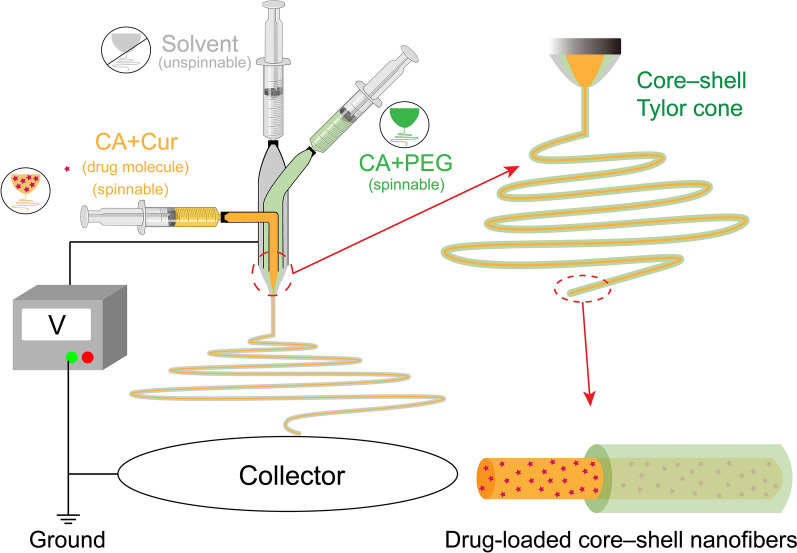
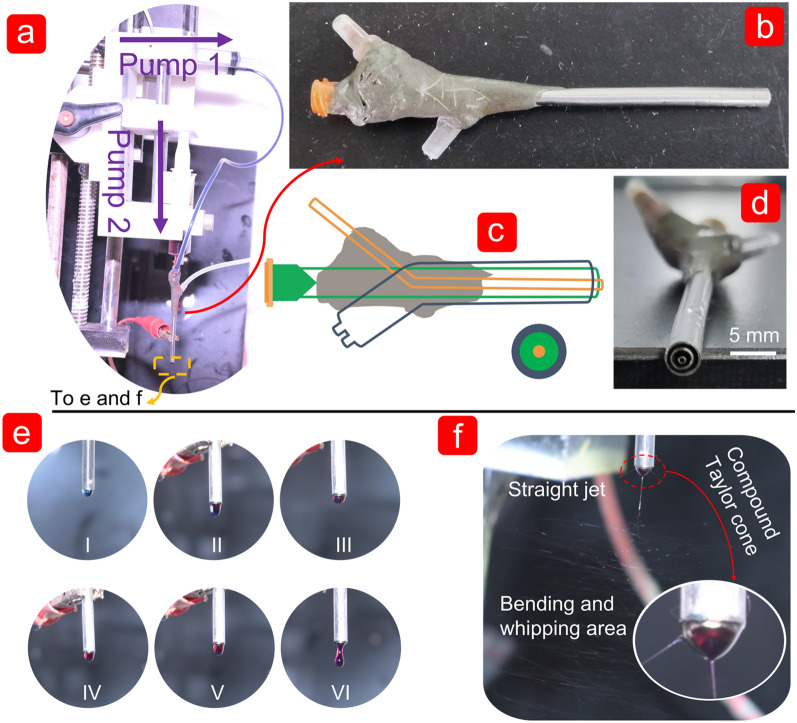
In this work, we proposed a modified triaxial electrospinning strategy to fabricate functional core-shell fibres, which could elaborate design of shell component for manipulating the sustained-release drug. Cellulose acetate (CA) was designed as the main polymeric matrix, whereas polyethylene glycol (PEG) was added as a hydrophilic material in the middle layer. Cur, as a model drug, was stored in the inner layer.
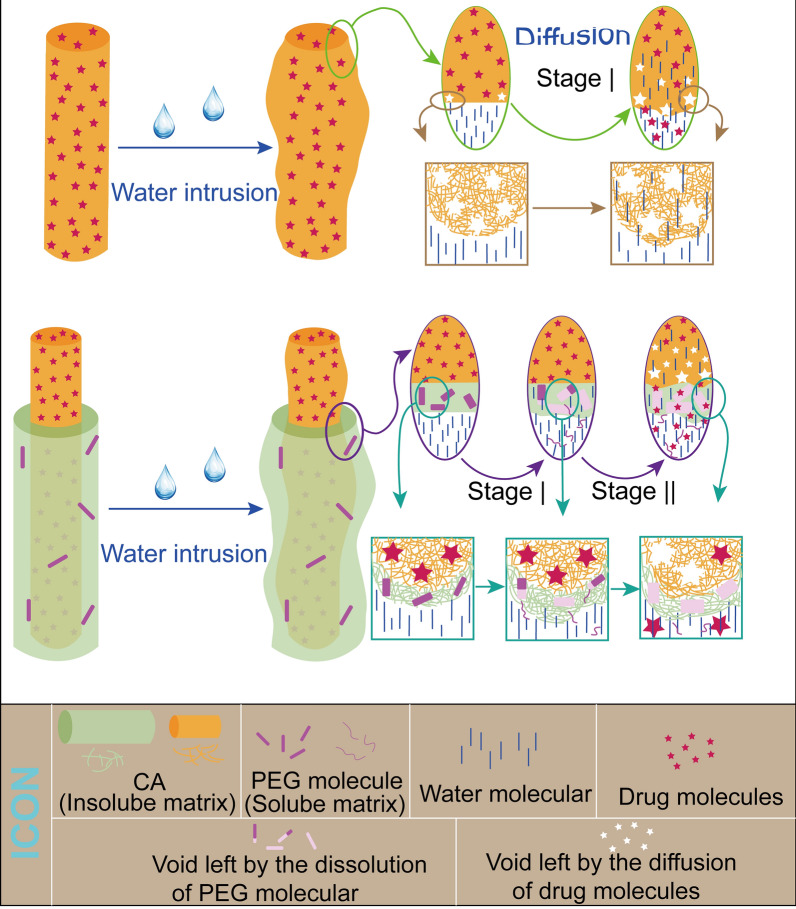
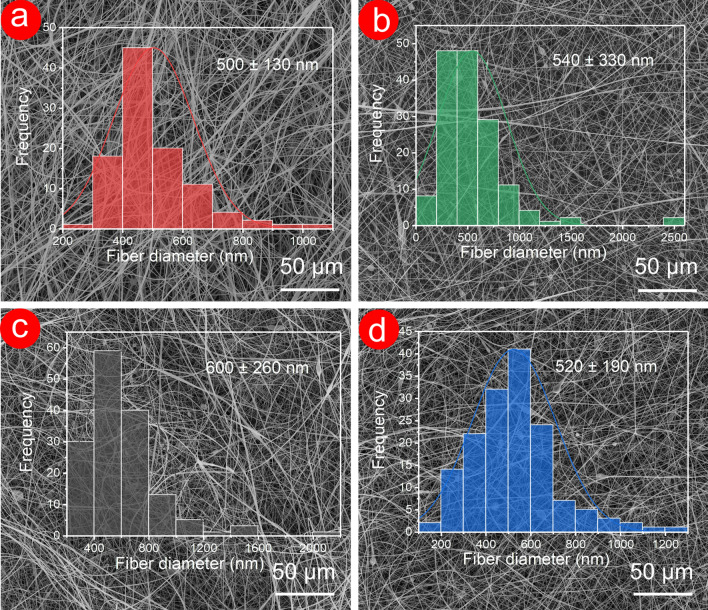
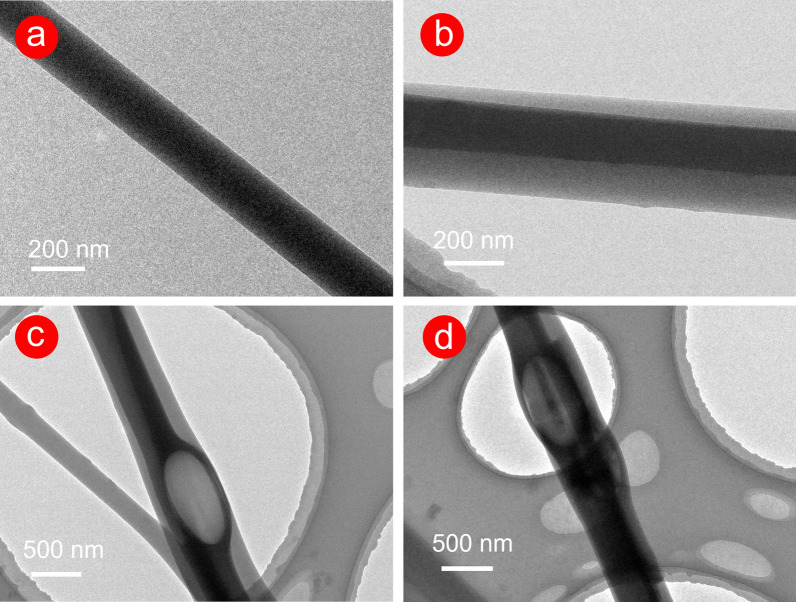
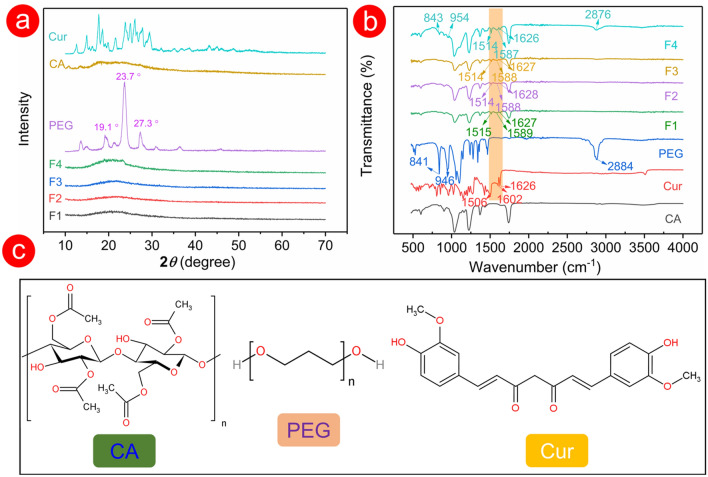
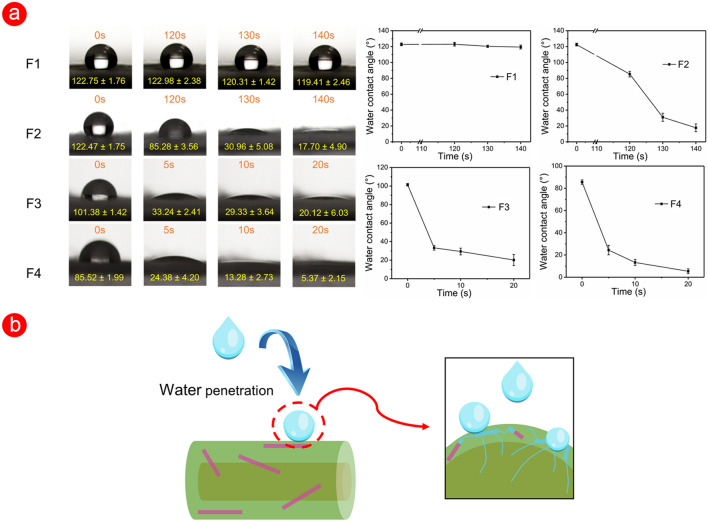
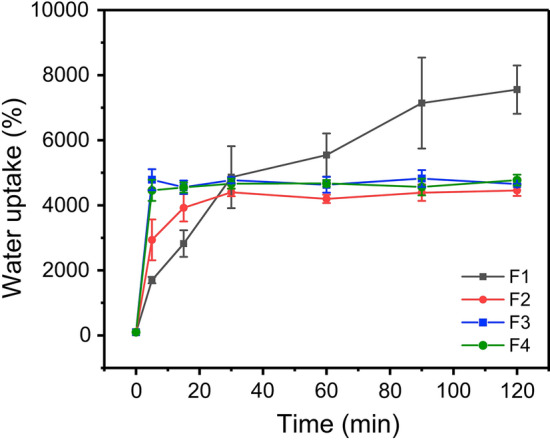
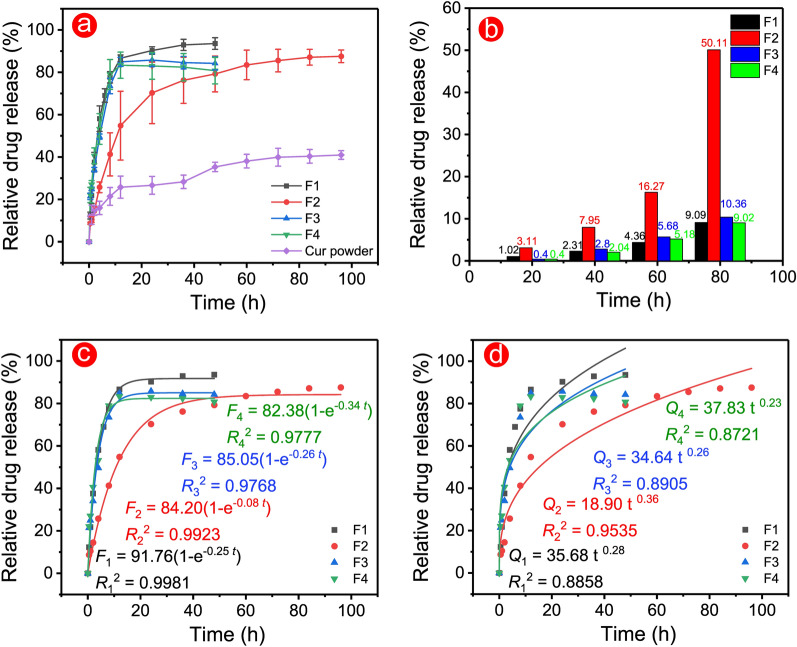
Scanning electron microscopy (SEM) results and transmission electron microscopy (TEM) demonstrated that the cylindrical F2-F4 fibres had a clear core-shell structure. The model drug Cur in fibres was verified in an amorphous form during the X-ray diffraction (XRD) patterns, and Fourier transformed infrared spectroscopy (FTIR) results indicated good compatibility with the CA matrix. The water contact angle test showed that functional F2-F4 fibres had a high hydrophilic property in 120 s and the control sample F1 needed over 0.5 h to obtain hydrophilic property. In the initial stage of moisture intrusion into fibres, the quickly dissolved PEG component guided the water molecules and rapidly eroded the internal structure of functional fibres. The good hydrophilicity of F2-F4 fibres brought relatively excellent swelling rate around 4600%. Blank outer layer of functional F2 fibres with 1% PEG created an exciting opportunity for providing a 96 h sustained-release drug profile, while F3 and F4 fibres with over 3% PEG provided a 12 h modified drug release profile to eliminate tailing-off effect.
Here, the functional F2-F4 fibres had been successfully produced by using the advanced modified triaxial electrospinning nanotechnology with different polymer matrices. The simple strategy in this work has remarkable potential to manipulate hydrophilicity and sustained release of drug carriers, meantime it can also enrich the preparation approaches of functional nanomaterials.
纳米结构和材料的多样化组合引起了研究人员的广泛关注,以开发先进的功能材料。在药物传递系统中,亲水性和药物持续释放性能是相互矛盾的。因此,同时提高药物持续释放性能和增加材料亲水性仍然存在困难。
在这项工作中,我们提出了一种改进的三轴静电纺丝策略来制备功能性核壳纤维,可以精心设计壳层成分来控制药物的持续释放。醋酸纤维素(CA)被设计为主要的聚合物基质,而聚乙二醇(PEG)被添加到中间层作为亲水性材料。姜黄素(Cur)作为模型药物储存在内层。
扫描电子显微镜(SEM)和透射电子显微镜(TEM)结果表明,圆柱形 F2-F4 纤维具有明显的核壳结构。X 射线衍射(XRD)图谱验证了纤维中的模型药物 Cur 呈无定形形式,傅里叶变换红外光谱(FTIR)结果表明与 CA 基质具有良好的相容性。水接触角测试表明,功能性 F2-F4 纤维在 120 秒内具有高亲水性,而对照样品 F1 需要超过 0.5 小时才能获得亲水性。在水分侵入纤维的初始阶段,快速溶解的 PEG 成分引导水分子并迅速侵蚀功能纤维的内部结构。F2-F4 纤维的良好亲水性带来了相对出色的溶胀率约为 4600%。具有 1%PEG 的功能性 F2 纤维的空白外层为提供 96 小时持续释放药物的特性创造了令人兴奋的机会,而具有超过 3%PEG 的 F3 和 F4 纤维则提供了 12 小时的改良药物释放特性,以消除拖尾效应。
本研究使用先进的改进三轴静电纺丝纳米技术和不同的聚合物基质成功制备了功能性 F2-F4 纤维。本工作中的简单策略具有显著的潜力来控制药物载体的亲水性和持续释放,同时还可以丰富功能性纳米材料的制备方法。