Huang Chengcheng, Pouget Alexandre, Doiron Brent
Department of Neuroscience, University of Pittsburgh, Pittsburgh, PA, USA.
Department of Mathematics, University of Pittsburgh, Pittsburgh, PA, USA.
Sci Adv. 2022 Jun 3;8(22):eabg5244. doi: 10.1126/sciadv.abg5244. Epub 2022 Jun 1.
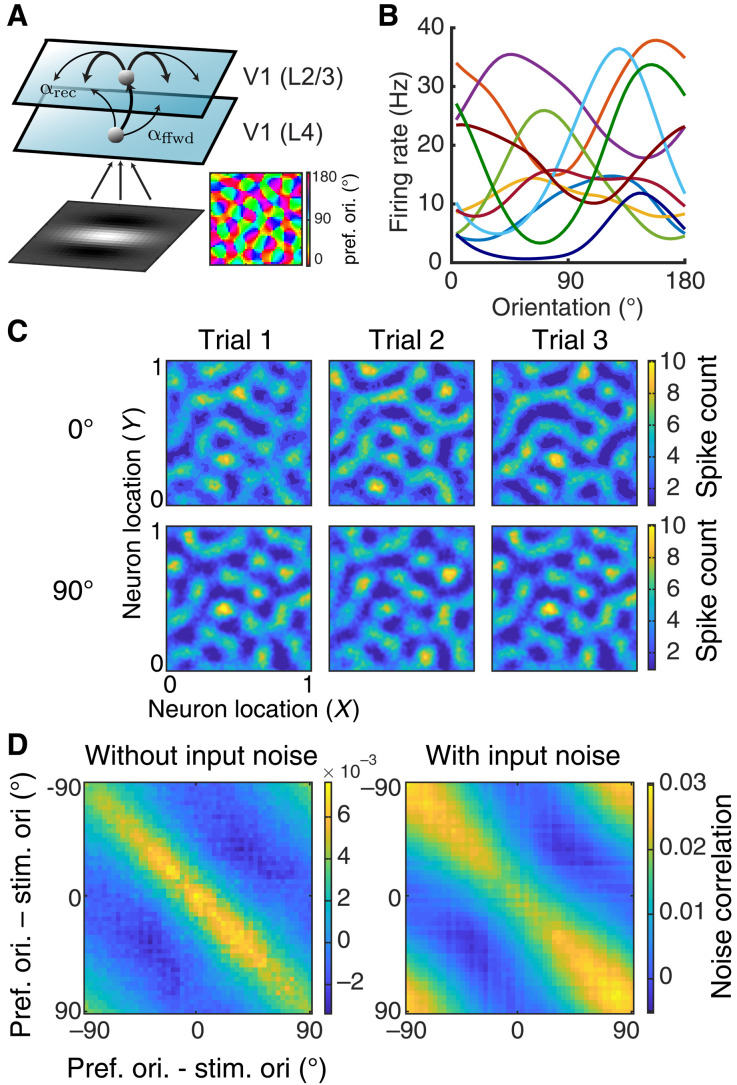
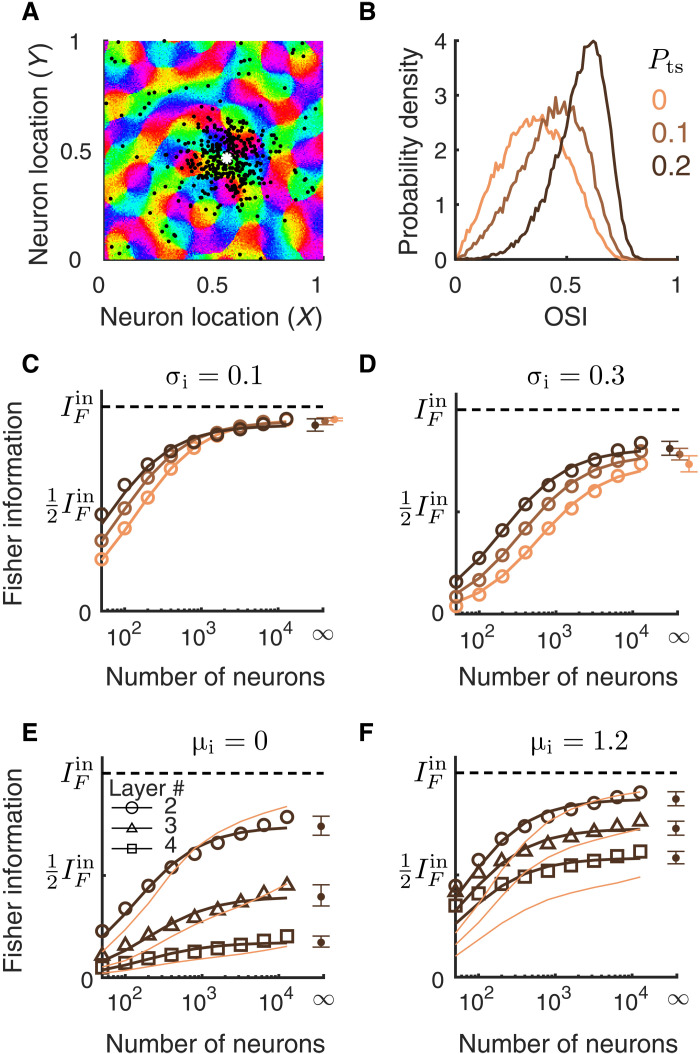
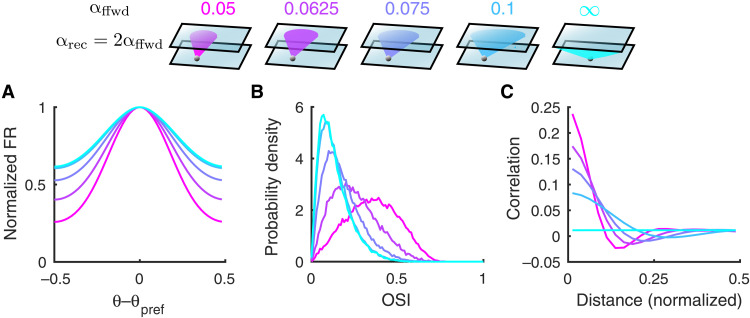
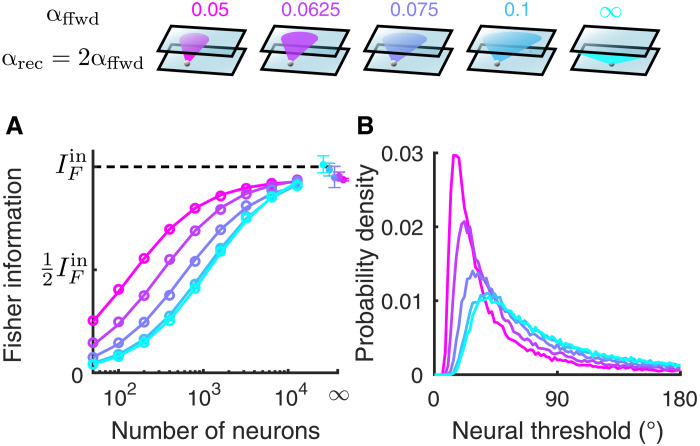
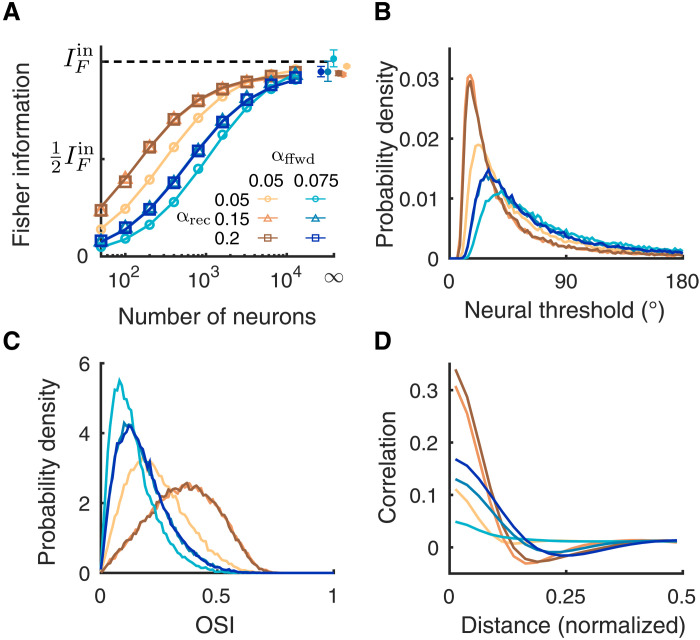
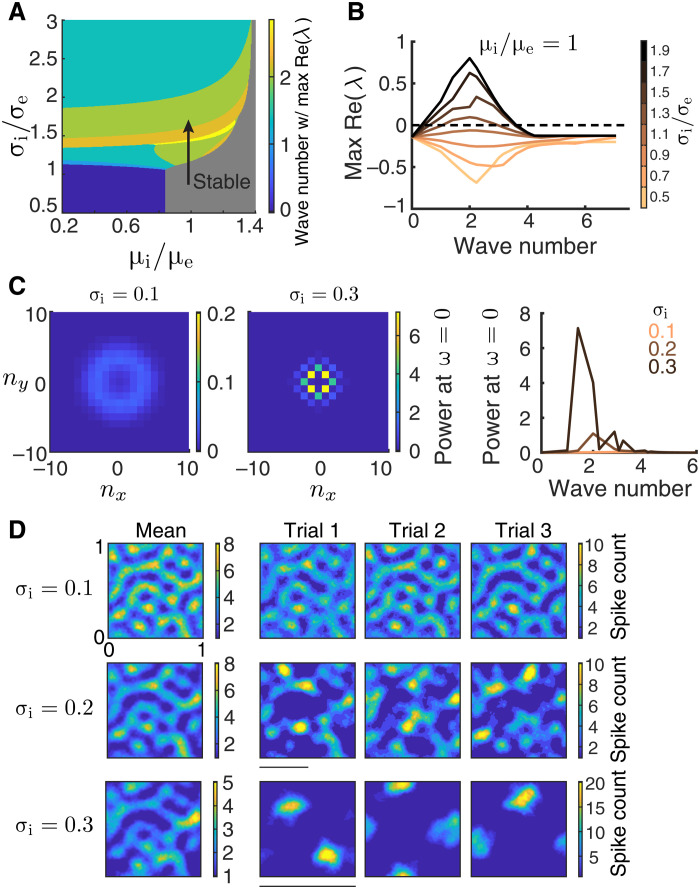
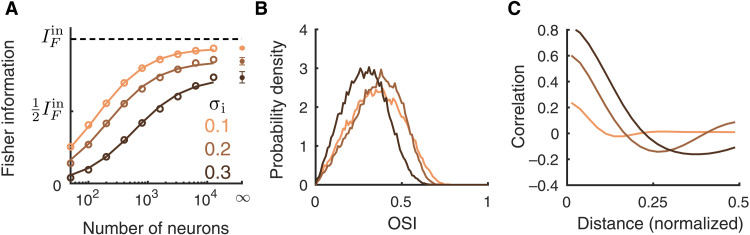
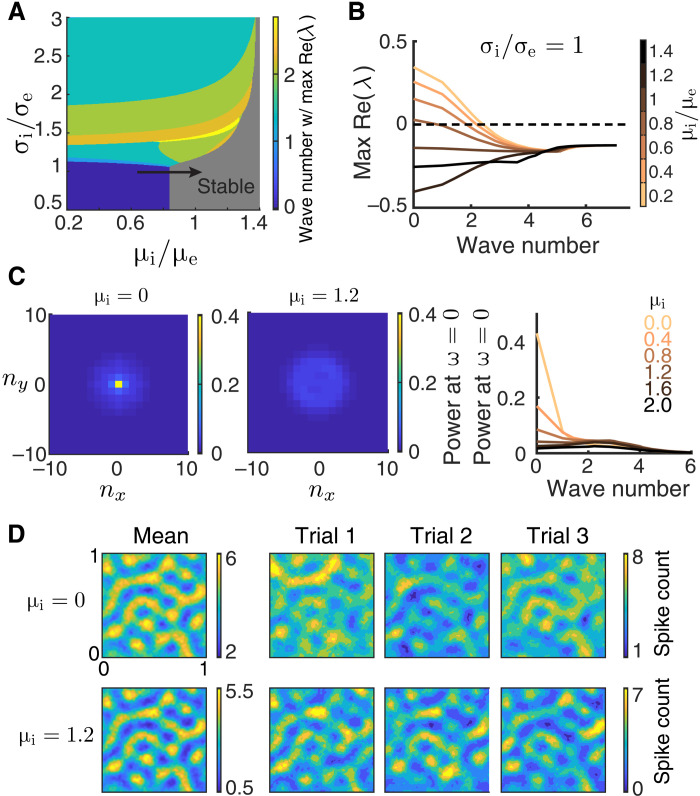
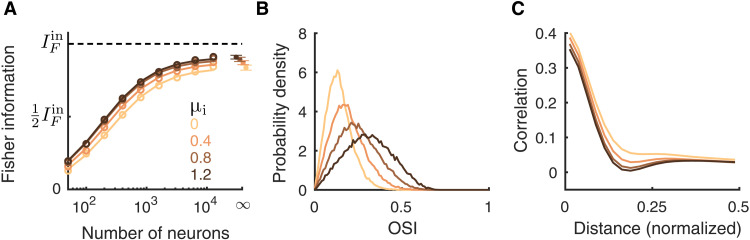
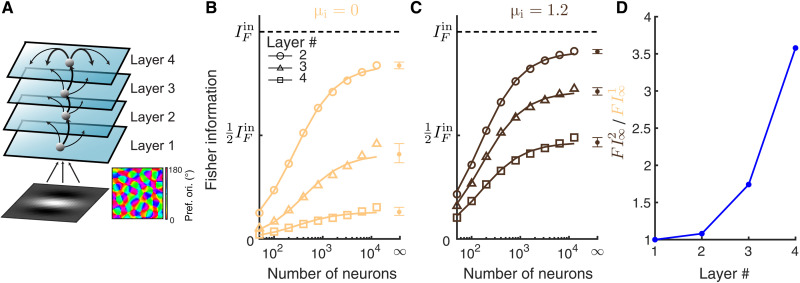
How neuronal variability affects sensory coding is a central question in systems neuroscience, often with complex and model-dependent answers. Many studies explore population models with a parametric structure for response tuning and variability, preventing an analysis of how synaptic circuitry establishes neural codes. We study stimulus coding in networks of spiking neuron models with spatially ordered excitatory and inhibitory connectivity. The wiring structure is capable of producing rich population-wide shared neuronal variability that agrees with many features of recorded cortical activity. While both the spatial scales of feedforward and recurrent projections strongly affect noise correlations, only recurrent projections, and in particular inhibitory projections, can introduce correlations that limit the stimulus information available to a decoder. Using a spatial neural field model, we relate the recurrent circuit conditions for information limiting noise correlations to how recurrent excitation and inhibition can form spatiotemporal patterns of population-wide activity.
神经元变异性如何影响感觉编码是系统神经科学中的一个核心问题,其答案往往复杂且依赖于模型。许多研究探索具有响应调谐和变异性参数结构的群体模型,这阻碍了对突触回路如何建立神经编码的分析。我们研究具有空间有序兴奋性和抑制性连接的脉冲神经元模型网络中的刺激编码。这种布线结构能够产生丰富的全群体共享神经元变异性,这与记录的皮层活动的许多特征一致。虽然前馈和反馈投射的空间尺度都强烈影响噪声相关性,但只有反馈投射,特别是抑制性投射,才能引入限制解码器可用刺激信息的相关性。使用空间神经场模型,我们将信息限制噪声相关性的反馈回路条件与反馈兴奋和抑制如何形成全群体活动的时空模式联系起来。