Department of Clinical Laboratory Sciences, College of Applied Medical Sciences, University of Hafr Al Batin, Hafar al-Batin 31991, Saudi Arabia.
Molecules. 2022 May 31;27(11):3539. doi: 10.3390/molecules27113539.
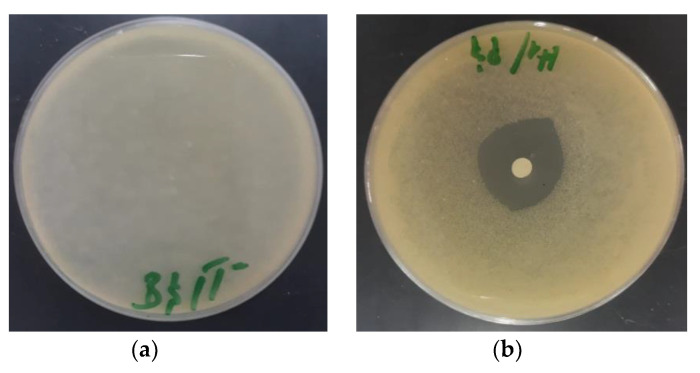
Recently, the antimicrobial potential of essential oils extracted from plants has gained extensive research interest, primarily for the development of novel antimicrobial treatments to combat emerging microbial resistance. The current study aims at investigating the antimicrobial activity and chemical composition of essential oil derived from gold coin daisy, which is known as (EOAG). In this context, a gas chromatography-tandem mass spectrometry (GC-MS) analysis of EOAG was conducted to identify its phytoconstituents. The in vitro antioxidant capacity of EOAG was determined by the use of three tests, namely: 1,1-diphenyl-2-picrylhydrzyl (DPPH), ferric reducing activity power (FRAP), and total antioxidant capacity (TAC). The antimicrobial activity of EOAG against clinically important bacterial (, K12; , ATCC 6633; , DSM 6333; and , CIP A22) and fungal (, ATCC 10231; , MTCC 282; , MTCC 9606; and MTCC 9913) strains was assessed. Antimicrobial efficacy was determined on solid (inhibition diameter) and liquid media to calculate the minimum inhibitory concentration (MIC). GC/MS profiling of EOAG revealed that 18 compounds were identified, with a dominance of α-Thujone (17.92%) followed by carvacrol (14.14%), with a total identification of about 99. 92%. The antioxidant activity of EOAG was determined to have IC values of 34.81 ± 1.12 µg/mL (DPPH), 89.37 ± 5.02 µg/mL (FRAP), and 1048.38 ± 10.23 µg EAA/mg (TAC). The antibacterial activity in a solid medium revealed that the largest diameter was recorded in (28.47 ± 1.44 mm) followed by (27.41 ± 1.54 mm), and the MIC in was 12.18 ± 0.98 µg / mL. For the antifungal activity of EOAG, the largest inhibition diameter was found in (33.62 ± 2.14 mm) followed by (26.41 ± 1.90 mm), and the smallest MIC was found in (18.29 ± 1.21 µg/mL) followed by (19.39 ± 1.0 µg/mL). In conclusion, EOAG can be useful as a natural antimicrobial and antioxidant agent and an alternative to synthetic antibiotics. Hence, they might be utilized to treat a variety of infectious disorders caused by pathogenic microorganisms, particularly those that have gained resistance to standard antibiotics.
最近,植物中提取的精油的抗菌潜力引起了广泛的研究兴趣,主要是为了开发新的抗菌疗法来对抗新兴的微生物耐药性。本研究旨在研究金盏花衍生精油(EOAG)的抗菌活性和化学成分。通过气相色谱-串联质谱(GC-MS)分析对 EOAG 进行分析,以鉴定其植物成分。通过使用三种测试方法(1,1-二苯基-2-苦基肼基(DPPH)、铁还原活性能力(FRAP)和总抗氧化能力(TAC))来测定 EOAG 的体外抗氧化能力。评估了 EOAG 对临床重要细菌(、K12;、ATCC 6633;、DSM 6333;和、CIP A22)和真菌(、ATCC 10231;、MTCC 282;、MTCC 9606;和、MTCC 9913)菌株的抗菌活性。在固体(抑制直径)和液体培养基上测定抗菌功效,以计算最小抑菌浓度(MIC)。EOAG 的 GC/MS 分析表明,鉴定出 18 种化合物,其中 α-侧柏酮(17.92%)为主,香芹酚(14.14%)次之,总鉴定率约为 99.92%。EOAG 的抗氧化活性测定结果表明,其 IC 值分别为 34.81±1.12μg/mL(DPPH)、89.37±5.02μg/mL(FRAP)和 1048.38±10.23μg EAA/mg(TAC)。在固体培养基中的抗菌活性表明,记录到最大直径为 (28.47±1.44mm),其次是 (27.41±1.54mm),MIC 在 中为 12.18±0.98μg / mL。对于 EOAG 的抗真菌活性,最大抑制直径出现在 (33.62±2.14mm),其次是 (26.41±1.90mm),MIC 最小的是 (18.29±1.21μg/mL),其次是 (19.39±1.0μg/mL)。总之,EOAG 可用作天然抗菌和抗氧化剂,替代合成抗生素。因此,它们可用于治疗由致病微生物引起的多种感染性疾病,特别是对标准抗生素产生耐药性的那些疾病。