Feng Peng, Sun Xiaohuan, Liu Xiaodong, Li Yuqiu, Sun Qi, Lu Haoran, Li Minglong, Ding Xiaodong, Dong Yingshan
Key Laboratory of Agricultural Biological Functional Genes, College of Life Science, Northeast Agricultural University, Harbin, China.
College of Life Science, Leshan Normal University, Leshan, China.
Front Plant Sci. 2022 May 25;13:860056. doi: 10.3389/fpls.2022.860056. eCollection 2022.
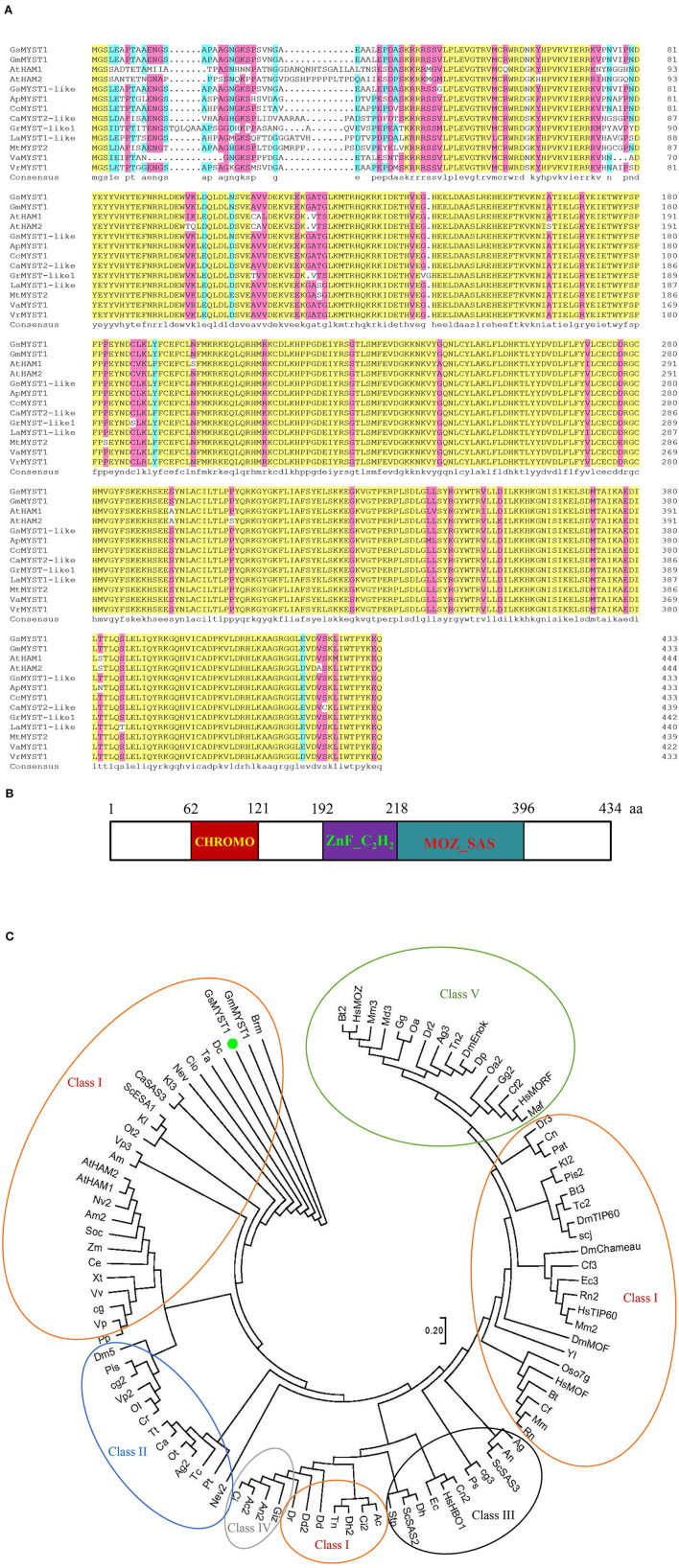
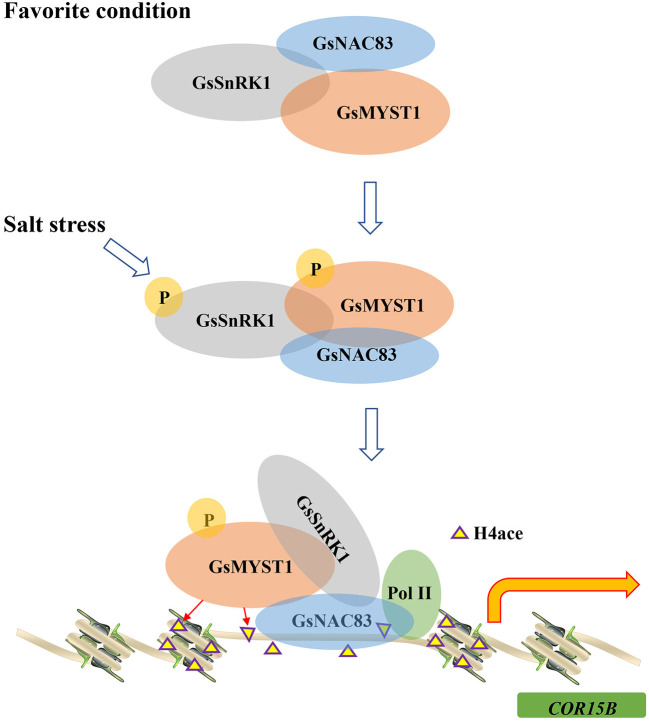
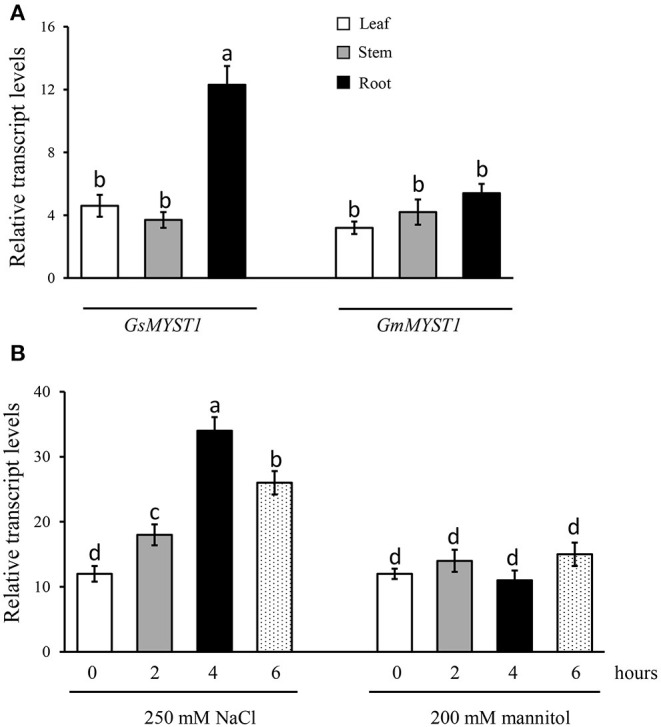
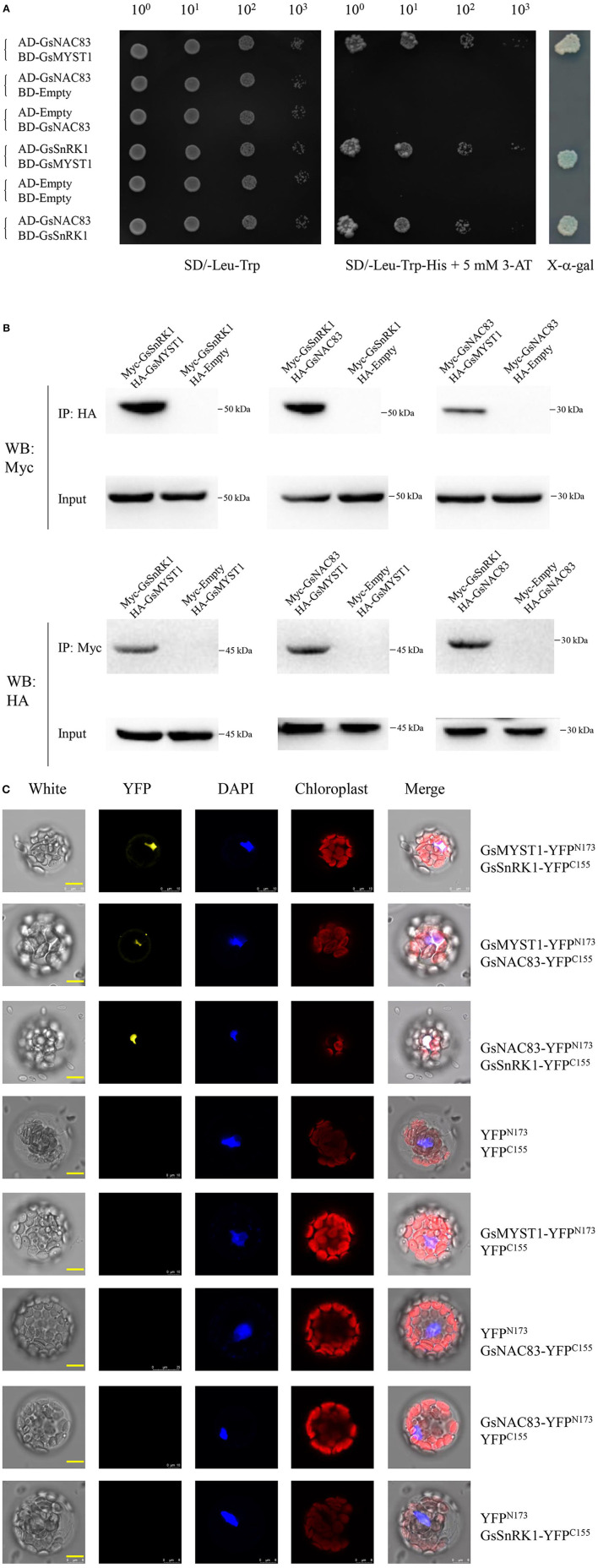
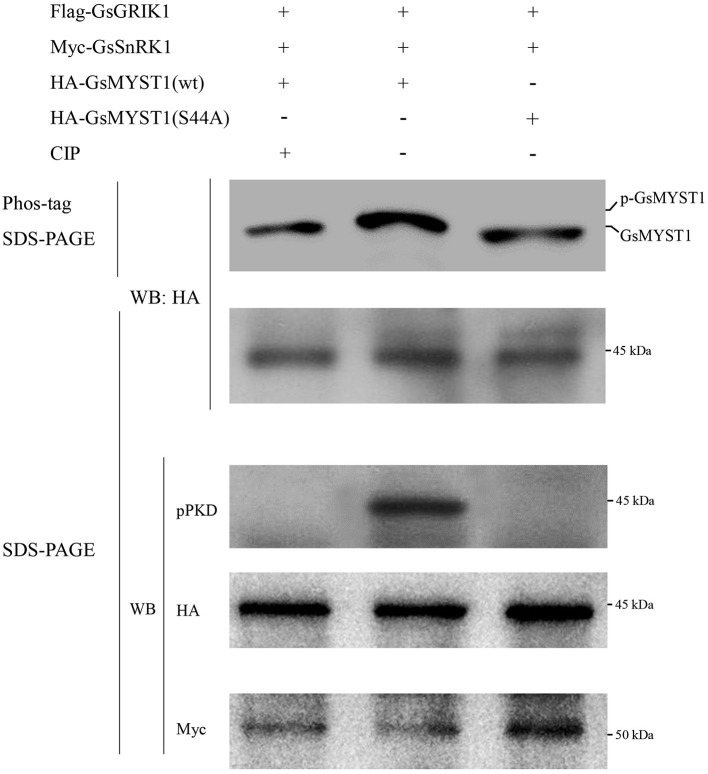
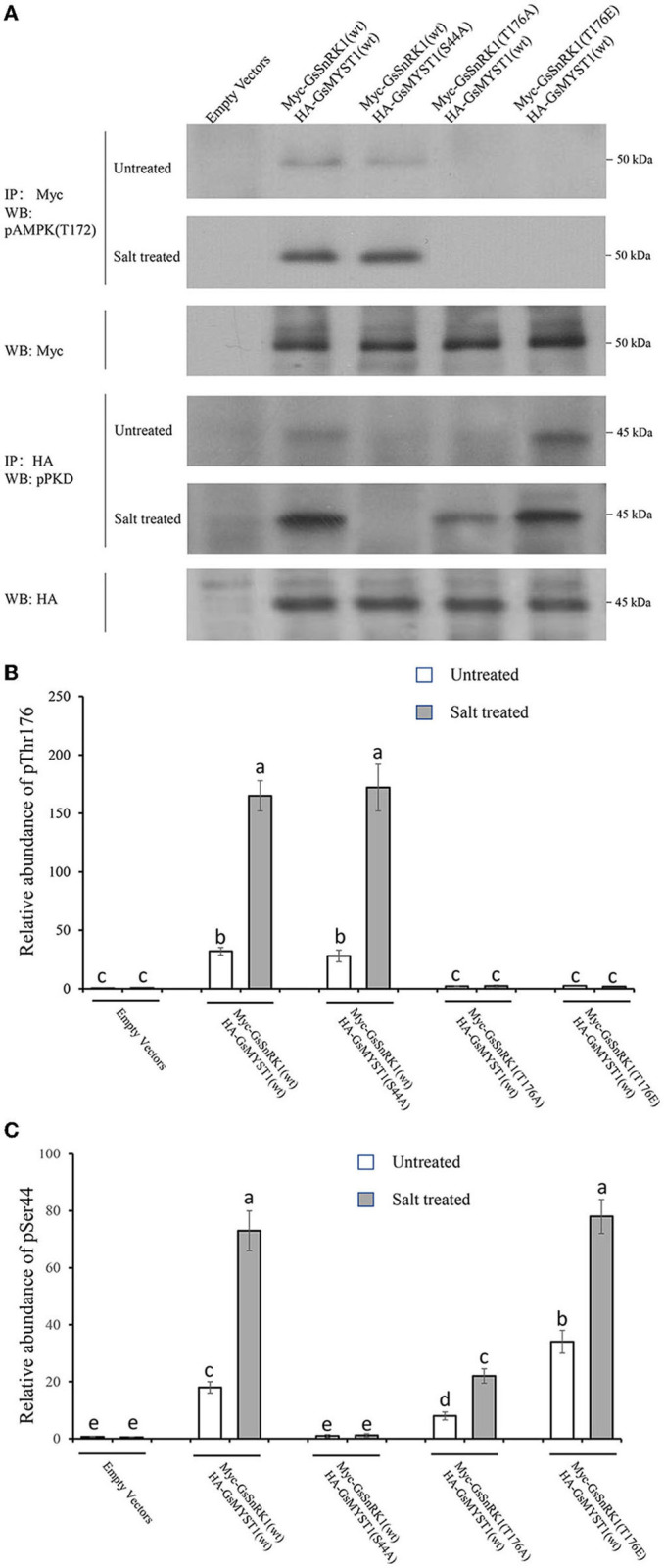
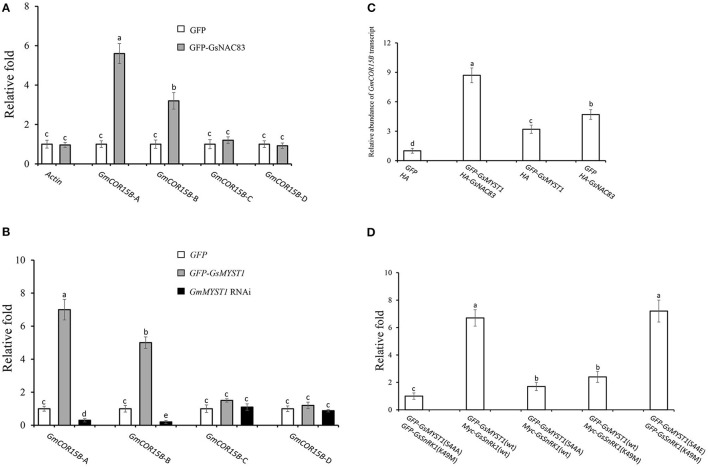
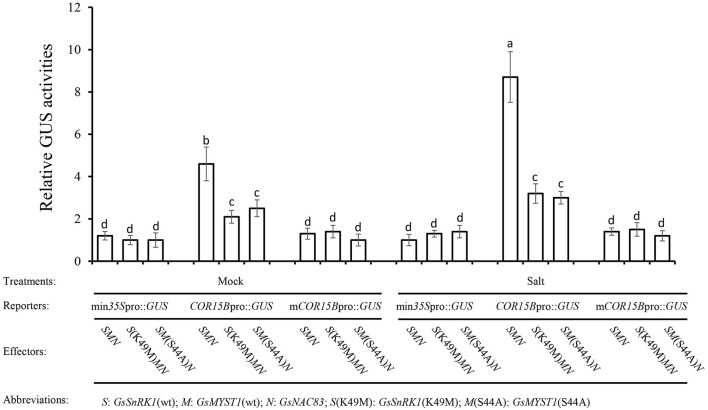
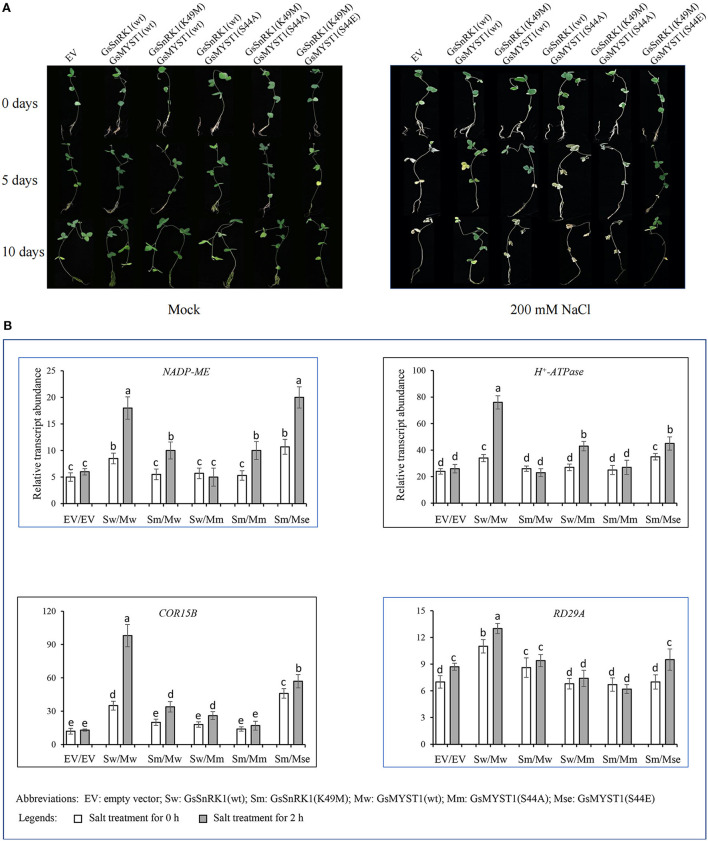
Salt stress is one of the most devastating environmental factors threatening soybean growth and yield. However, the molecular link between salt stress and epigenetics has not been well-elucidated in soybean. In this study, from the wild soybean cDNA library, we isolated a GsSnRK1 kinase interacting protein (GsMSTY1) which is phylogenetically homologous with histone acetyltransferase MYST family with unknown function. gene is dominantly expressed in wild soybean roots and is highly responsive to abiotic stresses. GsMYST1 was able to be phosphorylated at the Ser44 site by GsSnRK1 and demonstrated acetyltransferase activity in transgenic soybean roots revealed by an anti-H4ace antibody. A transcription factor protein GsNAC83 was identified to interact with both GsMYST1 and GsSnRK1, and GsNAC83 could recruit the GsMYST1-GsSnRK1 module to gene promoter determined by ChIP-qPCR assay. To dissect the molecular functions of this ternary complex, we treated the transgenic soybean roots with salt stress and found that the stress could activate GsSnRK1, and the activated GsSnRK1 subsequently phosphorylated GsMYST1 to enhance its acetyltransferase activity which may epigenetically promote the target gene expression. To explore the physiological functions, we coexpressed and genes in soybean hairy roots and found that only (wt)/(wt) but not the mutant genes could promote soybean resistance to salt stress, implicating that phosphorylation of GsMYST1 is required for it to acetylate histone H4 on the target genes to upregulate expression of the stress-related genes. Our data shed new light on the functions of the GsSnRK1-GsMYST1-GsNAC83 module and its regulatory mechanism on plant tolerance to abiotic stresses.
盐胁迫是威胁大豆生长和产量的最具破坏性的环境因素之一。然而,盐胁迫与表观遗传学之间的分子联系在大豆中尚未得到充分阐明。在本研究中,我们从野生大豆cDNA文库中分离出一种GsSnRK1激酶相互作用蛋白(GsMSTY1),它在系统发育上与功能未知的组蛋白乙酰转移酶MYST家族同源。该基因在野生大豆根中优势表达,并且对非生物胁迫高度响应。GsMYST1能够在Ser44位点被GsSnRK1磷酸化,并通过抗H4ace抗体在转基因大豆根中显示出乙酰转移酶活性。鉴定出一种转录因子蛋白GsNAC83与GsMYST1和GsSnRK1都相互作用,并且通过ChIP-qPCR分析确定GsNAC83可以将GsMYST1-GsSnRK1模块募集到基因启动子上。为了剖析这种三元复合物的分子功能,我们用盐胁迫处理转基因大豆根,发现胁迫可以激活GsSnRK1,激活的GsSnRK1随后磷酸化GsMYST1以增强其乙酰转移酶活性,这可能在表观遗传上促进靶基因表达。为了探索其生理功能,我们在大豆毛状根中共表达和基因,发现只有(野生型)/(野生型)而不是突变基因能够促进大豆对盐胁迫的抗性,这意味着GsMYST1的磷酸化是其在靶基因上乙酰化组蛋白H4以上调胁迫相关基因表达所必需的。我们的数据为GsSnRK1-GsMYST1-GsNAC83模块的功能及其对植物非生物胁迫耐受性的调控机制提供了新的线索。