• 文献检索
  • 文档翻译
  • 深度研究
  • 学术资讯
  • Suppr Zotero 插件Zotero 插件
  • 邀请有礼
  • 套餐&价格
  • 历史记录
应用&插件
Suppr Zotero 插件Zotero 插件浏览器插件Mac 客户端Windows 客户端微信小程序
定价
高级版会员购买积分包购买API积分包
服务
文献检索文档翻译深度研究API 文档MCP 服务
关于我们
关于 Suppr公司介绍联系我们用户协议隐私条款
关注我们

Suppr 超能文献

核心技术专利:CN118964589B侵权必究
粤ICP备2023148730 号-1Suppr @ 2026

文献检索

告别复杂PubMed语法,用中文像聊天一样搜索,搜遍4000万医学文献。AI智能推荐,让科研检索更轻松。

立即免费搜索

文件翻译

保留排版,准确专业,支持PDF/Word/PPT等文件格式,支持 12+语言互译。

免费翻译文档

深度研究

AI帮你快速写综述,25分钟生成高质量综述,智能提取关键信息,辅助科研写作。

立即免费体验

在瑞典实施“温和型”疫情限制措施期间,前往附近的自然环境有助于提升幸福感。

Visiting nearby natural settings supported wellbeing during Sweden's "soft-touch" pandemic restrictions.

作者信息

Samuelsson Karl, Barthel Stephan, Giusti Matteo, Hartig Terry

机构信息

Department of Computer and Geospatial Sciences, University of Gävle, Kungsbäcksvägen 47, 801 76 Gävle, Sweden.

Department of Building Engineering, Energy Systems and Sustainability Science, University of Gävle, Gävle, Sweden.

出版信息

Landsc Urban Plan. 2021 Oct;214:104176. doi: 10.1016/j.landurbplan.2021.104176. Epub 2021 Jul 2.

DOI:10.1016/j.landurbplan.2021.104176
PMID:35719409
原文链接:https://pmc.ncbi.nlm.nih.gov/articles/PMC9188842/
Abstract

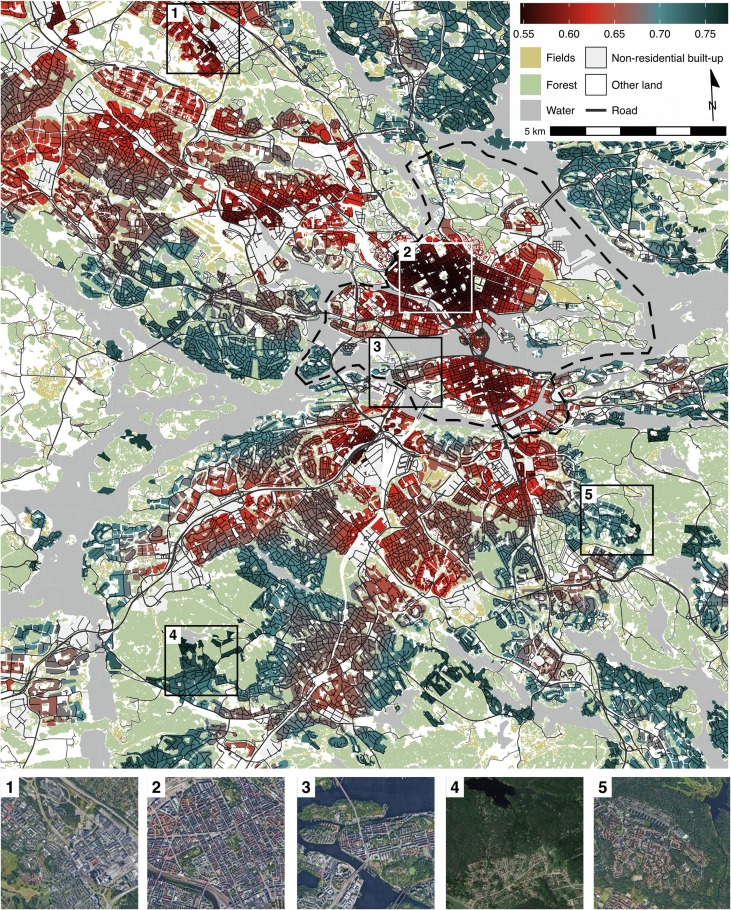
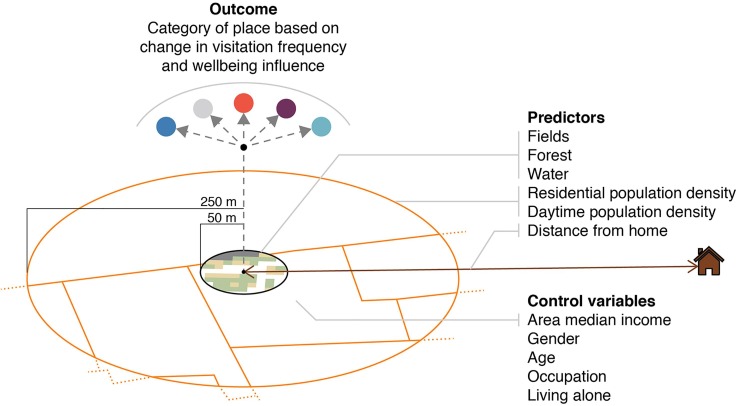
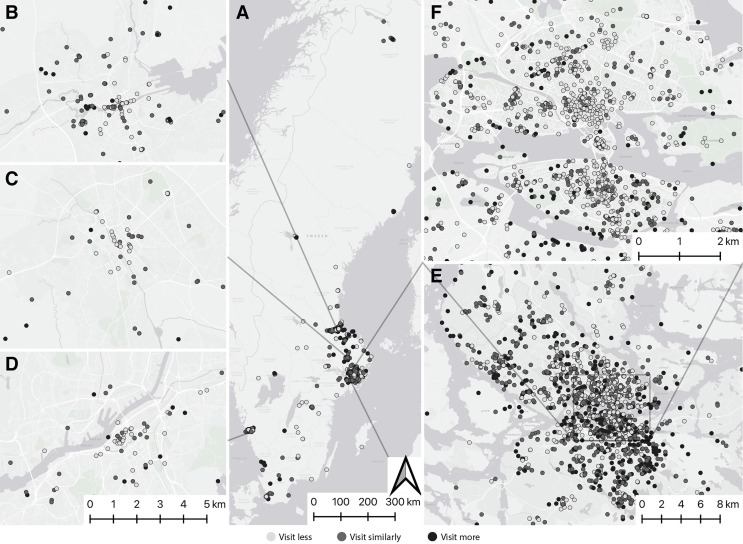
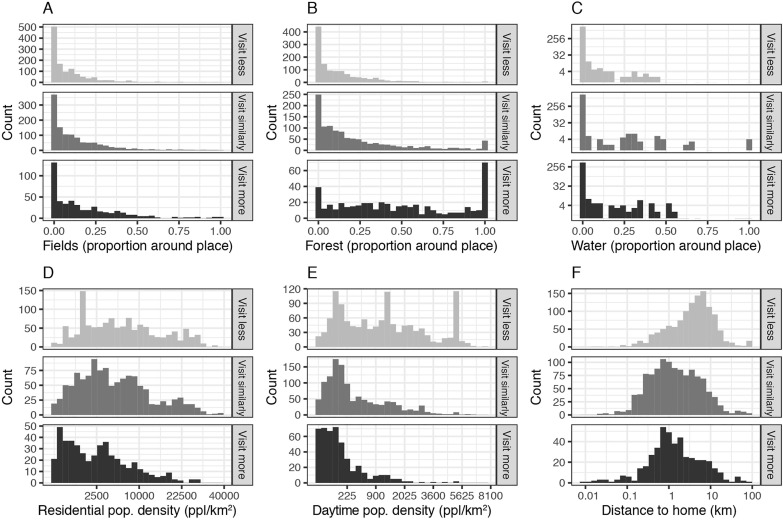
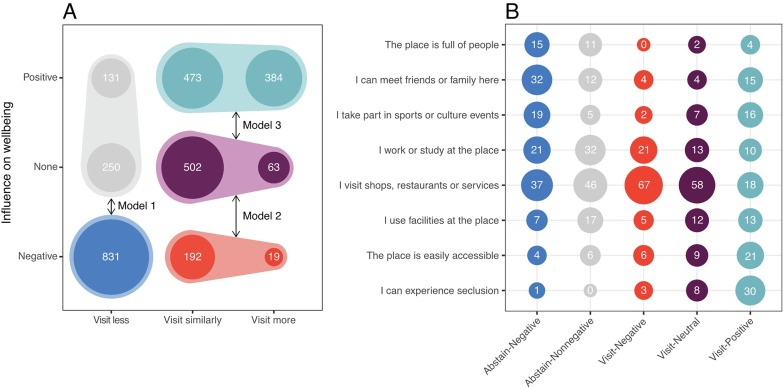
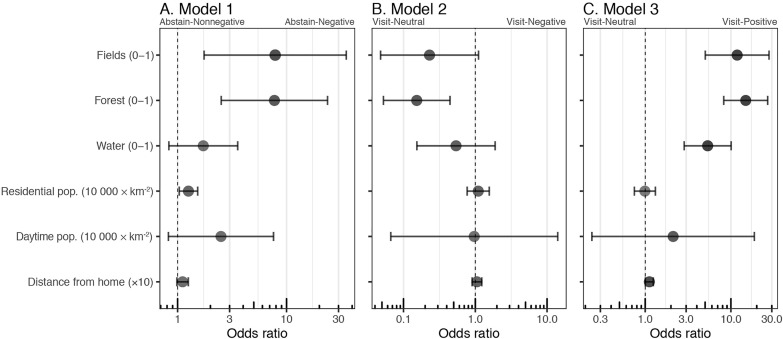
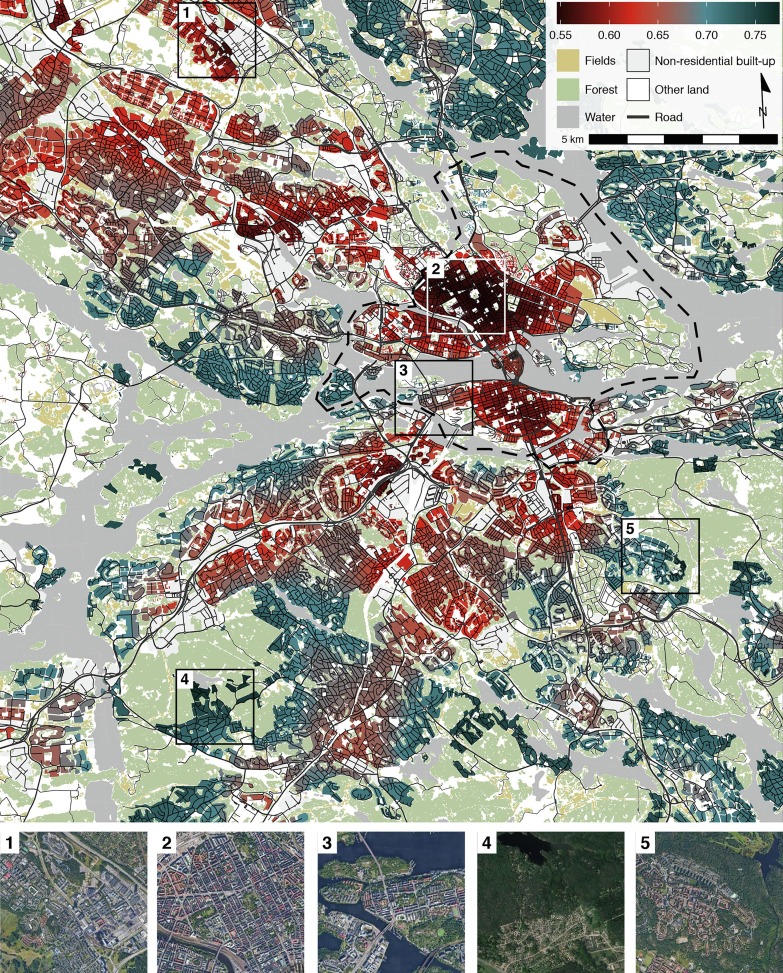
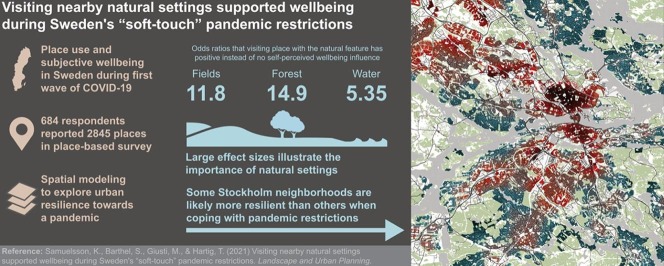
The coronavirus pandemic entailed varying restrictions on access, movement and social behavior in populations around the world. Knowledge about how people coped with "soft-touch" restrictions can inform urban spatial planning strategies that enhance resilience against future pandemics. We analyzed data from an online place-based survey on 2845 places across Sweden that respondents abstained from visiting, visited with similar frequency, or visited more frequently in spring 2020 as compared to before the pandemic. In spatial logistic regression models, we relate geographical and sociodemographic properties of places (fields, forests, water, residential population density and daytime population density) to self-perceived changes in wellbeing from visiting the given place less or more often, respectively. Abstaining from visiting places with natural features located in areas of high residential density was associated with a self-perceived negative influence on wellbeing. Yet, fields, forests and water were strongly associated with places people claimed wellbeing benefits from during pandemic restrictions. The further a visited place was from the respondent's home, the more likely it was to have a positive wellbeing influence. As an illustrative case, we map our models onto the landscape of Stockholm, showing that some neighborhoods are likely more resilient than others when coping with pandemic restrictions. Both the most and least resilient neighborhoods span the socio-economic spectrum. Urban planning will do well to enable equitable, easy access to natural settings by foot or bike, to increase pandemic preparedness as well as support climate change mitigation and biodiversity protection.

摘要

新冠疫情在全球范围内对人们的出行、活动和社交行为施加了不同程度的限制。了解人们如何应对这些“温和的”限制措施,有助于为城市空间规划策略提供参考,以增强应对未来疫情的韧性。我们分析了一项基于地点的在线调查数据,该调查涵盖了瑞典的2845个地点,受访者报告了他们在2020年春季与疫情前相比不再前往、前往频率不变或前往频率增加的地点。在空间逻辑回归模型中,我们将地点的地理和社会人口特征(农田、森林、水域、居住人口密度和白天人口密度)分别与因前往特定地点的频率降低或增加而自我感知到的幸福感变化联系起来。不再前往高居住密度地区的自然景观地点与自我感知的幸福感负面影响相关。然而,农田、森林和水域与人们在疫情限制期间声称从中受益的地点密切相关。被访问地点距离受访者的家越远,其对幸福感产生积极影响的可能性就越大。作为一个示例,我们将模型映射到斯德哥尔摩的景观上,结果表明在应对疫情限制时,一些社区可能比其他社区更具韧性。最具韧性和最缺乏韧性的社区都跨越了社会经济范围。城市规划应确保人们能够公平、便捷地步行或骑自行车前往自然环境,以提高应对疫情的准备能力,并支持缓解气候变化和保护生物多样性。
https://cdn.ncbi.nlm.nih.gov/pmc/blobs/0d8d/9188842/63d9882c9183/fx1_lrg.jpg
https://cdn.ncbi.nlm.nih.gov/pmc/blobs/0d8d/9188842/00d2a71bf037/ga1_lrg.jpg
https://cdn.ncbi.nlm.nih.gov/pmc/blobs/0d8d/9188842/777d0339d80e/gr1_lrg.jpg
https://cdn.ncbi.nlm.nih.gov/pmc/blobs/0d8d/9188842/60fbdaf4ef6a/gr2_lrg.jpg
https://cdn.ncbi.nlm.nih.gov/pmc/blobs/0d8d/9188842/e3be975960b4/gr3_lrg.jpg
https://cdn.ncbi.nlm.nih.gov/pmc/blobs/0d8d/9188842/4b79e9f926e4/gr4_lrg.jpg
https://cdn.ncbi.nlm.nih.gov/pmc/blobs/0d8d/9188842/4b6d8eb8eb13/gr5_lrg.jpg
https://cdn.ncbi.nlm.nih.gov/pmc/blobs/0d8d/9188842/291ec71dffde/gr6_lrg.jpg
https://cdn.ncbi.nlm.nih.gov/pmc/blobs/0d8d/9188842/63d9882c9183/fx1_lrg.jpg
https://cdn.ncbi.nlm.nih.gov/pmc/blobs/0d8d/9188842/00d2a71bf037/ga1_lrg.jpg
https://cdn.ncbi.nlm.nih.gov/pmc/blobs/0d8d/9188842/777d0339d80e/gr1_lrg.jpg
https://cdn.ncbi.nlm.nih.gov/pmc/blobs/0d8d/9188842/60fbdaf4ef6a/gr2_lrg.jpg
https://cdn.ncbi.nlm.nih.gov/pmc/blobs/0d8d/9188842/e3be975960b4/gr3_lrg.jpg
https://cdn.ncbi.nlm.nih.gov/pmc/blobs/0d8d/9188842/4b79e9f926e4/gr4_lrg.jpg
https://cdn.ncbi.nlm.nih.gov/pmc/blobs/0d8d/9188842/4b6d8eb8eb13/gr5_lrg.jpg
https://cdn.ncbi.nlm.nih.gov/pmc/blobs/0d8d/9188842/291ec71dffde/gr6_lrg.jpg
https://cdn.ncbi.nlm.nih.gov/pmc/blobs/0d8d/9188842/63d9882c9183/fx1_lrg.jpg

相似文献

1
Visiting nearby natural settings supported wellbeing during Sweden's "soft-touch" pandemic restrictions.在瑞典实施“温和型”疫情限制措施期间,前往附近的自然环境有助于提升幸福感。
Landsc Urban Plan. 2021 Oct;214:104176. doi: 10.1016/j.landurbplan.2021.104176. Epub 2021 Jul 2.
2
Nature's Role in Supporting Health during the COVID-19 Pandemic: A Geospatial and Socioecological Study.自然在支持 COVID-19 大流行期间健康方面的作用:一项地理空间和社会生态研究。
Int J Environ Res Public Health. 2021 Feb 24;18(5):2227. doi: 10.3390/ijerph18052227.
3
The importance of urban natural areas and urban ecosystem services during the COVID-19 pandemic.城市自然区域和城市生态系统服务在 COVID-19 大流行期间的重要性。
PLoS One. 2020 Dec 17;15(12):e0243344. doi: 10.1371/journal.pone.0243344. eCollection 2020.
4
Resilient urban form to pandemics: Lessons from COVID-19.应对大流行病的韧性城市形态:来自新冠疫情的教训
Med J Islam Repub Iran. 2020 Jun 30;34:71. doi: 10.34171/mjiri.34.71. eCollection 2020.
5
Outdoor recreation and nature's contribution to well-being in a pandemic situation - Case Turku, Finland.大流行情况下户外休闲与自然对福祉的贡献——芬兰图尔库案例
Urban For Urban Green. 2021 Sep;64:127257. doi: 10.1016/j.ufug.2021.127257. Epub 2021 Jul 19.
6
Change in time spent visiting and experiences of green space following restrictions on movement during the COVID-19 pandemic: a nationally representative cross-sectional study of UK adults.新冠疫情期间出行限制对英国成年人探访绿地时间和体验变化的影响:一项全国代表性的横断面研究。
BMJ Open. 2021 Mar 8;11(3):e044067. doi: 10.1136/bmjopen-2020-044067.
7
Consequences of visiting restrictions during the COVID-19 pandemic: An integrative review.疫情期间探视限制的后果:综合述评。
Int J Nurs Stud. 2021 Sep;121:104000. doi: 10.1016/j.ijnurstu.2021.104000. Epub 2021 Jun 12.
8
Working With Refugees' Health During COVID-19-The Experience of Health- and Social Care Workers in Sweden.在 COVID-19 期间关注难民健康——瑞典卫生和社会保健工作者的经验。
Front Public Health. 2022 May 19;10:811974. doi: 10.3389/fpubh.2022.811974. eCollection 2022.
9
Anxiety and loneliness among older people living in residential care facilities or receiving home care services in Sweden during the COVID-19 pandemic: a national cross-sectional study.在 COVID-19 大流行期间,瑞典居住在养老院或接受家庭护理服务的老年人的焦虑和孤独感:一项全国性横断面研究。
BMC Geriatr. 2022 Dec 1;22(1):927. doi: 10.1186/s12877-022-03544-z.
10
Evaluating Perspectives of Relatives of Nursing Home Residents on the Nursing Home Visiting Restrictions During the COVID-19 Crisis: A Dutch Cross-Sectional Survey Study.评估新冠疫情期间养老院居民亲属对养老院探视限制的看法:一项荷兰横断面调查研究。
J Am Med Dir Assoc. 2020 Dec;21(12):1746-1750.e3. doi: 10.1016/j.jamda.2020.09.031. Epub 2020 Sep 30.

引用本文的文献

1
Analysis of pandemic outdoor recreation and green infrastructure in Nordic cities to enhance urban resilience.北欧城市大流行期间户外休闲与绿色基础设施分析以增强城市韧性
NPJ Urban Sustain. 2022;2(1):25. doi: 10.1038/s42949-022-00068-8. Epub 2022 Oct 3.
2
Characteristics of urban park recreation and health during early COVID-19 by on-site survey in Beijing.新冠疫情早期北京城市公园游憩与健康特征的实地调查
NPJ Urban Sustain. 2023;3(1):31. doi: 10.1038/s42949-023-00110-3. Epub 2023 Jun 6.
3
Natural environments, psychosocial health, and health behaviors in a crisis - A scoping review of the literature in the COVID-19 context.

本文引用的文献

1
Associations between COVID-19 transmission rates, park use, and landscape structure.新冠病毒传播率、公园使用与景观结构的关联
Sci Total Environ. 2021 Oct 1;789:148123. doi: 10.1016/j.scitotenv.2021.148123. Epub 2021 Jun 2.
2
How COVID-19 and the Dutch 'intelligent lockdown' change activities, work and travel behaviour: Evidence from longitudinal data in the Netherlands.新冠疫情与荷兰“智能封锁”如何改变活动、工作和出行行为:来自荷兰纵向数据的证据
Transp Res Interdiscip Perspect. 2020 Jul;6:100150. doi: 10.1016/j.trip.2020.100150. Epub 2020 Jun 10.
3
More green, less lonely? A longitudinal cohort study.
危机中的自然环境、心理社会健康与健康行为——COVID-19背景下的文献综述
J Environ Psychol. 2023 Jun;88:102009. doi: 10.1016/j.jenvp.2023.102009. Epub 2023 Apr 9.
4
Exploring how worthwhile the things that you do in life are during COVID-19 and links to well-being and working from home.探索在新冠疫情期间你在生活中所做之事的价值,以及这些与幸福感和居家工作的联系。
Transp Res Part A Policy Pract. 2023 Feb;168:103579. doi: 10.1016/j.tra.2022.103579. Epub 2023 Jan 4.
5
Swedish High School Students' Drug and Alcohol Use Habits throughout 2020.瑞典高中生 2020 年全年的毒品和酒精使用习惯。
Int J Environ Res Public Health. 2022 Dec 16;19(24):16928. doi: 10.3390/ijerph192416928.
6
Urban park use and self-reported physical, mental, and social health during the COVID-19 pandemic: An on-site survey in Beijing, China.新冠疫情期间城市公园的使用情况与自我报告的身体、心理和社会健康状况:中国北京的一项实地调查
Urban For Urban Green. 2023 Jan;79:127804. doi: 10.1016/j.ufug.2022.127804. Epub 2022 Nov 25.
7
Are All Urban Parks Robust to the COVID-19 Pandemic? Focusing on Type, Functionality, and Accessibility.所有城市公园都能抵御新冠疫情吗?关注类型、功能和可达性。
Int J Environ Res Public Health. 2022 May 16;19(10):6062. doi: 10.3390/ijerph19106062.
8
Urban parks as a potential mitigator of suicide rates resulting from global pandemics: Empirical evidence from past experiences in Seoul, Korea.城市公园作为全球大流行导致的自杀率的潜在缓解因素:来自韩国首尔过去经验的实证证据。
Cities. 2022 Aug;127:103725. doi: 10.1016/j.cities.2022.103725. Epub 2022 May 4.
9
Park access and mental health among parents and children during the COVID-19 pandemic.公园使用与新冠疫情期间家长和儿童的心理健康。
BMC Public Health. 2022 Apr 21;22(1):800. doi: 10.1186/s12889-022-13148-2.
更多绿色,更少孤独?一项纵向队列研究。
Int J Epidemiol. 2022 Feb 18;51(1):99-110. doi: 10.1093/ije/dyab089.
4
A global panel database of pandemic policies (Oxford COVID-19 Government Response Tracker).一个全球性的大流行病政策面板数据库(牛津 COVID-19 政府应对追踪器)。
Nat Hum Behav. 2021 Apr;5(4):529-538. doi: 10.1038/s41562-021-01079-8. Epub 2021 Mar 8.
5
Pathways linking biodiversity to human health: A conceptual framework.生物多样性与人类健康关联的途径:概念框架。
Environ Int. 2021 May;150:106420. doi: 10.1016/j.envint.2021.106420. Epub 2021 Feb 6.
6
Emotional Well-Being Under Conditions of Lockdown: An Experience Sampling Study in Austria During the COVID-19 Pandemic.封锁状态下的情绪健康:新冠疫情期间奥地利的一项经验取样研究
J Happiness Stud. 2021;22(6):2703-2720. doi: 10.1007/s10902-020-00337-2. Epub 2021 Jan 2.
7
The COVID-19 pandemic: Impacts on cities and major lessons for urban planning, design, and management.新型冠状病毒肺炎疫情:对城市的影响及对城市规划、设计和管理的主要启示。
Sci Total Environ. 2020 Dec 20;749:142391. doi: 10.1016/j.scitotenv.2020.142391. Epub 2020 Sep 18.
8
Safe but Lonely? Loneliness, Anxiety, and Depression Symptoms and COVID-19.安全却孤独?孤独、焦虑与抑郁症状及新冠疫情
Front Psychol. 2020 Dec 4;11:579181. doi: 10.3389/fpsyg.2020.579181. eCollection 2020.
9
Contact with blue-green spaces during the COVID-19 pandemic lockdown beneficial for mental health.在 COVID-19 大流行封锁期间接触蓝绿空间对心理健康有益。
Sci Total Environ. 2021 Feb 20;756:143984. doi: 10.1016/j.scitotenv.2020.143984. Epub 2020 Nov 26.
10
A population-based cohort study of socio-demographic risk factors for COVID-19 deaths in Sweden.基于人群的队列研究:瑞典 COVID-19 死亡的社会人口学危险因素。
Nat Commun. 2020 Oct 9;11(1):5097. doi: 10.1038/s41467-020-18926-3.