Sallehuddin Nusaibah, Md Fadilah Nur Izzah, Hwei Ng Min, Wen Adzim Poh Yuen, Yusop Salma Mohamad, Rajab Nor Fadilah, Hiraoka Yosuke, Tabata Yasuhiko, Fauzi Mh Busra
Centre for Tissue Engineering and Regenerative Medicine, Faculty of Medicine, Universiti Kebangsaan Malaysia, Cheras, Kuala Lumpur 56000, Malaysia.
Department of Surgery, Hospital Canselor Tuanku Muhriz, Universiti Kebangsaan Malaysia, Cheras, Kuala Lumpur 56000, Malaysia.
Biomedicines. 2022 Jun 4;10(6):1327. doi: 10.3390/biomedicines10061327.
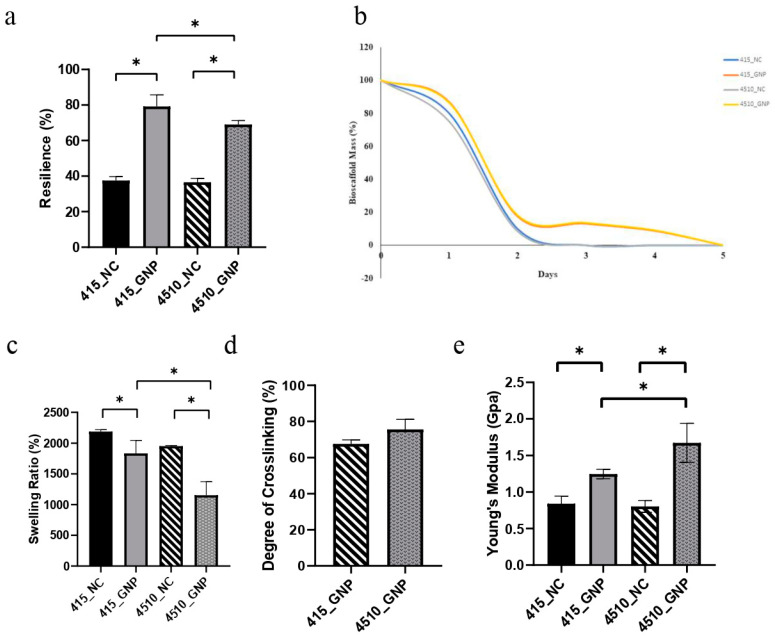
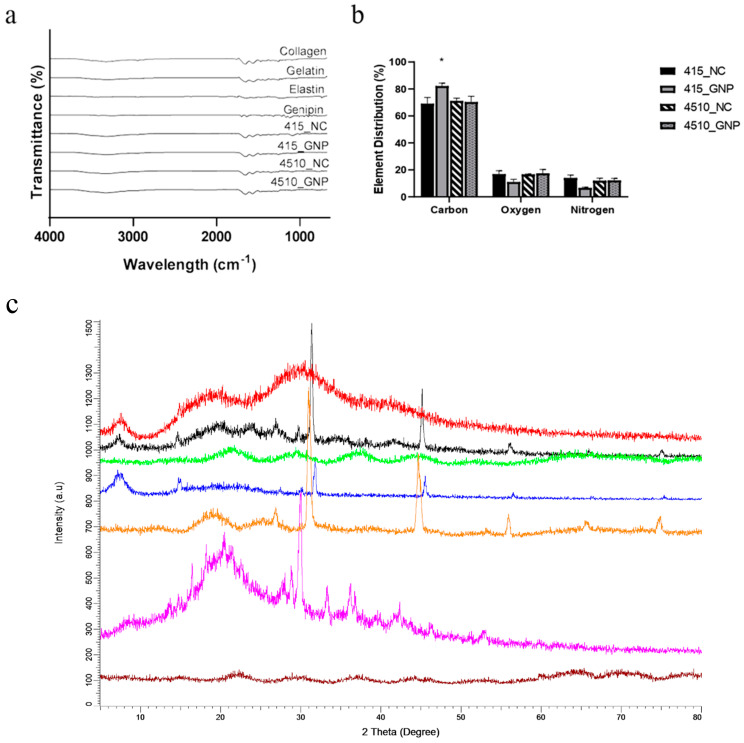
Full-thickness skin wounds have become a serious burden to patients, medical care, and the socio-economic environment. The development of a safe and effective acellular skin substitute that can rapidly restore intact physiological skin is required. Natural bioactive materials including collagen, gelatin, and elastin possess significant advantages over synthetic biomaterials regarding biodegradability and biocompatibility. However, low mechanical strength, a faster biodegradation rate, and thermally unstable biomaterials lead to slow-healing and a high rate of post-implantation failure. To overcome these concerns, naturally occurring genipin (GNP) flavonoids were added to improve the mechanical strength, degradation rate, and thermal properties. Therefore, this study aimed to fabricate and characterize collagen−gelatin−elastin (CollaGee) biomaterials cross-linked with GNP as an acellular skin substitute potentially used in full-thickness wound healing. CollaGee at different ratios was divided into non-cross-linked and cross-linked with 0.1% GNP (w/v). The physicochemical, mechanical, and biocompatibility properties of CollaGee were further investigated. The results demonstrated that GNP-cross-linked CollaGee has better physicochemical (>50% porosity, pore size range of 100−200 µm, swelling ratio of >1000%) and mechanical properties (resilience and cross-linking degree of >60%, modulus of >1.0 GPa) compared to non-cross-linked CollaGee groups. Furthermore, both cross-linked and non-cross-linked CollaGee demonstrated pivotal cellular compatibility with no toxicity and sustained cell viability until day 7 towards human dermal fibroblasts. These findings suggest that GNP-cross-linked CollaGee could be a promising ready-to-use product for the rapid treatment of full-thickness skin loss.
全层皮肤伤口已成为患者、医疗护理以及社会经济环境的沉重负担。因此,需要开发一种能够快速恢复完整生理皮肤的安全有效的无细胞皮肤替代物。包括胶原蛋白、明胶和弹性蛋白在内的天然生物活性材料在生物降解性和生物相容性方面比合成生物材料具有显著优势。然而,机械强度低、生物降解速度快以及生物材料热稳定性差会导致愈合缓慢和植入后失败率高。为了克服这些问题,添加了天然存在的京尼平(GNP)类黄酮以提高机械强度、降解速率和热性能。因此,本研究旨在制备并表征与GNP交联的胶原蛋白-明胶-弹性蛋白(CollaGee)生物材料,作为一种可能用于全层伤口愈合的无细胞皮肤替代物。将不同比例的CollaGee分为未交联组和与0.1% GNP(w/v)交联组。进一步研究了CollaGee的物理化学、机械和生物相容性特性。结果表明,与未交联的CollaGee组相比,GNP交联的CollaGee具有更好的物理化学性能(孔隙率>50%,孔径范围为100-200 µm,溶胀率>1000%)和机械性能(弹性和交联度>60%,模量>1.0 GPa)。此外,交联和未交联的CollaGee均表现出关键的细胞相容性,对人皮肤成纤维细胞无毒性且在第7天前保持细胞活力。这些发现表明,GNP交联的CollaGee可能是一种有前景的即用型产品,可用于快速治疗全层皮肤缺损。