Toselli Stefania, Mauro Mario, Grigoletto Alessia, Cataldi Stefania, Benedetti Luca, Nanni Gianni, Di Miceli Riccardo, Aiello Paolo, Gallamini Davide, Fischetti Francesco, Greco Gianpiero
Department of Biomedical and Neuromotor Sciences, University of Bologna, 40126 Bologna, Italy.
Department for Life Quality Studies, University of Bologna, 47921 Rimini, Italy.
Biology (Basel). 2022 May 27;11(6):823. doi: 10.3390/biology11060823.
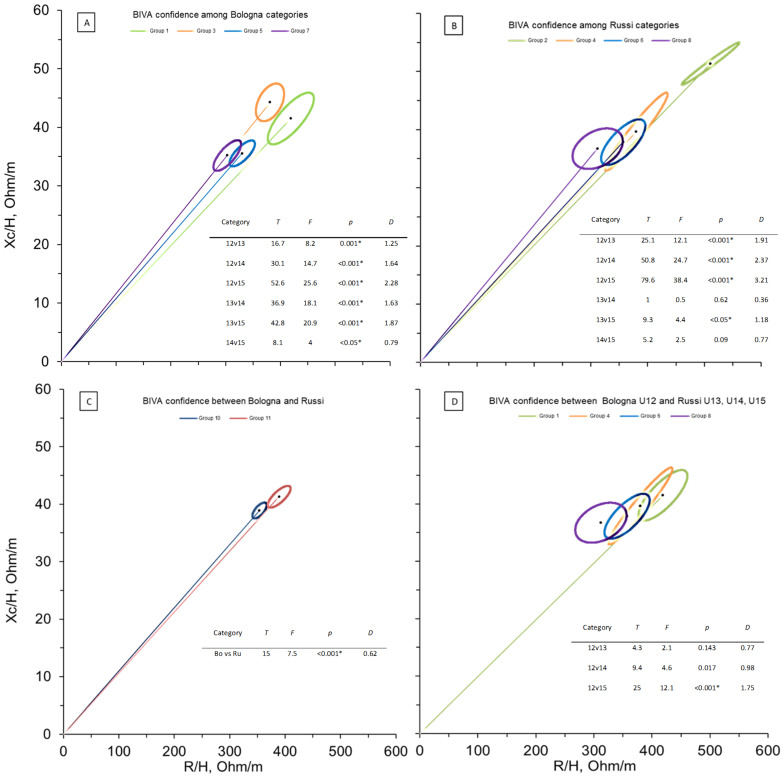
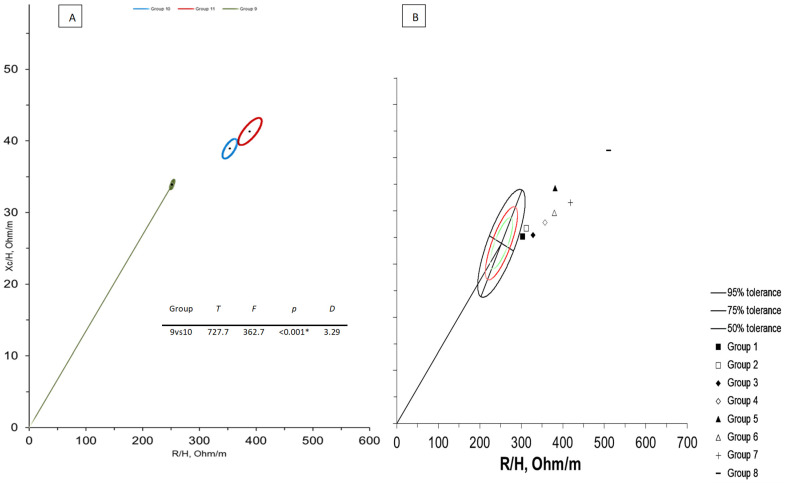
Soccer is a multifactorial sport, in which players are expected to possess well developed physical, psychological, technical, and tactical skills. Thus, the anthropometric and fitness measures play a determinant role and could vary according to the competitive level. Therefore, the present study aimed to verify differences in body composition and physical performance between two soccer team. 162 young soccer players (from the Under 12 to Under 15 age categories; age: 13.01 ± 1.15 years) of different competitive levels (elite—n = 98 and non-elite—n = 64) were recruited. Anthropometric characteristics (height, weight, lengths, widths, circumferences, and skinfold thicknesses (SK)), bioelectrical impedance, physical performance test as countermovement jump (CMJ), 15 m straight-line sprints, Yo-Yo Intermittent Recovery Test Level 1 (Yo-Yo), and 20 + 20 m repeated-sprint ability (RSA)) were carried out. In addition, Body mass index (BMI), body composition parameters (percentage of fat mass (%F), Fat mass (FM, kg), and Fat-free mass (FFM, kg)) and the areas of the upper arm, calf and thigh were calculated, and the Bioelectric Impedance Vector Analysis (BIVA) procedures were applied. In addition, a linear discriminant analysis was assessed to determine which factors better discriminate between an elite and non-elite football team. Many differences were observed in body composition between and within each football team’s category, especially in triceps SK (p < 0.05), %F (p < 0.05), and all performance tests (p < 0.01). The canonical correlation was 0.717 (F(7,128) = 19.37, p < 0.0001), and the coefficients that better discriminated between two teams were 15 m sprint (−2.39), RSA (1−26), suprailiac SK (−0.5) and CMJ (−0.45). Elite soccer team players present a better body composition and greater physical efficiency. In addition, BIVA outcome could be a relevant selection criterion to scout among younger soccer players.
足球是一项多因素运动,要求运动员具备良好的身体、心理、技术和战术技能。因此,人体测量和体能指标起着决定性作用,并且可能因竞技水平而异。因此,本研究旨在验证两支足球队在身体成分和身体表现方面的差异。招募了162名不同竞技水平(精英组—n = 98,非精英组—n = 64)的年轻足球运动员(年龄在12岁以下至15岁以下;年龄:13.01 ± 1.15岁)。进行了人体测量特征(身高、体重、长度、宽度、周长和皮褶厚度(SK))、生物电阻抗、诸如反向移动跳(CMJ)、15米直线冲刺、Yo-Yo间歇恢复测试1级(Yo-Yo)和20 + 20米重复冲刺能力(RSA)等身体表现测试。此外,计算了体重指数(BMI)、身体成分参数(脂肪质量百分比(%F)、脂肪质量(FM,千克)和去脂体重(FFM,千克))以及上臂、小腿和大腿的面积,并应用了生物电阻抗矢量分析(BIVA)程序。此外,进行了线性判别分析以确定哪些因素能更好地区分精英足球队和非精英足球队。在每个足球队类别之间以及类别内部的身体成分方面观察到许多差异,尤其是在肱三头肌SK(p < 0.05)、%F(p < 0.05)和所有表现测试(p < 0.01)方面。典型相关系数为0.717(F(7,128) = 19.37,p < 0.0001),能更好地区分两支球队的系数为15米冲刺(-2.39)、RSA(1 - 26)、髂上SK(-0.5)和CMJ(-0.45)。精英足球队球员具有更好的身体成分和更高 的身体效率。此外,BIVA结果可能是在年轻足球运动员中进行选拔的一个相关标准。