Khalaf Ahmad Taha, Wei Yuanyuan, Wan Jun, Zhu Jiang, Peng Yu, Abdul Kadir Samiah Yasmin, Zainol Jamaludin, Oglah Zahraa, Cheng Lijia, Shi Zheng
Clinical Genetics Laboratory, Clinical Medical College & Affiliated Hospital & Basic Medical College of Chengdu University, Chengdu 610106, China.
Faculty of Medicine, Widad University College, Kuantan 25200, Pahang, Malaysia.
Life (Basel). 2022 Jun 16;12(6):903. doi: 10.3390/life12060903.
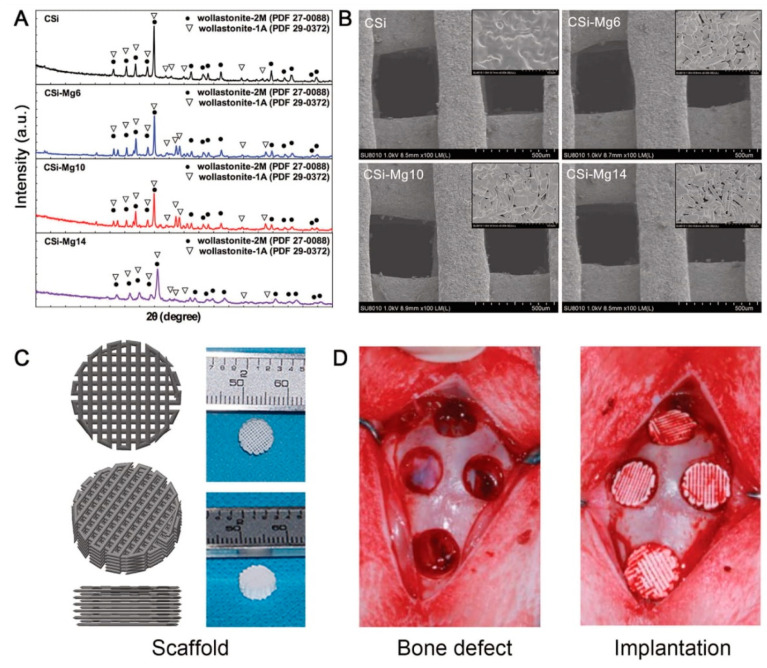
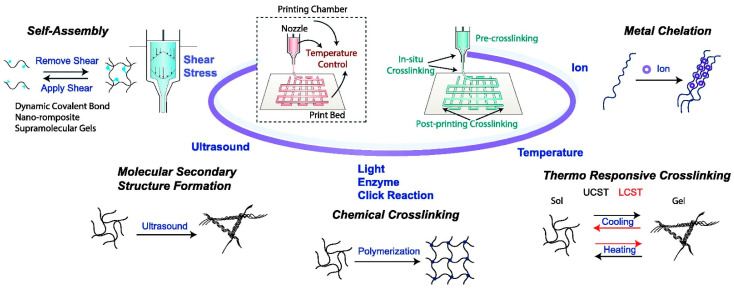
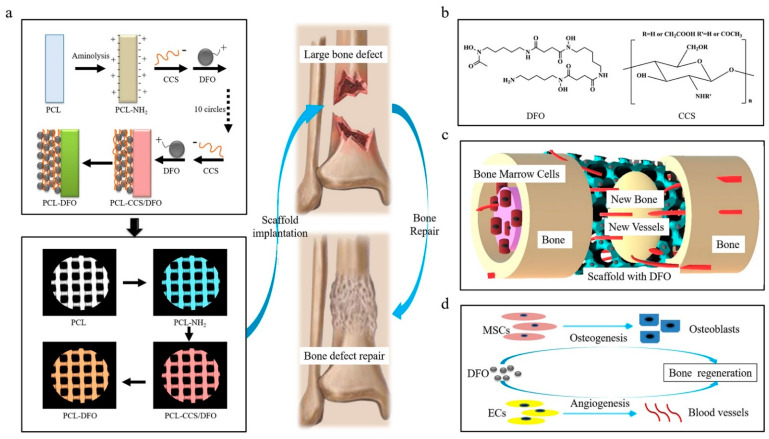
Trauma and bone loss from infections, tumors, and congenital diseases make bone repair and regeneration the greatest challenges in orthopedic, craniofacial, and plastic surgeries. The shortage of donors, intrinsic limitations, and complications in transplantation have led to more focus and interest in regenerative medicine. Structures that closely mimic bone tissue can be produced by this unique technology. The steady development of three-dimensional (3D)-printed bone tissue engineering scaffold therapy has played an important role in achieving the desired goal. Bioceramic scaffolds are widely studied and appear to be the most promising solution. In addition, 3D printing technology can simulate mechanical and biological surface properties and print with high precision complex internal and external structures to match their functional properties. Inkjet, extrusion, and light-based 3D printing are among the rapidly advancing bone bioprinting technologies. Furthermore, stem cell therapy has recently shown an important role in this field, although large tissue defects are difficult to fill by injection alone. The combination of 3D-printed bone tissue engineering scaffolds with stem cells has shown very promising results. Therefore, biocompatible artificial tissue engineering with living cells is the key element required for clinical applications where there is a high demand for bone defect repair. Furthermore, the emergence of various advanced manufacturing technologies has made the form of biomaterials and their functions, composition, and structure more diversified, and manifold. The importance of this article lies in that it aims to briefly review the main principles and characteristics of the currently available methods in orthopedic bioprinting technology to prepare bioceramic scaffolds, and finally discuss the challenges and prospects for applications in this promising and vital field.
创伤以及感染、肿瘤和先天性疾病导致的骨质流失,使骨修复和再生成为骨科、颅面外科和整形外科面临的最大挑战。供体短缺、内在局限性以及移植并发症促使人们更加关注和青睐再生医学。这种独特的技术能够制造出与骨组织极为相似的结构。三维(3D)打印骨组织工程支架疗法的稳步发展,在实现预期目标方面发挥了重要作用。生物陶瓷支架受到广泛研究,似乎是最具前景的解决方案。此外,3D打印技术能够模拟机械和生物表面特性,并高精度打印复杂的内部和外部结构以匹配其功能特性。喷墨、挤出和基于光的3D打印是快速发展的骨生物打印技术。此外,尽管仅通过注射难以填充大的组织缺损,但干细胞疗法最近在该领域显示出重要作用。3D打印骨组织工程支架与干细胞的结合已显示出非常有前景的结果。因此,具有活细胞的生物相容性人工组织工程是骨缺损修复临床应用所需的关键要素。此外,各种先进制造技术的出现使生物材料的形式及其功能、组成和结构更加多样化、多元化。本文的重要性在于,它旨在简要回顾骨科生物打印技术中目前可用的制备生物陶瓷支架方法的主要原理和特点,最后讨论在这个充满希望且至关重要的领域中的应用挑战和前景。