CIBER de Epidemiología y Salud Pública, Madrid, Spain.
Genomics and Health Area, Fundación para el Fomento de la Investigación Sanitaria y Biomédica de la Comunitat Valenciana, Valencia, Spain.
Gut Microbes. 2022 Jan-Dec;14(1):2089002. doi: 10.1080/19490976.2022.2089002.
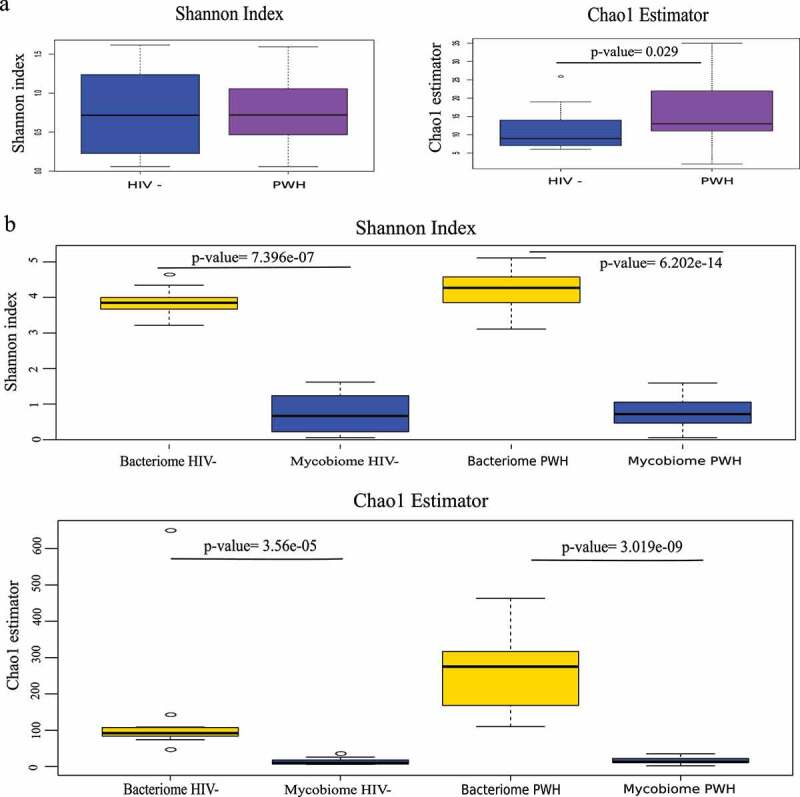
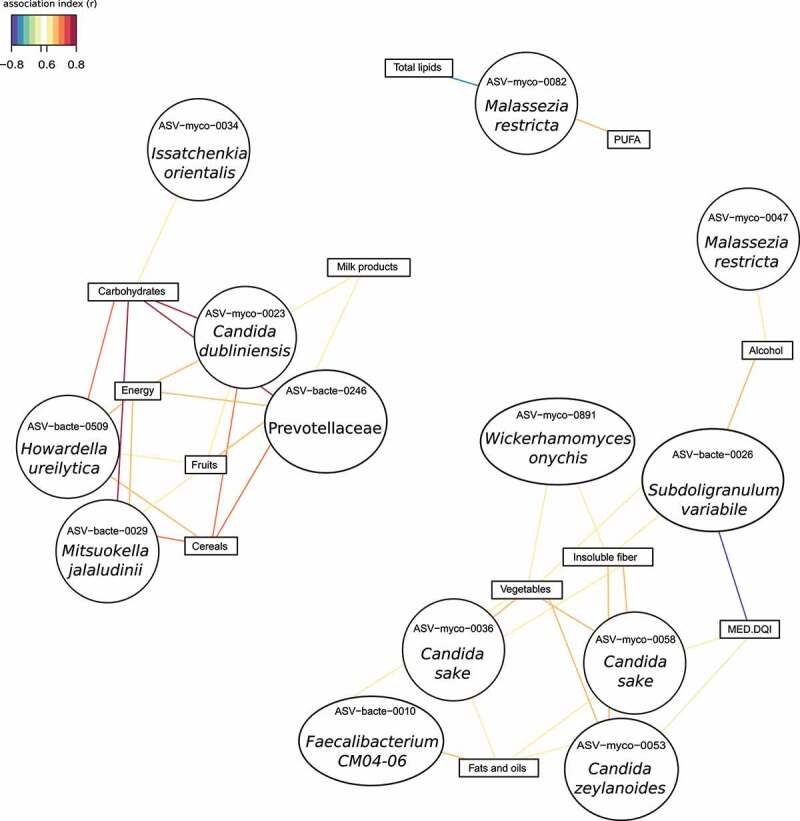
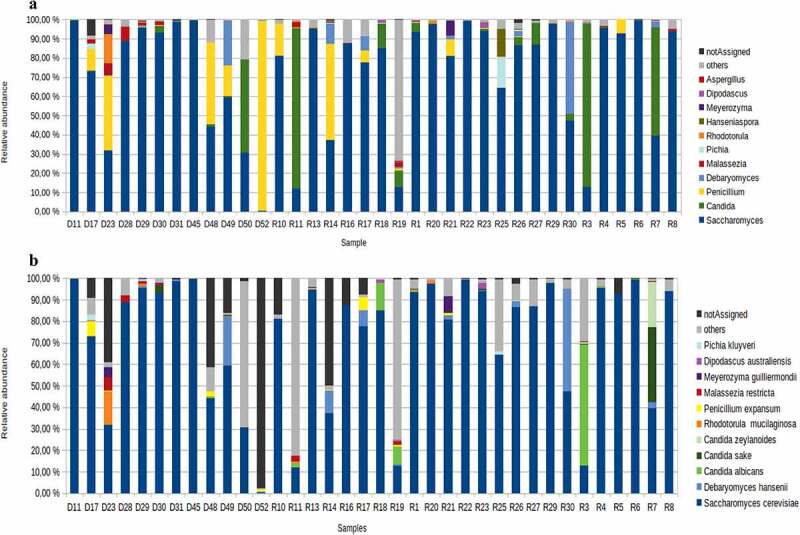
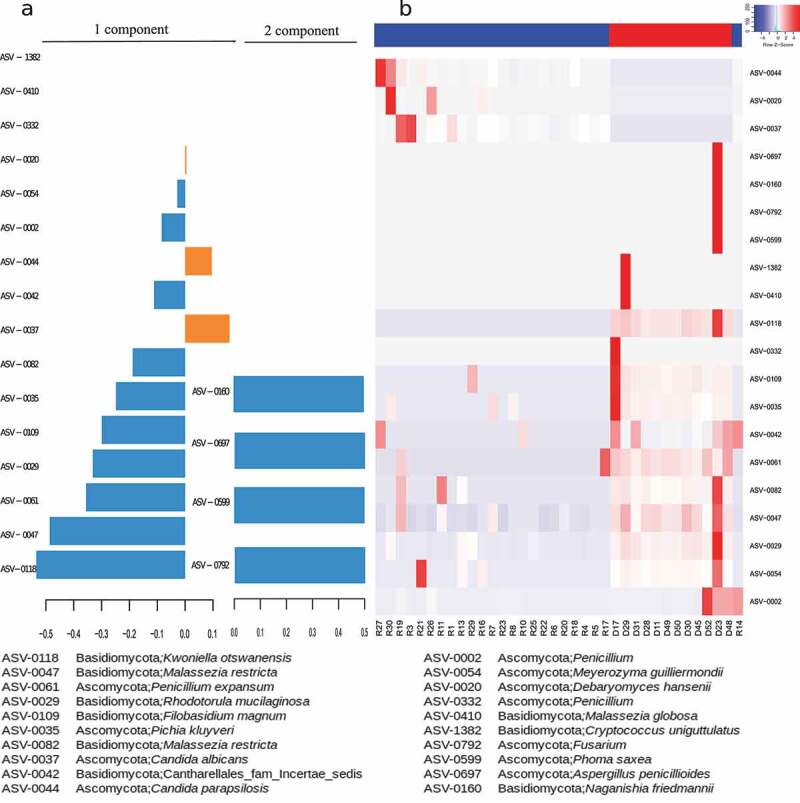
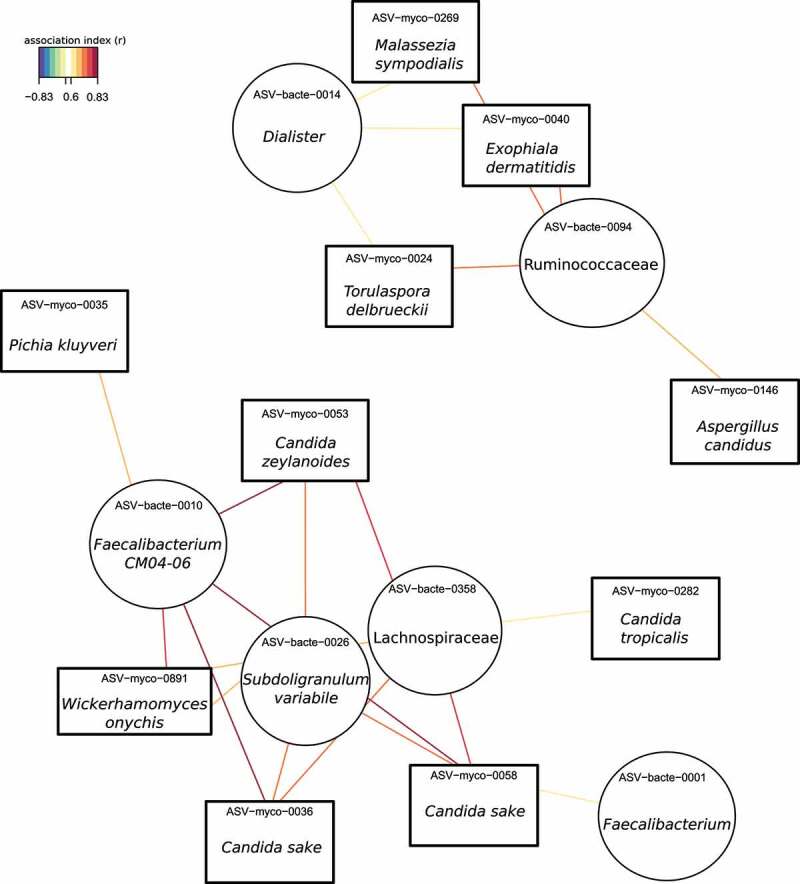
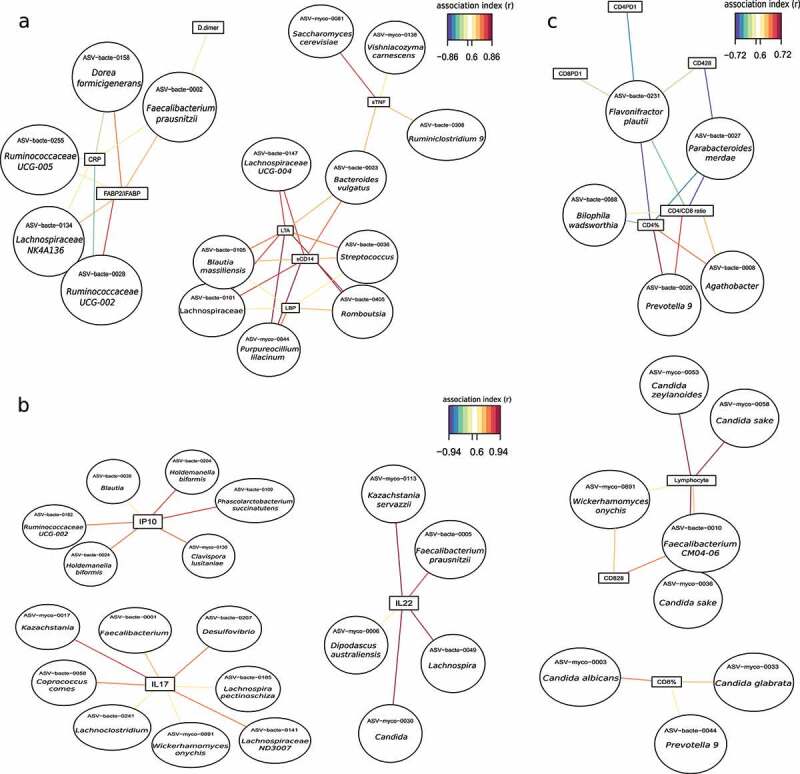
While the intestinal microbiome seems a major driver of persistent immune defects in people with HIV (PWH), little is known about its fungal component, the mycobiome. We assessed the inter-kingdom mycobiome-bacteriome interactions, the impact of diet, and the association with the innate and adaptive immunity in PWH on antiretroviral therapy. We included 24 PWH individuals and 12 healthy controls. We sequenced the Internal Transcribed Spacer 2 amplicons, determined amplicon sequence variants, measured biomarkers of the innate and adaptive immunity in blood and relations with diet. Compared to healthy controls, PWH subjects exhibited a distinct and richer mycobiome and an enrichment for , and . In PWH, and species were strongly correlated with several bacterial genera, including genus. Regarding the links between the mycobiome and systemic immunology, we found a positive correlation between species and the levels of proinflammatory cytokines (sTNF-R2 and IL-17), interleukin 22 (a cytokine implicated in the regulation of mucosal immunity), and CD8+ T cell counts. This suggests an important role of the yeasts in systemic innate and adaptive immune responses. Finally, we identified inter-kingdom interactions implicated in fiber degradation, short-chain fatty acid production, and lipid metabolism, and an effect of vegetable and fiber intake on the mycobiome. Therefore, despite the great differences in abundance and diversity between the bacterial and fungal communities of the gut, we defined the changes associated with HIV, determined several different inter-kingdom associations, and found links between the mycobiome, nutrient metabolism, and systemic immunity.
虽然肠道微生物组似乎是导致 HIV 感染者(PWH)持续免疫缺陷的主要驱动因素,但人们对其真菌组成部分——真菌组知之甚少。我们评估了 PWH 抗逆转录病毒治疗中的种间真菌-细菌相互作用、饮食的影响及其与先天和适应性免疫的关联。我们纳入了 24 名 PWH 个体和 12 名健康对照。我们对内部转录间隔区 2 扩增子进行了测序,确定了扩增子序列变异体,测量了血液中先天和适应性免疫的生物标志物,并与饮食进行了关联。与健康对照组相比,PWH 个体表现出独特而丰富的真菌组,并且富集了 和 。在 PWH 中, 和 物种与包括 属在内的多个细菌属强烈相关。关于真菌组与全身免疫学之间的联系,我们发现 物种与促炎细胞因子(sTNF-R2 和 IL-17)、白细胞介素 22(一种参与调节粘膜免疫的细胞因子)和 CD8+T 细胞计数呈正相关。这表明酵母菌在全身先天和适应性免疫反应中起着重要作用。最后,我们确定了与纤维降解、短链脂肪酸产生和脂质代谢有关的种间相互作用,并确定了蔬菜和纤维摄入对真菌组的影响。因此,尽管肠道细菌和真菌群落的丰度和多样性存在巨大差异,但我们确定了与 HIV 相关的变化,确定了几种不同的种间关联,并发现了真菌组、营养代谢和全身免疫之间的联系。