Department of Veterinary Medicine, University of Cambridge, Cambridge, United Kingdom.
Elife. 2022 Jun 28;11:e74819. doi: 10.7554/eLife.74819.
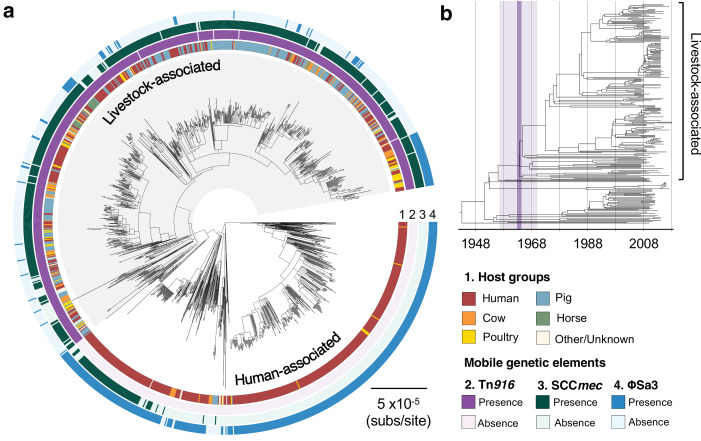
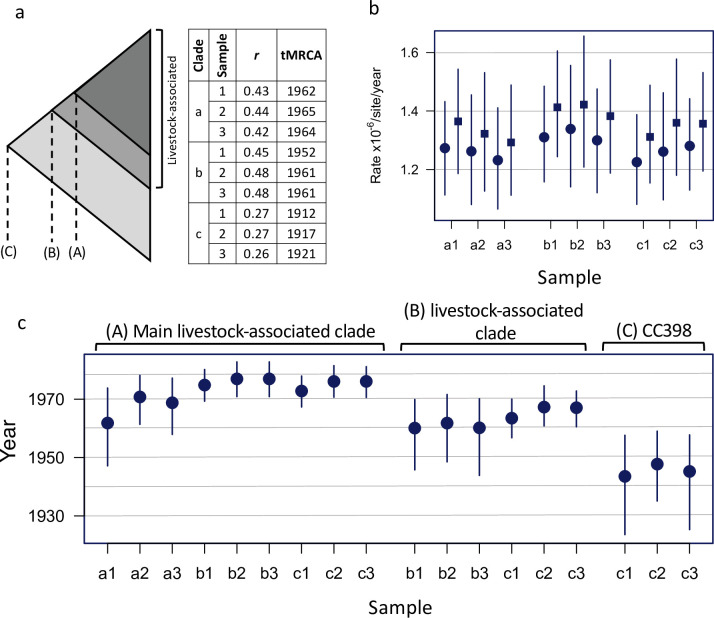
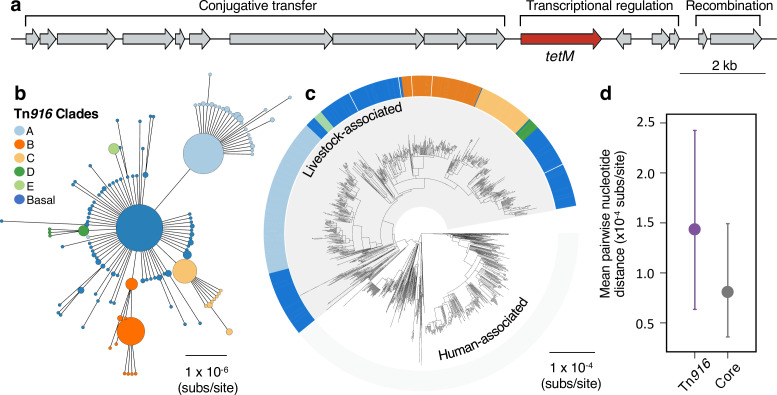
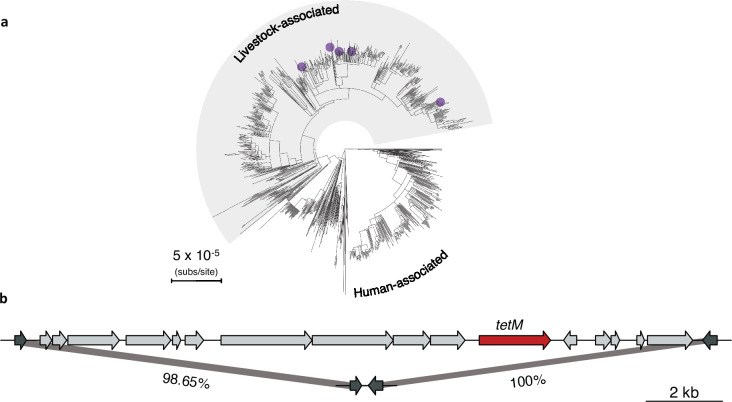
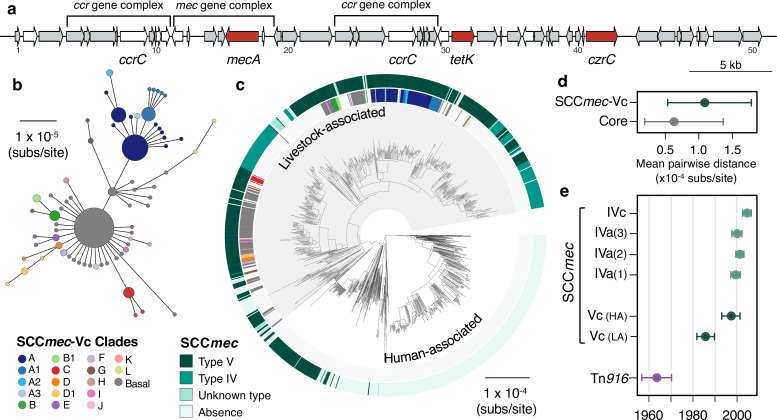
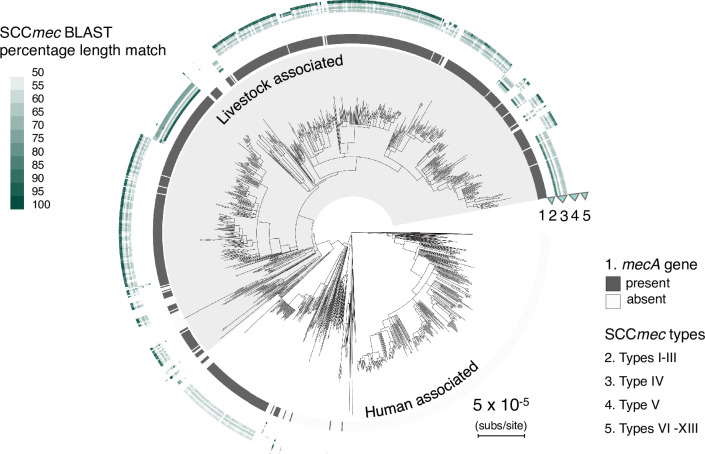
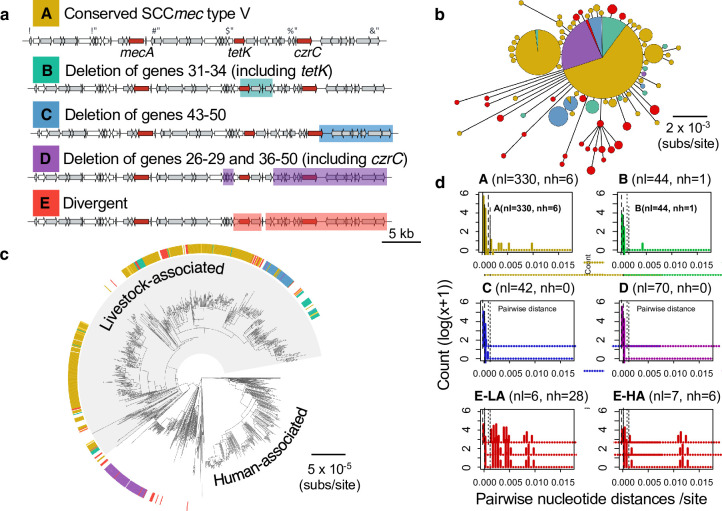
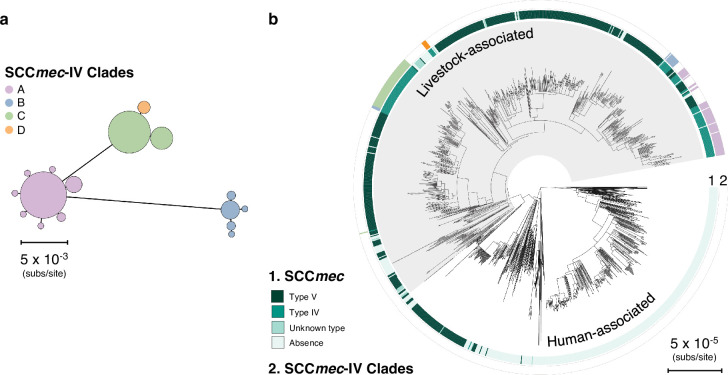
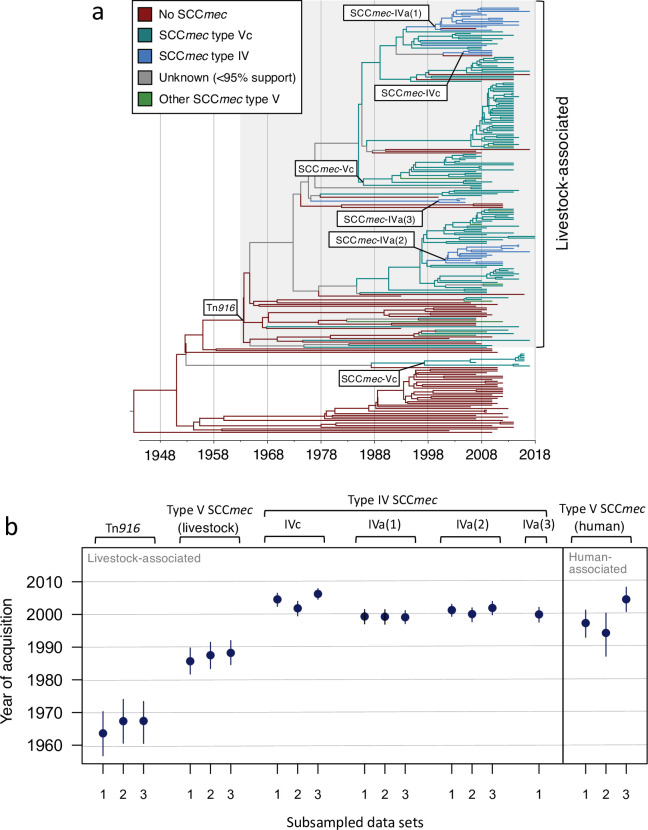
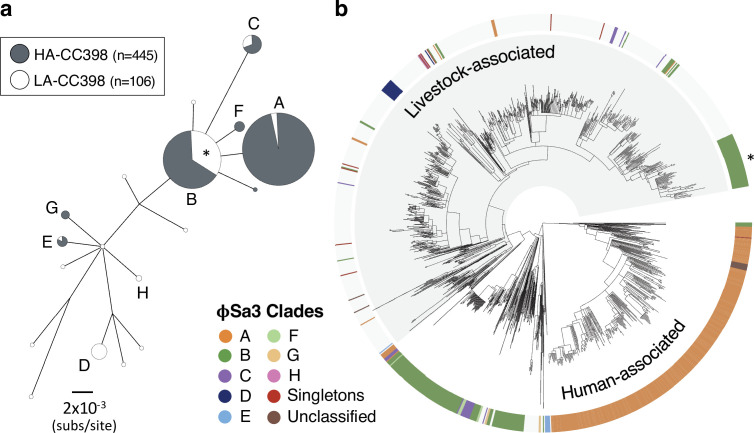
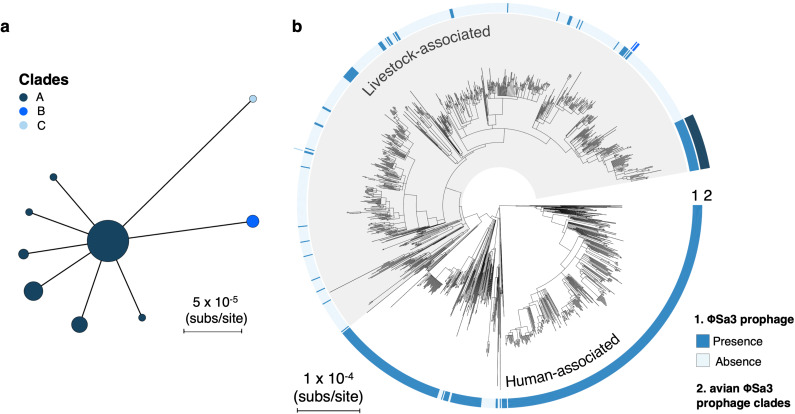
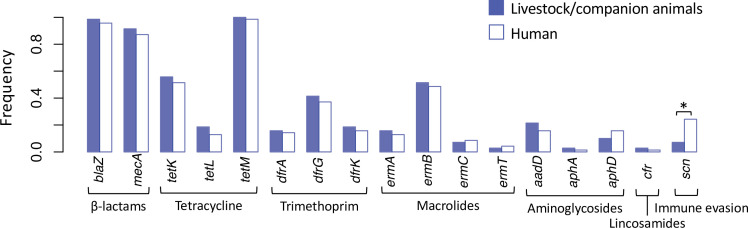
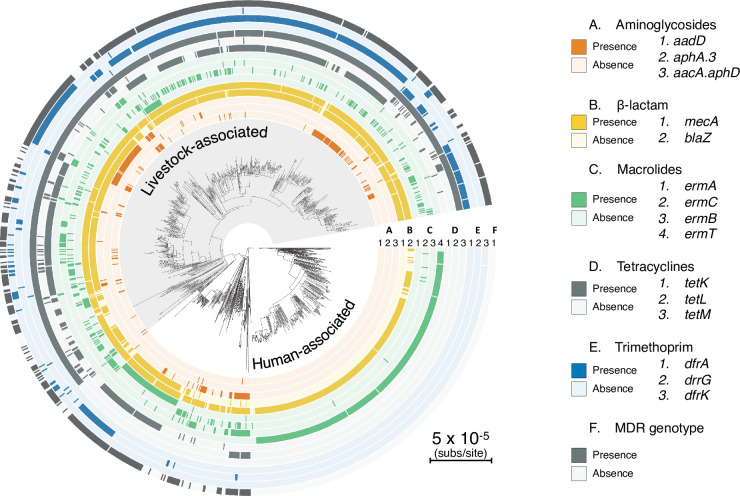
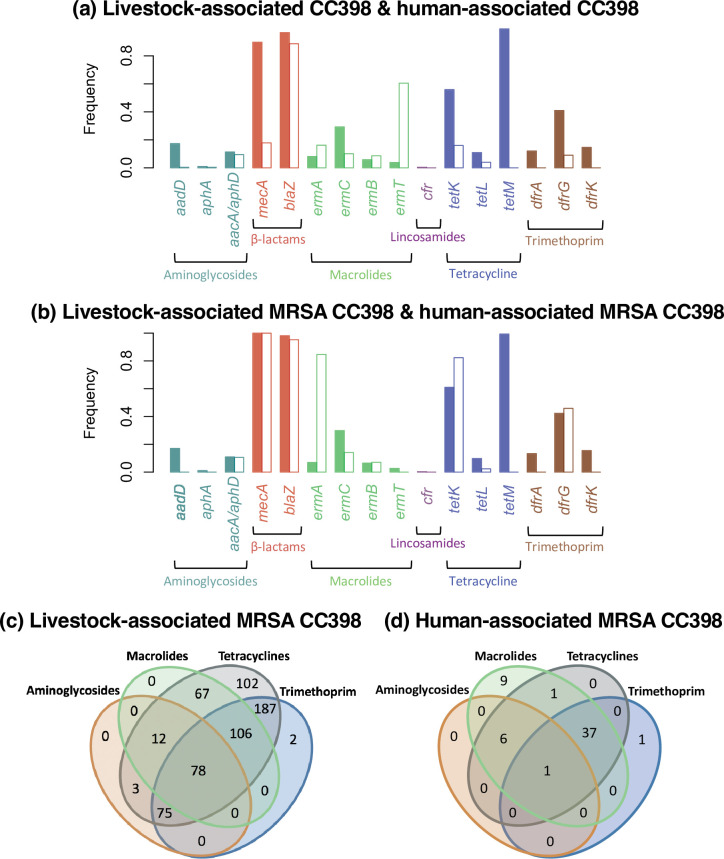
Mobile genetic elements (MGEs) are agents of horizontal gene transfer in bacteria, but can also be vertically inherited by daughter cells. Establishing the dynamics that led to contemporary patterns of MGEs in bacterial genomes is central to predicting the emergence and evolution of novel and resistant pathogens. Methicillin-resistant (MRSA) clonal-complex (CC) 398 is the dominant MRSA in European livestock and a growing cause of human infections. Previous studies have identified three categories of MGEs whose presence or absence distinguishes livestock-associated CC398 from a closely related and less antibiotic-resistant human-associated population. Here, we fully characterise the evolutionary dynamics of these MGEs using a collection of 1180 CC398 genomes, sampled from livestock and humans, over 27 years. We find that the emergence of livestock-associated CC398 coincided with the acquisition of a Tn transposon carrying a tetracycline resistance gene, which has been stably inherited for 57 years. This was followed by the acquisition of a type V SCC that carries methicillin, tetracycline, and heavy metal resistance genes, which has been maintained for 35 years, with occasional truncations and replacements with type IV SCC. In contrast, a class of prophages that carry a human immune evasion gene cluster and that are largely absent from livestock-associated CC398 have been repeatedly gained and lost in both human- and livestock-associated CC398. These contrasting dynamics mean that when livestock-associated MRSA is transmitted to humans, adaptation to the human host outpaces loss of antibiotic resistance. In addition, the stable inheritance of resistance-associated MGEs suggests that the impact of ongoing reductions in antibiotic and zinc oxide use in European farms on livestock-associated MRSA will be slow to be realised.
移动遗传元件(MGE)是细菌水平基因转移的媒介,但也可以被子细胞垂直遗传。确定导致细菌基因组中 MGE 出现现代模式的动力学是预测新型和耐药病原体出现和进化的核心。耐甲氧西林的(MRSA)克隆复合体(CC)398 是欧洲牲畜中主要的 MRSA,也是人类感染不断增加的原因。先前的研究已经确定了三类 MGE,它们的存在或不存在将与牲畜相关的 CC398 与密切相关且抗生素耐药性较低的人类相关群体区分开来。在这里,我们使用来自牲畜和人类的 1180 个 CC398 基因组的集合,对这些 MGE 的进化动态进行了全面描述,这些基因组在 27 年内进行了采样。我们发现,与牲畜相关的 CC398 的出现与携带四环素抗性基因的 Tn 转座子的获得同时发生,该基因已经稳定遗传了 57 年。随后,获得了携带甲氧西林、四环素和重金属抗性基因的第五类 SCC,该基因已经被维持了 35 年,偶尔会发生截断和用第四类 SCC 替换。相比之下,一类携带人类免疫逃避基因簇的噬菌体主要不存在于与牲畜相关的 CC398 中,它们在人与牲畜相关的 CC398 中都被反复获得和丢失。这些对比鲜明的动态意味着,当与牲畜相关的 MRSA 传播给人类时,对人类宿主的适应速度超过了抗生素耐药性的丧失。此外,与抗生素耐药性相关的 MGE 的稳定遗传表明,欧洲农场中抗生素和氧化锌使用量的持续减少对与牲畜相关的 MRSA 的影响将需要很长时间才能显现。