• 文献检索
  • 文档翻译
  • 深度研究
  • 学术资讯
  • Suppr Zotero 插件Zotero 插件
  • 邀请有礼
  • 套餐&价格
  • 历史记录
应用&插件
Suppr Zotero 插件Zotero 插件浏览器插件Mac 客户端Windows 客户端微信小程序
定价
高级版会员购买积分包购买API积分包
服务
文献检索文档翻译深度研究API 文档MCP 服务
关于我们
关于 Suppr公司介绍联系我们用户协议隐私条款
关注我们

Suppr 超能文献

核心技术专利:CN118964589B侵权必究
粤ICP备2023148730 号-1Suppr @ 2026

文献检索

告别复杂PubMed语法,用中文像聊天一样搜索,搜遍4000万医学文献。AI智能推荐,让科研检索更轻松。

立即免费搜索

文件翻译

保留排版,准确专业,支持PDF/Word/PPT等文件格式,支持 12+语言互译。

免费翻译文档

深度研究

AI帮你快速写综述,25分钟生成高质量综述,智能提取关键信息,辅助科研写作。

立即免费体验

一种用于转移性癌症检测的新型混合深度学习模型。

A Novel Hybrid Deep Learning Model for Metastatic Cancer Detection.

机构信息

School of Management Science and Engineering, Chongqing University of Post and Telecommunication, Chongqing 400065, China.

Department of Electronics and Information Engineering, Xian Jiaotong University, Xian, China.

出版信息

Comput Intell Neurosci. 2022 Jun 24;2022:8141530. doi: 10.1155/2022/8141530. eCollection 2022.

DOI:10.1155/2022/8141530
PMID:35785076
原文链接:https://pmc.ncbi.nlm.nih.gov/articles/PMC9249449/
Abstract

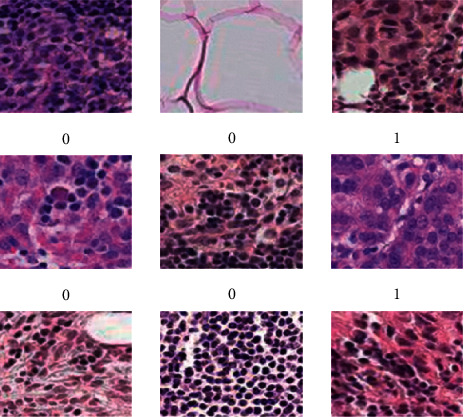
Cancer has been found as a heterogeneous disease with various subtypes and aims to destroy the body's normal cells abruptly. As a result, it is essential to detect and prognosis the distinct type of cancer since they may help cancer survivors with treatment in the early stage. It must also divide cancer patients into high- and low-risk groups. While realizing efficient detection of cancer is frequently a time-taking and exhausting task with the high possibility of pathologist errors and previous studies employed data mining and machine learning (ML) techniques to identify cancer, these strategies rely on handcrafted feature extraction techniques that result in incorrect classification. On the contrary, deep learning (DL) is robust in feature extraction and has recently been widely used for classification and detection purposes. This research implemented a novel hybrid AlexNet-gated recurrent unit (AlexNet-GRU) model for the lymph node (LN) breast cancer detection and classification. We have used a well-known Kaggle (PCam) data set to classify LN cancer samples. This study is tested and compared among three models: convolutional neural network GRU (CNN-GRU), CNN long short-term memory (CNN-LSTM), and the proposed AlexNet-GRU. The experimental results indicated that the performance metrics accuracy, precision, sensitivity, and specificity (99.50%, 98.10%, 98.90%, and 97.50) of the proposed model can reduce the pathologist errors that occur during the diagnosis process of incorrect classification and significantly better performance than CNN-GRU and CNN-LSTM models. The proposed model is compared with other recent ML/DL algorithms to analyze the model's efficiency, which reveals that the proposed AlexNet-GRU model is computationally efficient. Also, the proposed model presents its superiority over state-of-the-art methods for LN breast cancer detection and classification.

摘要

癌症已被发现为一种具有多种亚型的异质疾病,其目的是突然破坏身体的正常细胞。因此,检测和预测不同类型的癌症至关重要,因为它们可能有助于癌症幸存者在早期进行治疗。这也必须将癌症患者分为高风险和低风险组。虽然实现癌症的高效检测通常是一项耗时且费力的任务,并且存在病理学家错误的高可能性,但以前的研究采用了数据挖掘和机器学习 (ML) 技术来识别癌症,这些策略依赖于手工制作的特征提取技术,导致分类错误。相反,深度学习 (DL) 在特征提取方面非常强大,最近已广泛用于分类和检测目的。本研究针对淋巴结 (LN) 乳腺癌检测和分类实施了一种新的混合 AlexNet-门控循环单元 (AlexNet-GRU) 模型。我们使用了一个著名的 Kaggle (PCam) 数据集来对 LN 癌症样本进行分类。本研究在三个模型中进行了测试和比较:卷积神经网络 GRU (CNN-GRU)、卷积神经网络长短期记忆 (CNN-LSTM) 和提出的 AlexNet-GRU。实验结果表明,所提出模型的性能指标准确率、精度、灵敏度和特异性 (99.50%、98.10%、98.90% 和 97.50%) 可以减少病理学家在错误分类诊断过程中出现的错误,并显著优于 CNN-GRU 和 CNN-LSTM 模型。将所提出的模型与其他最近的 ML/DL 算法进行比较,以分析模型的效率,这表明所提出的 AlexNet-GRU 模型在计算上是高效的。此外,所提出的模型在 LN 乳腺癌检测和分类方面表现出优于最新方法的优越性。

https://cdn.ncbi.nlm.nih.gov/pmc/blobs/ed66/9249449/9ca069faa0fa/CIN2022-8141530.015.jpg
https://cdn.ncbi.nlm.nih.gov/pmc/blobs/ed66/9249449/d676d7377ea2/CIN2022-8141530.001.jpg
https://cdn.ncbi.nlm.nih.gov/pmc/blobs/ed66/9249449/3ecdea09544f/CIN2022-8141530.002.jpg
https://cdn.ncbi.nlm.nih.gov/pmc/blobs/ed66/9249449/852262755adc/CIN2022-8141530.003.jpg
https://cdn.ncbi.nlm.nih.gov/pmc/blobs/ed66/9249449/151b660036cb/CIN2022-8141530.004.jpg
https://cdn.ncbi.nlm.nih.gov/pmc/blobs/ed66/9249449/52811f85b680/CIN2022-8141530.005.jpg
https://cdn.ncbi.nlm.nih.gov/pmc/blobs/ed66/9249449/c3099c9507a2/CIN2022-8141530.006.jpg
https://cdn.ncbi.nlm.nih.gov/pmc/blobs/ed66/9249449/6299823b71a3/CIN2022-8141530.007.jpg
https://cdn.ncbi.nlm.nih.gov/pmc/blobs/ed66/9249449/697b44e339dd/CIN2022-8141530.008.jpg
https://cdn.ncbi.nlm.nih.gov/pmc/blobs/ed66/9249449/8740da9d6066/CIN2022-8141530.009.jpg
https://cdn.ncbi.nlm.nih.gov/pmc/blobs/ed66/9249449/63863a8e3043/CIN2022-8141530.010.jpg
https://cdn.ncbi.nlm.nih.gov/pmc/blobs/ed66/9249449/864e14e62a53/CIN2022-8141530.011.jpg
https://cdn.ncbi.nlm.nih.gov/pmc/blobs/ed66/9249449/2bdb4bb567eb/CIN2022-8141530.012.jpg
https://cdn.ncbi.nlm.nih.gov/pmc/blobs/ed66/9249449/fabba1a02277/CIN2022-8141530.013.jpg
https://cdn.ncbi.nlm.nih.gov/pmc/blobs/ed66/9249449/a49b240b924a/CIN2022-8141530.014.jpg
https://cdn.ncbi.nlm.nih.gov/pmc/blobs/ed66/9249449/9ca069faa0fa/CIN2022-8141530.015.jpg
https://cdn.ncbi.nlm.nih.gov/pmc/blobs/ed66/9249449/d676d7377ea2/CIN2022-8141530.001.jpg
https://cdn.ncbi.nlm.nih.gov/pmc/blobs/ed66/9249449/3ecdea09544f/CIN2022-8141530.002.jpg
https://cdn.ncbi.nlm.nih.gov/pmc/blobs/ed66/9249449/852262755adc/CIN2022-8141530.003.jpg
https://cdn.ncbi.nlm.nih.gov/pmc/blobs/ed66/9249449/151b660036cb/CIN2022-8141530.004.jpg
https://cdn.ncbi.nlm.nih.gov/pmc/blobs/ed66/9249449/52811f85b680/CIN2022-8141530.005.jpg
https://cdn.ncbi.nlm.nih.gov/pmc/blobs/ed66/9249449/c3099c9507a2/CIN2022-8141530.006.jpg
https://cdn.ncbi.nlm.nih.gov/pmc/blobs/ed66/9249449/6299823b71a3/CIN2022-8141530.007.jpg
https://cdn.ncbi.nlm.nih.gov/pmc/blobs/ed66/9249449/697b44e339dd/CIN2022-8141530.008.jpg
https://cdn.ncbi.nlm.nih.gov/pmc/blobs/ed66/9249449/8740da9d6066/CIN2022-8141530.009.jpg
https://cdn.ncbi.nlm.nih.gov/pmc/blobs/ed66/9249449/63863a8e3043/CIN2022-8141530.010.jpg
https://cdn.ncbi.nlm.nih.gov/pmc/blobs/ed66/9249449/864e14e62a53/CIN2022-8141530.011.jpg
https://cdn.ncbi.nlm.nih.gov/pmc/blobs/ed66/9249449/2bdb4bb567eb/CIN2022-8141530.012.jpg
https://cdn.ncbi.nlm.nih.gov/pmc/blobs/ed66/9249449/fabba1a02277/CIN2022-8141530.013.jpg
https://cdn.ncbi.nlm.nih.gov/pmc/blobs/ed66/9249449/a49b240b924a/CIN2022-8141530.014.jpg
https://cdn.ncbi.nlm.nih.gov/pmc/blobs/ed66/9249449/9ca069faa0fa/CIN2022-8141530.015.jpg

相似文献

1
A Novel Hybrid Deep Learning Model for Metastatic Cancer Detection.一种用于转移性癌症检测的新型混合深度学习模型。
Comput Intell Neurosci. 2022 Jun 24;2022:8141530. doi: 10.1155/2022/8141530. eCollection 2022.
2
Classification of benign and malignant subtypes of breast cancer histopathology imaging using hybrid CNN-LSTM based transfer learning.基于混合 CNN-LSTM 的迁移学习的乳腺癌组织病理学成像的良恶性亚型分类。
BMC Med Imaging. 2023 Jan 30;23(1):19. doi: 10.1186/s12880-023-00964-0.
3
Stock prediction based on bidirectional gated recurrent unit with convolutional neural network and feature selection.基于双向门控循环单元与卷积神经网络的特征选择股票预测。
PLoS One. 2022 Feb 4;17(2):e0262501. doi: 10.1371/journal.pone.0262501. eCollection 2022.
4
An Efficient Multi-Scale Convolutional Neural Network Based Multi-Class Brain MRI Classification for SaMD.基于高效多尺度卷积神经网络的 SaMD 多类脑 MRI 分类
Tomography. 2022 Jul 26;8(4):1905-1927. doi: 10.3390/tomography8040161.
5
Deep learning networks based decision fusion model of EEG and fNIRS for classification of cognitive tasks.基于深度学习网络的脑电图和功能近红外光谱用于认知任务分类的决策融合模型
Cogn Neurodyn. 2024 Aug;18(4):1489-1506. doi: 10.1007/s11571-023-09986-4. Epub 2023 Jun 30.
6
Novel deep learning hybrid models (CNN-GRU and DLDL-RF) for the susceptibility classification of dust sources in the Middle East: a global source.新型深度学习混合模型(CNN-GRU 和 DLDL-RF)用于中东地区粉尘源的易感性分类:全球来源。
Sci Rep. 2022 Nov 11;12(1):19342. doi: 10.1038/s41598-022-24036-5.
7
Comparative study of machine learning methods for COVID-19 transmission forecasting.机器学习方法在 COVID-19 传播预测中的比较研究。
J Biomed Inform. 2021 Jun;118:103791. doi: 10.1016/j.jbi.2021.103791. Epub 2021 Apr 26.
8
Edge deep learning for neural implants: a case study of seizure detection and prediction.边缘深度学习在神经植入物中的应用:以癫痫检测和预测为例。
J Neural Eng. 2021 Apr 26;18(4). doi: 10.1088/1741-2552/abf473.
9
Hybrid WT-CNN-GRU-based model for the estimation of reservoir water quality variables considering spatio-temporal features.基于混合 WT-CNN-GRU 的模型,考虑时空特征估算水库水质变量。
J Environ Manage. 2024 May;358:120756. doi: 10.1016/j.jenvman.2024.120756. Epub 2024 Apr 9.
10
A comparative study on deep learning models for text classification of unstructured medical notes with various levels of class imbalance.深度学习模型在不同类别不平衡程度的非结构化医疗记录文本分类中的对比研究。
BMC Med Res Methodol. 2022 Jul 2;22(1):181. doi: 10.1186/s12874-022-01665-y.

引用本文的文献

1
SkinEHDLF a hybrid deep learning approach for accurate skin cancer classification in complex systems.SkinEHDLF:一种用于复杂系统中皮肤癌精确分类的混合深度学习方法。
Sci Rep. 2025 Apr 28;15(1):14913. doi: 10.1038/s41598-025-98205-7.
2
Risk-based evaluation of machine learning-based classification methods used for medical devices.用于医疗设备的基于机器学习的分类方法的基于风险的评估。
BMC Med Inform Decis Mak. 2025 Mar 11;25(1):126. doi: 10.1186/s12911-025-02909-9.
3
Machine learning-based prediction of distant metastasis risk in invasive ductal carcinoma of the breast.

本文引用的文献

1
Multi- class classification of breast cancer abnormalities using Deep Convolutional Neural Network (CNN).使用深度卷积神经网络(CNN)对乳腺癌异常进行多类别分类。
PLoS One. 2021 Aug 26;16(8):e0256500. doi: 10.1371/journal.pone.0256500. eCollection 2021.
2
A Hybrid Deep Learning-Driven SDN Enabled Mechanism for Secure Communication in Internet of Things (IoT).基于深度学习和 SDN 的物联网安全通信混合机制。
Sensors (Basel). 2021 Jul 18;21(14):4884. doi: 10.3390/s21144884.
3
Convolutional Neural Networks based classification of breast ultrasonography images by hybrid method with respect to benign, malignant, and normal using mRMR.
基于机器学习的乳腺浸润性导管癌远处转移风险预测
PLoS One. 2025 Feb 26;20(2):e0310410. doi: 10.1371/journal.pone.0310410. eCollection 2025.
4
The Use of Hybrid CNN-RNN Deep Learning Models to Discriminate Tumor Tissue in Dynamic Breast Thermography.使用混合CNN-RNN深度学习模型鉴别动态乳腺热成像中的肿瘤组织。
J Imaging. 2024 Dec 21;10(12):329. doi: 10.3390/jimaging10120329.
5
Integrative hybrid deep learning for enhanced breast cancer diagnosis: leveraging the Wisconsin Breast Cancer Database and the CBIS-DDSM dataset.基于威斯康星州乳腺癌数据库和 CBIS-DDSM 数据集的集成混合深度学习增强乳腺癌诊断
Sci Rep. 2024 Nov 1;14(1):26287. doi: 10.1038/s41598-024-74305-8.
6
Drug-Free Mesoporous Silica Nanoparticles Enable Suppression of Cancer Metastasis and Confer Survival Advantages to Mice with Tumor Xenografts.无药物介孔二氧化硅纳米颗粒可抑制癌症转移,并赋予荷瘤异种移植小鼠生存优势。
ACS Appl Mater Interfaces. 2024 Nov 13;16(45):61787-61804. doi: 10.1021/acsami.4c16609. Epub 2024 Oct 24.
7
A Method for Real-Time Lung Nodule Instance Segmentation Using Deep Learning.一种使用深度学习进行实时肺结节实例分割的方法。
Life (Basel). 2024 Sep 20;14(9):1192. doi: 10.3390/life14091192.
8
Emerging research trends in artificial intelligence for cancer diagnostic systems: A comprehensive review.癌症诊断系统人工智能的新兴研究趋势:全面综述
Heliyon. 2024 Aug 23;10(17):e36743. doi: 10.1016/j.heliyon.2024.e36743. eCollection 2024 Sep 15.
9
Brain Tumor Classification from MRI Using Image Enhancement and Convolutional Neural Network Techniques.基于图像增强和卷积神经网络技术的磁共振成像脑肿瘤分类
Brain Sci. 2023 Sep 14;13(9):1320. doi: 10.3390/brainsci13091320.
10
On the Analyses of Medical Images Using Traditional Machine Learning Techniques and Convolutional Neural Networks.关于使用传统机器学习技术和卷积神经网络对医学图像进行分析
Arch Comput Methods Eng. 2023;30(5):3173-3233. doi: 10.1007/s11831-023-09899-9. Epub 2023 Apr 4.
基于卷积神经网络的乳腺超声图像分类方法,采用 mRMR 混合方法对良性、恶性和正常进行分类。
Comput Biol Med. 2021 Jun;133:104407. doi: 10.1016/j.compbiomed.2021.104407. Epub 2021 Apr 19.
4
Biomarker Discovery and Validation: Statistical Considerations.生物标志物的发现和验证:统计考虑。
J Thorac Oncol. 2021 Apr;16(4):537-545. doi: 10.1016/j.jtho.2021.01.1616. Epub 2021 Feb 2.
5
Convolutional neural network-based models for diagnosis of breast cancer.基于卷积神经网络的乳腺癌诊断模型
Neural Comput Appl. 2022;34(14):11383-11394. doi: 10.1007/s00521-020-05394-5. Epub 2020 Oct 9.
6
Breast cancer detection using deep convolutional neural networks and support vector machines.使用深度卷积神经网络和支持向量机进行乳腺癌检测。
PeerJ. 2019 Jan 28;7:e6201. doi: 10.7717/peerj.6201. eCollection 2019.
7
Detection and classification of cancer in whole slide breast histopathology images using deep convolutional networks.使用深度卷积网络对全切片乳腺组织病理学图像中的癌症进行检测和分类。
Pattern Recognit. 2018 Dec;84:345-356. doi: 10.1016/j.patcog.2018.07.022. Epub 2018 Jul 20.
8
Ultrasound Imaging Technologies for Breast Cancer Detection and Management: A Review.用于乳腺癌检测与管理的超声成像技术:综述
Ultrasound Med Biol. 2018 Jan;44(1):37-70. doi: 10.1016/j.ultrasmedbio.2017.09.012. Epub 2017 Oct 26.
9
A Dataset for Breast Cancer Histopathological Image Classification.一个用于乳腺癌组织病理学图像分类的数据集。
IEEE Trans Biomed Eng. 2016 Jul;63(7):1455-62. doi: 10.1109/TBME.2015.2496264. Epub 2015 Oct 30.
10
Machine learning models in breast cancer survival prediction.用于乳腺癌生存预测的机器学习模型。
Technol Health Care. 2016;24(1):31-42. doi: 10.3233/THC-151071.