School of Sports Science and Physical Education, Nanjing Normal University, Nanjing 210023, China.
Department of Sport, Physical Education and Health, Hong Kong Baptist University, Hong Kong SAR 00852, China.
Int J Environ Res Public Health. 2022 Jul 5;19(13):8212. doi: 10.3390/ijerph19138212.
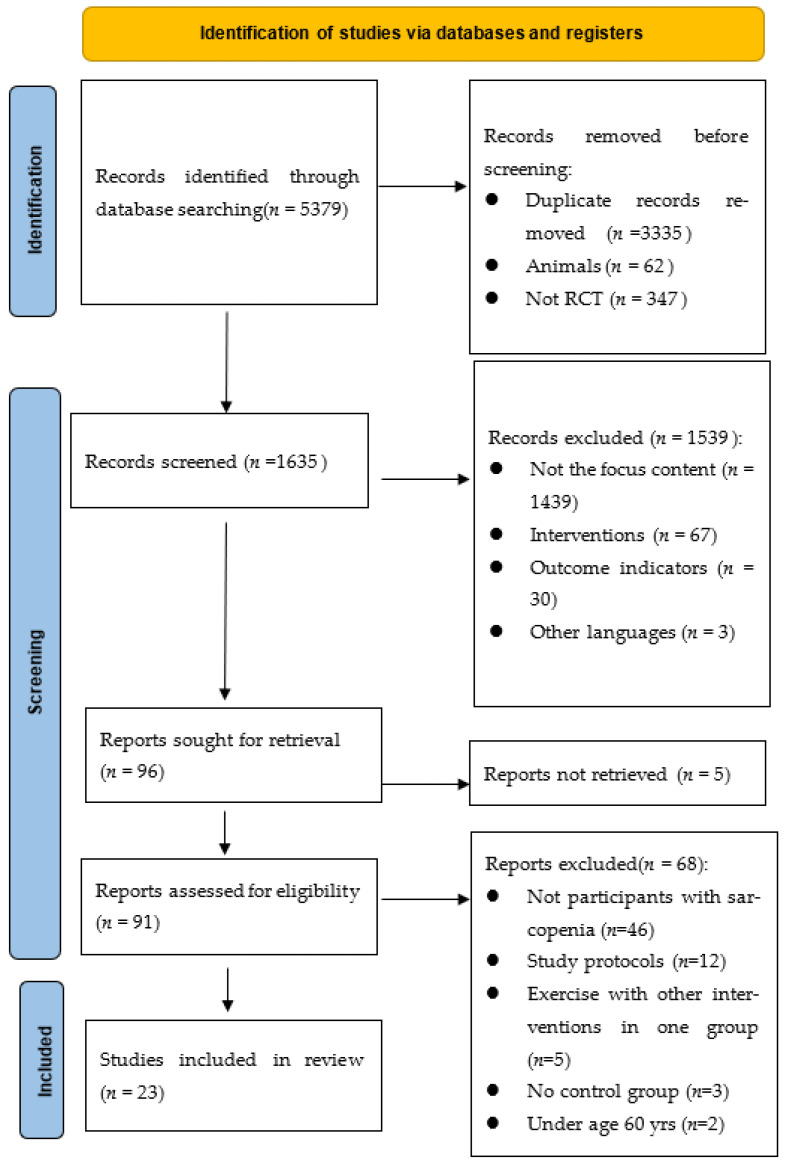
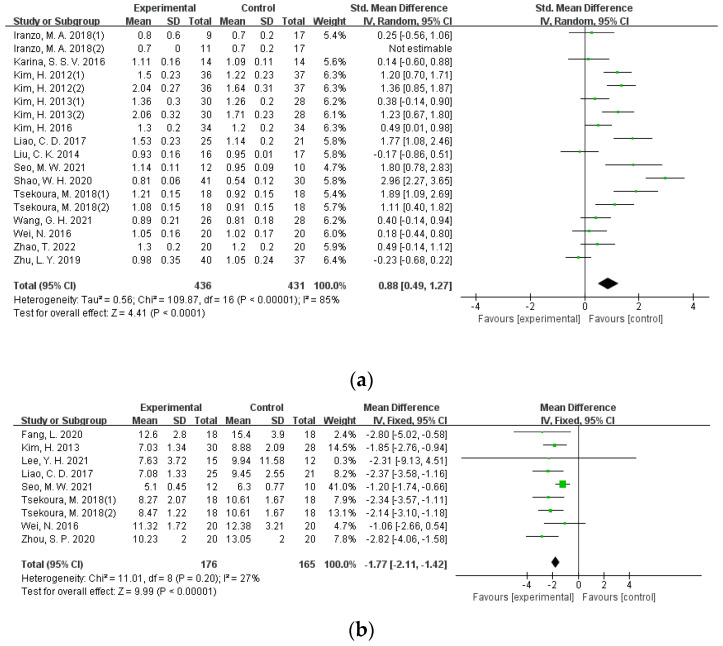
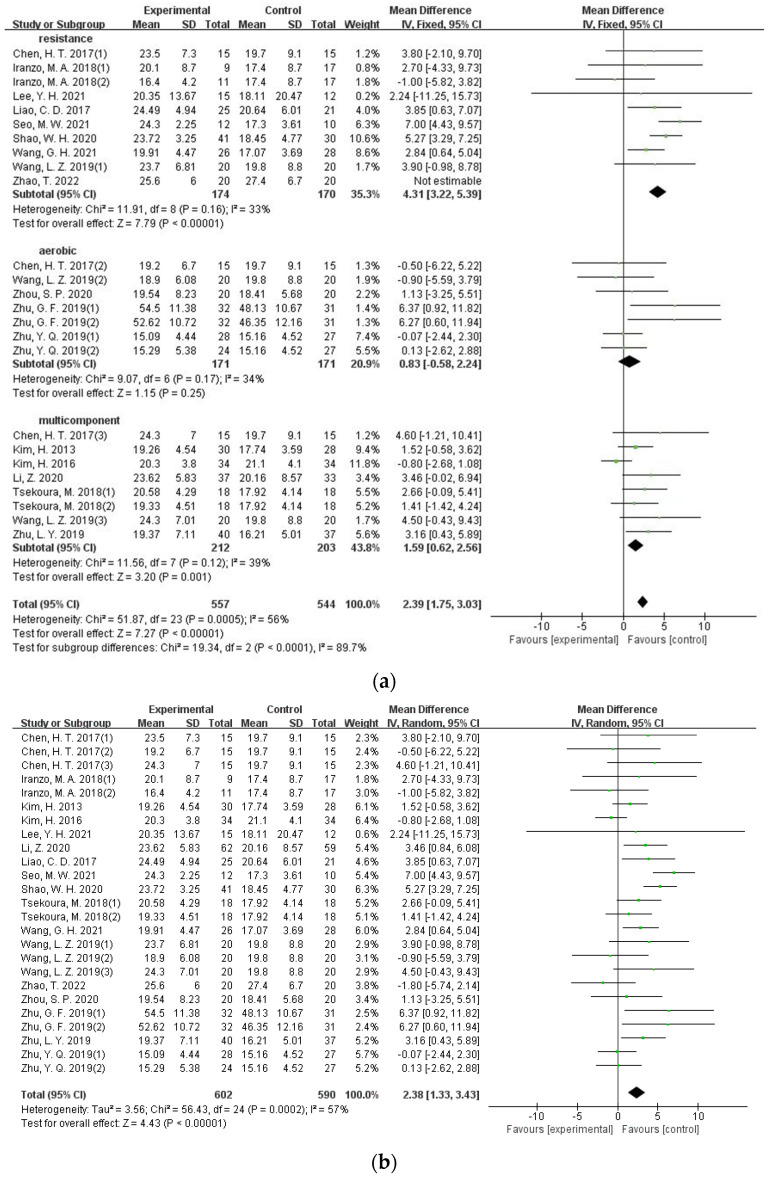
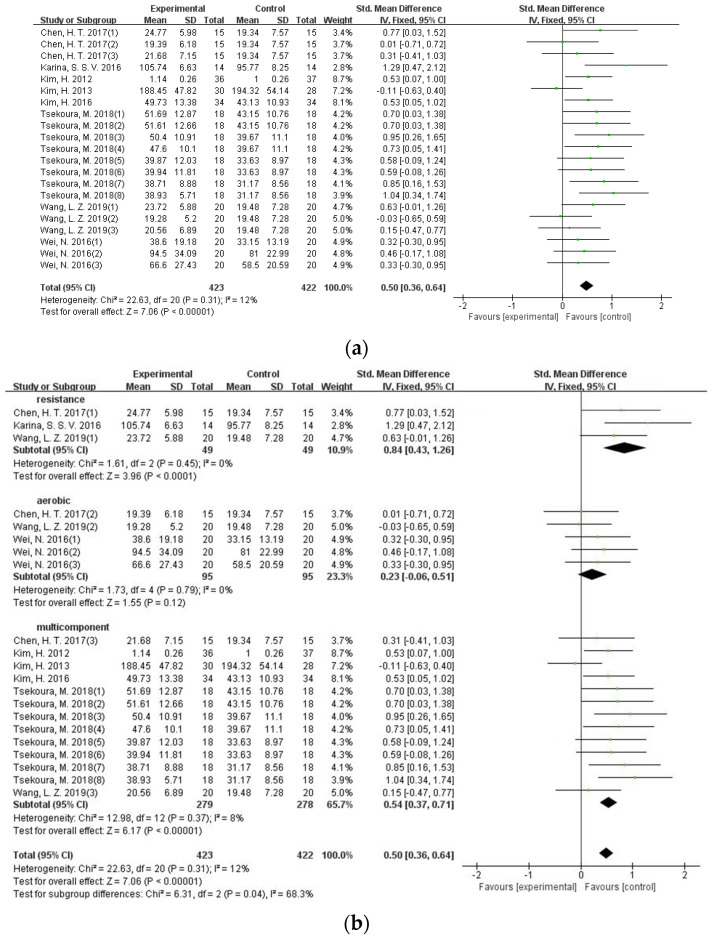
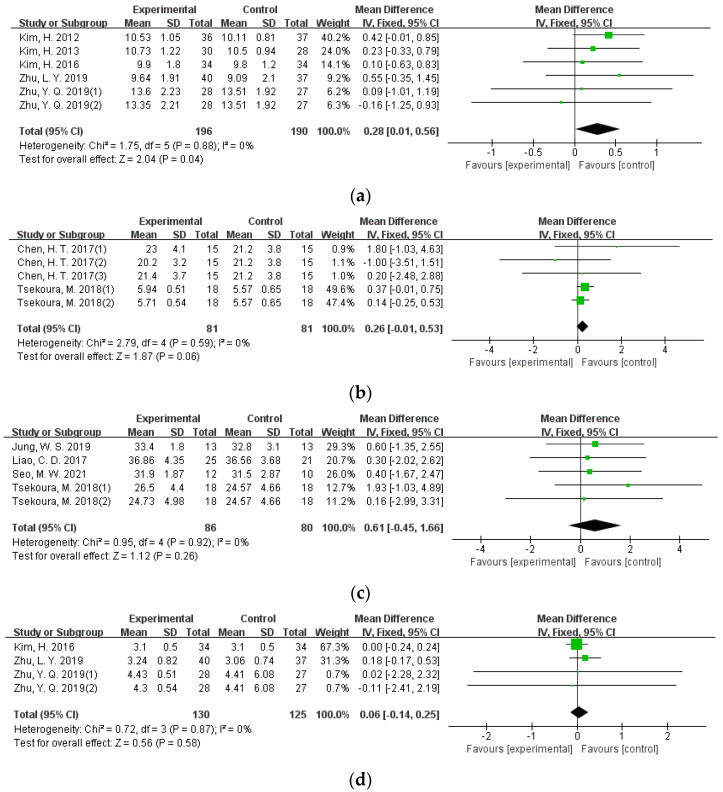
This study aimed to analyze the efficacy of exercise interventions on muscle strength, muscle mass, and physical performance in older adults with sarcopenia. Randomized controlled studies assessing exercise effects on sarcopenia were searched in Web of Science, PubMed, Cochrane Library, ProQuest, EBSCOhost, Scopus, EMBASE, and VIP and CNKI up to 31 March 2022. Data were expressed as weighted/standardized mean difference (MD/SMD) with 95% confidence intervals (CI). I index was employed for heterogeneity. The initial search identified 5379 studies, and 23 studies involving 1252 participants met the inclusion criteria for further analysis. Results revealed that exercise interventions can significantly improve grip strength (MD = 2.38, 95%CI = 1.33-3.43), knee extension strength (SMD = 0.50, 95%CI = 0.36-0.64), muscle mass of lower extremities (MD = 0.28, 95%CI = 0.01-0.56), walking speed (SMD = 0.88, 95%CI = 0.49-1.27), and functional mobility (MD = -1.77, 95%CI = -2.11--1.42) among older adults with sarcopenia. No significant exercise effects were found on fat-free muscle mass, appendicular muscle mass, skeletal muscle mass, and muscle mass of the upper extremities. The results of subgroup analysis indicated that both resistance training and multicomponent exercise could significantly increase the muscle strength, while aerobic exercise did not. The findings suggest that exercise intervention can effectively improve muscle function and physical performance in older adults with sarcopenia, but has limited effects on the muscle mass of the upper extremities. In addition, it is highly recommended to apply group-based and supervised resistance training and multicomponent exercise in the prevention and treatment of sarcopenia among the older population.
本研究旨在分析运动干预对患有肌少症的老年人肌肉力量、肌肉质量和身体机能的疗效。在 Web of Science、PubMed、Cochrane Library、ProQuest、EBSCOhost、Scopus、EMBASE 和 VIP 以及中国知网(CNKI)中检索了评估运动对肌少症影响的随机对照研究,检索截至 2022 年 3 月 31 日。数据以加权/标准化均数差(MD/SMD)和 95%置信区间(CI)表示。采用 I ²指数评估异质性。最初的搜索确定了 5379 项研究,23 项涉及 1252 名参与者的研究符合进一步分析的纳入标准。结果表明,运动干预可以显著提高握力(MD=2.38,95%CI=1.33-3.43)、膝关节伸展力量(SMD=0.50,95%CI=0.36-0.64)、下肢肌肉质量(MD=0.28,95%CI=0.01-0.56)、行走速度(SMD=0.88,95%CI=0.49-1.27)和功能移动性(MD=-1.77,95%CI=-2.11--1.42)。运动对老年人的无脂肪肌肉质量、四肢肌肉质量、骨骼肌质量和上肢肌肉质量没有显著影响。亚组分析结果表明,抗阻训练和多组分运动均可显著增加肌肉力量,而有氧运动则没有。研究结果表明,运动干预可有效改善肌少症老年人的肌肉功能和身体机能,但对上肢肌肉质量的影响有限。此外,强烈建议在老年人中应用基于小组和监督的抗阻训练和多组分运动来预防和治疗肌少症。