Wang William B, Clapper Jude C
Upper School, Taipei American School, 800 Chung Shan North Road, Section 6, Taipei 11152, Taiwan.
Nanomaterials (Basel). 2022 Jun 22;12(13):2139. doi: 10.3390/nano12132139.
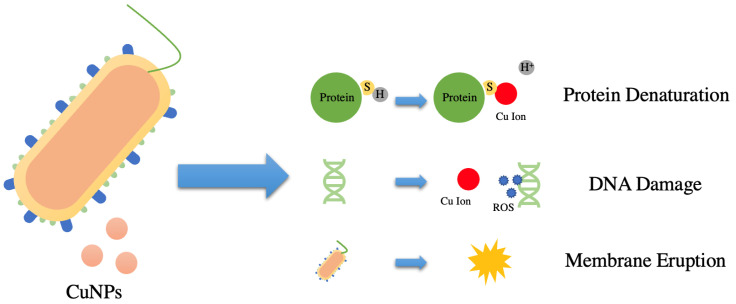
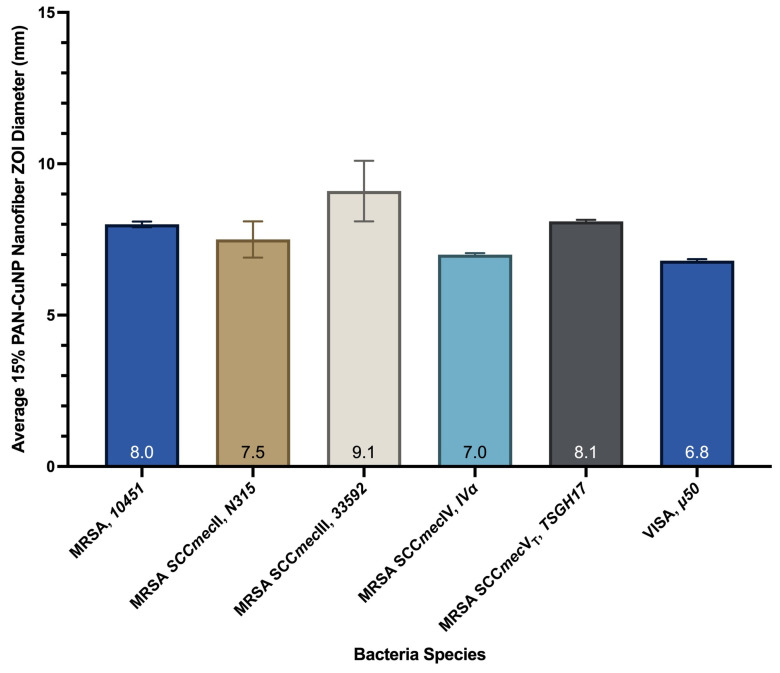
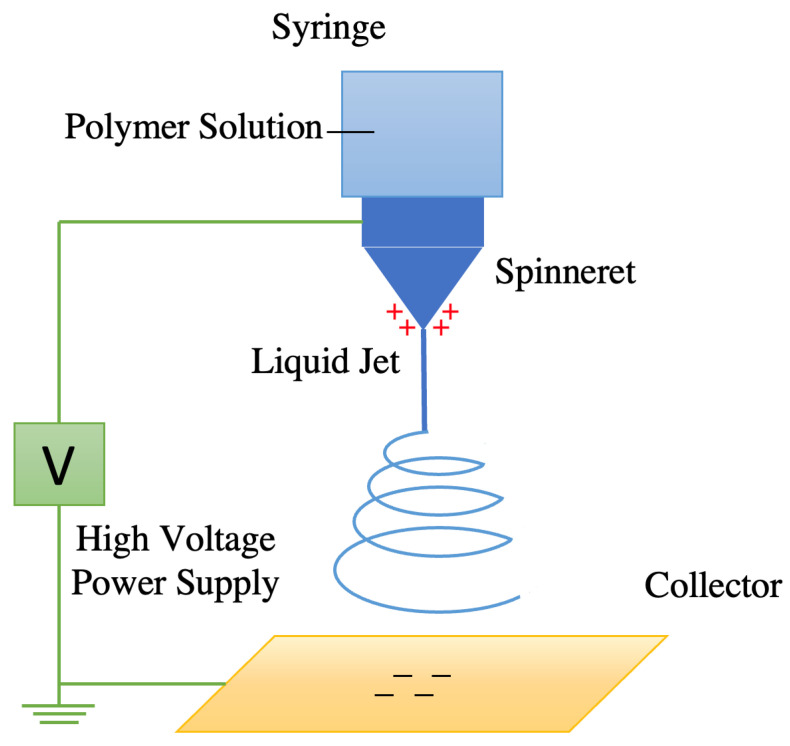
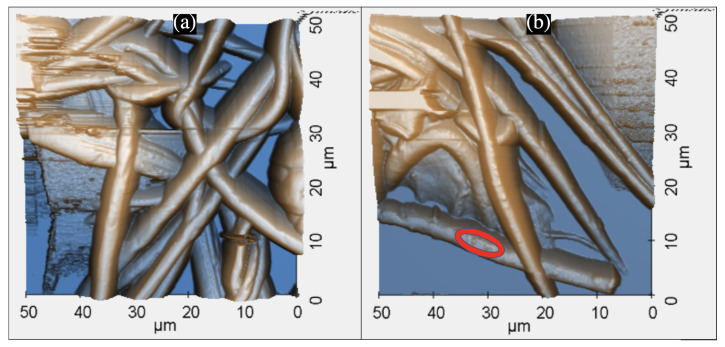
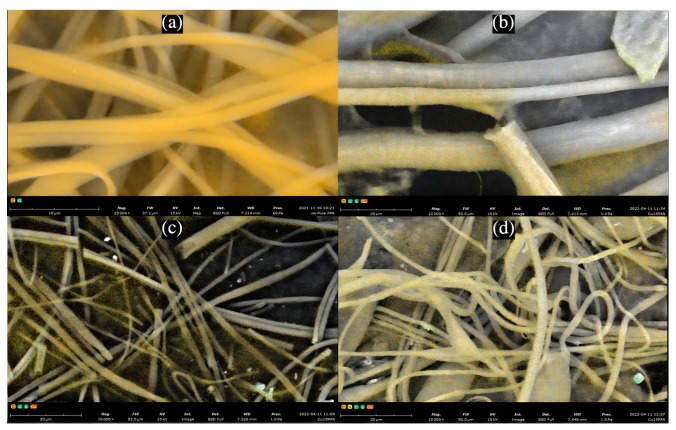
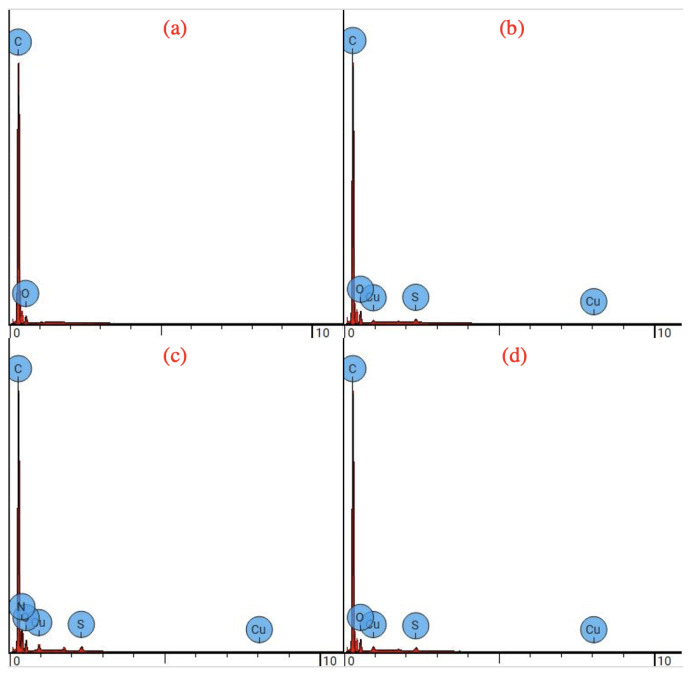
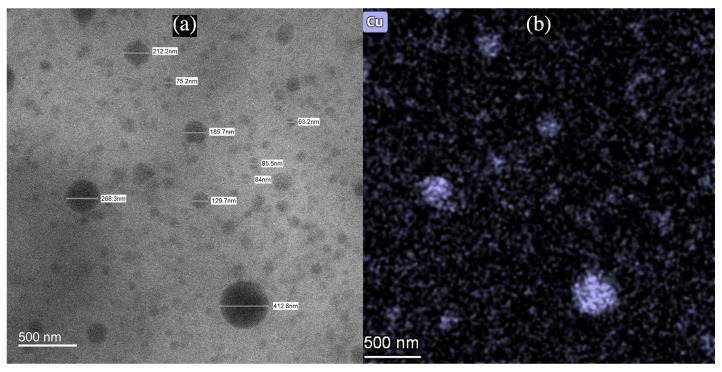
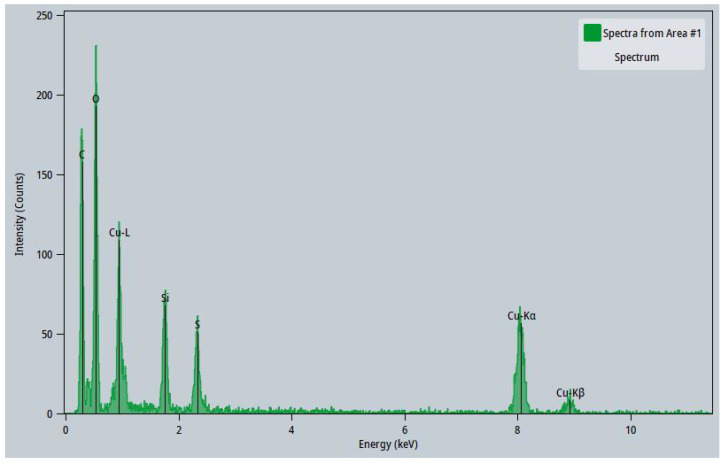
Bacteria induced diseases such as community-acquired pneumonia (CAP) are easily transmitted through respiratory droplets expelled from a person's nose or mouth. It has become increasingly important for researchers to discover materials that can be implemented in in vitro surface contact settings which disrupt bacterial growth and transmission. Copper (Cu) is known to have antibacterial properties and have been used in medical applications. This study investigates the antibacterial properties of polyacrylonitrile (PAN) based nanofibers coated with different concentrations of copper nanoparticles (CuNPs). Different concentrations of copper sulfate (CuSO) and polyacrylonitrile (PAN) were mixed with dimethylformamide (DMF) solution, an electrospinning solvent that also acts as a reducing agent for CuSO, which forms CuNPs and Cu ions. The resulting colloidal solutions were electrospun into nanofibers, which were then characterized using various analysis techniques. Methicillin-Resistant isolates of , an infective strain that induces pneumonia, were incubated with cutouts of various nanocomposites using disk diffusion methods on Luria-Bertani (LB) agar to test for the polymers' antibacterial properties. Herein, we disclose that PAN-CuNP nanofibers have successfully demonstrated antibacterial activity against bacteria that were otherwise resistant to highly effective antibiotics. Our findings reveal that PAN-CuNP nanofibers have the potential to be used on contact surfaces that are at risk of contracting bacterial infections, such as masks, in vivo implants, or surgical intubation.
细菌引发的疾病,如社区获得性肺炎(CAP),很容易通过人鼻子或嘴巴呼出的呼吸道飞沫传播。对于研究人员来说,发现可用于体外表面接触环境以破坏细菌生长和传播的材料变得越来越重要。已知铜(Cu)具有抗菌特性,并已用于医学应用。本研究调查了涂覆不同浓度铜纳米颗粒(CuNP)的聚丙烯腈(PAN)基纳米纤维的抗菌性能。将不同浓度的硫酸铜(CuSO)和聚丙烯腈(PAN)与二甲基甲酰胺(DMF)溶液混合,DMF是一种静电纺丝溶剂,同时也作为CuSO的还原剂,可形成CuNP和Cu离子。将所得胶体溶液静电纺丝成纳米纤维,然后使用各种分析技术对其进行表征。使用纸片扩散法在Luria-Bertani(LB)琼脂上,将耐甲氧西林的肺炎感染菌株与各种纳米复合材料的切片一起孵育,以测试聚合物的抗菌性能。在此,我们揭示PAN-CuNP纳米纤维已成功证明对原本对高效抗生素耐药的细菌具有抗菌活性。我们的研究结果表明,PAN-CuNP纳米纤维有潜力用于有感染细菌风险的接触表面,如口罩、体内植入物或手术插管。