The First Affiliated Hospital of Soochow University/School of Nursing, Soochow University, No. 188 Shizi Street, Suzhou, 215006, China.
School of Nursing, Medical College of Soochow University, Suzhou, 215006, People's Republic of China.
BMC Complement Med Ther. 2022 Jul 14;22(1):187. doi: 10.1186/s12906-022-03668-0.
To investigate the effect of aromatherapy on sleep quality in cancer patients.
Published literature on the effect of aromatherapy in cancer patients with sleep disorders in the form of randomized controlled trials (RCTs) were systematically retrieved and screened from PubMed, Cochrane Library, Embase, CBM, CNKI, VIP, and Wanfang databases from inception to November 2021. The methodological quality of the included studies was critically and independently evaluated by two reviewers using the Cochrane Risk of Bias Assessment Tool for RCTs. The correlated data were extracted using the pre-designed form, and all analyses were performed using Reviewer Manager version 5.4. Due to the difference in sleep quality instruments, the data extracted in this study were in the form of standard mean difference (SMD).
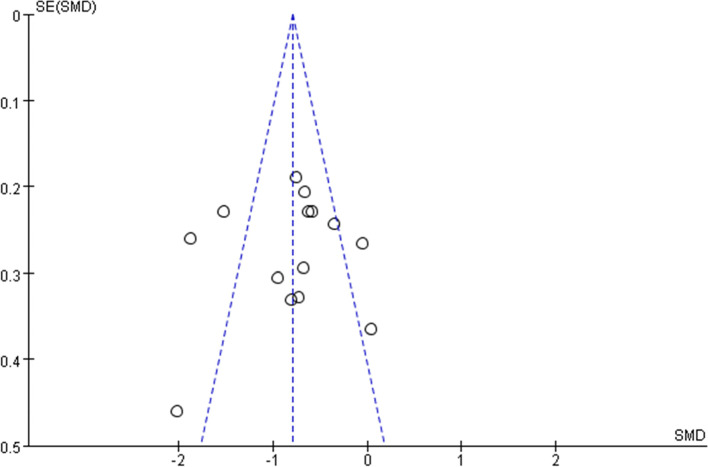
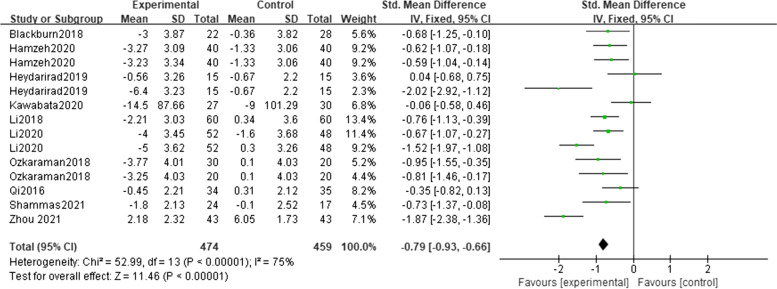
Ten RCTs included 933 patients (experimental group: 474, control group: 459), and the risk of bias in the included studies was moderate. Aromatherapy could significantly improve the sleep quality of cancer patients [SMD = - 0.79, 95% CI (- 0.93, - 0.66), p < 0.01], especially those with breast cancer [SMD = - 0.98, 95% CI (- 1.57, - 0.40), p < 0.01]. Aromatherapy with single essential oil had a better effect on sleep quality [SMD = -0.94, 95%CI (- 1.25, - 0.62), p < 0.01], of which lavender essential oil had the best effect [SMD = -1.06,95%CI (- 1.49, - 0.63), p < 0.01] while compound essential oils had no effect on sleep quality improvement in cancer patients [SMD = -0.21, 95%CI (- 0.57, 0.14), p = 0.23]. Four of the ten RCTs reported the occurrence of adverse events, of which only one RCT indicated that patients had headache and sneezing while the remaining six did not.
This meta-analysis of 10 RCTs reveals that aromatherapy with single essential oil had a substantial effect on the sleep quality of cancer patients and should be recommended as a beneficial complementary therapy to promote sleep quality in cancer patients.
探讨芳香疗法对癌症患者睡眠质量的影响。
系统检索 PubMed、Cochrane Library、Embase、CBM、CNKI、VIP 和万方数据库中以随机对照试验(RCT)形式发表的关于癌症患者睡眠障碍的芳香疗法相关文献,筛选纳入研究,并由 2 位评价员独立按照 Cochrane 偏倚风险评估工具评价纳入研究的方法学质量,采用预先设计的表格提取相关数据,采用 Review Manager 5.4 软件进行分析。由于睡眠质量评估工具的差异,本研究提取的数据形式为标准化均数差(SMD)。
共纳入 10 项 RCT,包含 933 例患者(实验组 474 例,对照组 459 例),纳入研究的偏倚风险为中度。芳香疗法可显著改善癌症患者的睡眠质量[SMD=-0.79,95%CI(-0.93,-0.66),p<0.01],尤其对乳腺癌患者的效果更佳[SMD=-0.98,95%CI(-1.57,-0.40),p<0.01]。使用单一精油的芳香疗法对睡眠质量的改善效果更好[SMD=-0.94,95%CI(-1.25,-0.62),p<0.01],其中薰衣草精油的效果最佳[SMD=-1.06,95%CI(-1.49,-0.63),p<0.01],而复方精油对癌症患者的睡眠质量改善无明显作用[SMD=-0.21,95%CI(-0.57,0.14),p=0.23]。10 项 RCT 中有 4 项报告了不良反应的发生情况,其中仅有 1 项 RCT 报道患者出现头痛和打喷嚏,其余 6 项 RCT 均未报告。
本项包含 10 项 RCT 的荟萃分析结果表明,使用单一精油的芳香疗法对癌症患者的睡眠质量有显著影响,可作为促进癌症患者睡眠质量的有益补充疗法推荐使用。