Wang You-Wei, Hu Nan, Li Xiao-Hong
Academy of Medical Engineering and Translational Medicine, Tianjin University, Tianjin, China.
Front Cell Dev Biol. 2022 Jul 1;10:948818. doi: 10.3389/fcell.2022.948818. eCollection 2022.
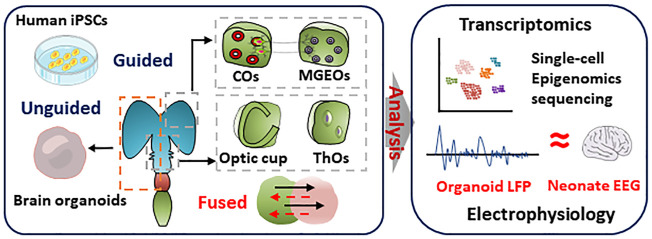
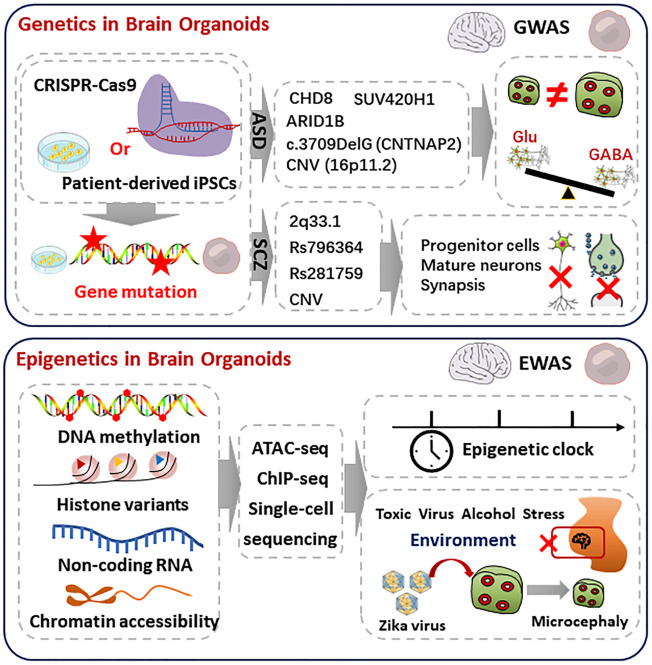
Revealing the mechanisms of neural development and the pathogenesis of neural diseases are one of the most challenging missions in life science. Pluripotent stem cells derived brain organoids mimic the development, maturation, signal generation, and function of human brains, providing unique advantage for neurology. Single-cell RNA sequencing (scRNA-Seq) and multielectrode array independently revealed the similarity between brain organoids and immature human brain at early developmental stages, in the context of gene transcription and dynamic network of neuronal signals. Brain organoids provided the unique opportunity to investigate the underlying mechanism of neural differentiation, senescence, and pathogenesis. In this review, we summarized the latest knowledge and technology in the brain organoid field, the current and potential applications in disease models and pre-clinic studies, with emphasizing the importance of transcriptional and epigenetic analysis.
揭示神经发育机制和神经疾病的发病机制是生命科学中最具挑战性的任务之一。多能干细胞衍生的脑类器官模拟人类大脑的发育、成熟、信号产生和功能,为神经学提供了独特优势。单细胞RNA测序(scRNA-Seq)和多电极阵列分别在基因转录和神经元信号动态网络的背景下揭示了脑类器官与早期发育阶段未成熟人类大脑之间的相似性。脑类器官为研究神经分化、衰老和发病机制的潜在机制提供了独特机会。在本综述中,我们总结了脑类器官领域的最新知识和技术,以及在疾病模型和临床前研究中的当前和潜在应用,强调了转录和表观遗传分析的重要性。