Islam Samia S, Neargarder Sandy, Kinger Shraddha B, Fox-Fuller Joshua T, Salazar Robert D, Cronin-Golomb Alice
Department of Psychological and Brain Sciences, Boston University, Boston, Massachusetts, USA.
Department of Psychology, Bridgewater State University, Bridgewater, Massachusetts, USA.
Gen Psychiatr. 2022 Jun 22;35(3):e100653. doi: 10.1136/gpsych-2021-100653. eCollection 2022.
Parkinson's disease (PD) is associated with perceived stigma and affects quality of life (QoL). Additional health conditions may influence these consequences of PD.
This study assessed the impact of health conditions on perceived stigma and QoL in persons with PD. We hypothesised that individuals with more health conditions would report more stigma and poorer QoL. We also examined the contributions of demographic and clinical characteristics to the correlations between health conditions and perceived stigma/QoL.
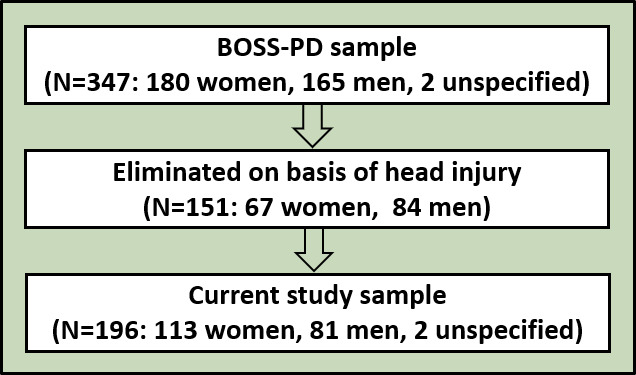
We identified 196 eligible participants from the Boston University Online Survey Study of Parkinson's Disease and examined their health history, performance on multiple stigma measures, and scores on the 39-item Parkinson's Disease Questionnaire assessing QoL.
At least one health condition was reported by 79% of the sample, with a median of 2 and a range of 0-7 health conditions. More perceived stigma and poorer QoL were associated with thyroid disease, depression, anxiety, and the total number of health conditions. These correlations were related to younger age, less education, and earlier disease onset. Other health conditions (high blood pressure, back/leg surgery, headache, cancer/tumours, and heart disease) were not significantly correlated with stigma or QoL.
Having more health conditions, or thyroid disease, depression, or anxiety, was associated with more perceived stigma and poorer QoL, with younger age, less education, and earlier disease onset affecting the associations. It is important to consider the burden of health conditions and how they affect persons with PD with specific clinical characteristics.
帕金森病(PD)与可感知的耻辱感相关,并影响生活质量(QoL)。其他健康状况可能会影响帕金森病的这些后果。
本研究评估了健康状况对帕金森病患者可感知耻辱感和生活质量的影响。我们假设患有更多健康问题的个体报告的耻辱感更强,生活质量更差。我们还研究了人口统计学和临床特征对健康状况与可感知耻辱感/生活质量之间相关性的影响。
我们从波士顿大学帕金森病在线调查研究中确定了196名符合条件的参与者,并检查了他们的健康史、多种耻辱感测量指标的表现以及用于评估生活质量的39项帕金森病问卷的得分。
79%的样本报告至少有一种健康状况,中位数为2种,范围为0至7种健康状况。更多的可感知耻辱感和较差的生活质量与甲状腺疾病、抑郁症、焦虑症以及健康状况总数相关。这些相关性与年龄较小、教育程度较低和疾病发病较早有关。其他健康状况(高血压、背部/腿部手术、头痛、癌症/肿瘤和心脏病)与耻辱感或生活质量无显著相关性。
患有更多健康问题,或甲状腺疾病、抑郁症或焦虑症,与更多的可感知耻辱感和较差的生活质量相关,年龄较小、教育程度较低和疾病发病较早影响这些关联。考虑健康问题的负担以及它们如何影响具有特定临床特征的帕金森病患者很重要。