• 文献检索
  • 文档翻译
  • 深度研究
  • 学术资讯
  • Suppr Zotero 插件Zotero 插件
  • 邀请有礼
  • 套餐&价格
  • 历史记录
应用&插件
Suppr Zotero 插件Zotero 插件浏览器插件Mac 客户端Windows 客户端微信小程序
定价
高级版会员购买积分包购买API积分包
服务
文献检索文档翻译深度研究API 文档MCP 服务
关于我们
关于 Suppr公司介绍联系我们用户协议隐私条款
关注我们

Suppr 超能文献

核心技术专利:CN118964589B侵权必究
粤ICP备2023148730 号-1Suppr @ 2026

文献检索

告别复杂PubMed语法,用中文像聊天一样搜索,搜遍4000万医学文献。AI智能推荐,让科研检索更轻松。

立即免费搜索

文件翻译

保留排版,准确专业,支持PDF/Word/PPT等文件格式,支持 12+语言互译。

免费翻译文档

深度研究

AI帮你快速写综述,25分钟生成高质量综述,智能提取关键信息,辅助科研写作。

立即免费体验

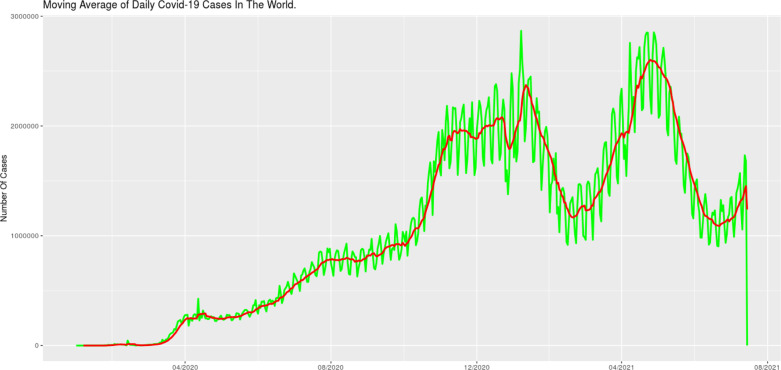
使用混合自回归积分移动平均(ARIMA)和神经网络模型预测全球每日新冠病毒病例数。

Forecasting daily Covid-19 cases in the world with a hybrid ARIMA and neural network model.

作者信息

de Araújo Morais Lucas Rabelo, da Silva Gomes Gecynalda Soares

机构信息

Department of Statistics, Federal University of Bahia, Salvador, Bahia, Brazil.

出版信息

Appl Soft Comput. 2022 Sep;126:109315. doi: 10.1016/j.asoc.2022.109315. Epub 2022 Jul 15.

DOI:10.1016/j.asoc.2022.109315
PMID:35854916
原文链接:https://pmc.ncbi.nlm.nih.gov/articles/PMC9283122/
Abstract

The use of models to predict disease cases is common in epidemiology and related areas, in the context of Covid-19, both ARIMA and Neural Network models can be applied for purposes of optimized resource management, so the aim of this study is to capture the linear and non-linear structures of daily Covid-19 cases in the world by using a hybrid forecasting model. In summary, the proposed hybrid system methodology consists of two steps. In the first step, an ARIMA model is used to analyze the linear part of the problem. In the second step, a neural network model is developed to model the residuals of the ARIMA model, which would be the non-linear part of it. The neural network model was superior to the ARIMA when considering the capture of weekly seasonality and in two weeks, the combination of models with the capture of seasonality in two weeks provided a mixed model with good error metrics, that allows actions to be premeditated with greater certainty, such as increasing the number of nurses in a location, or the acceleration of vaccination campaigns to diminish a possible increase in the number of cases.

摘要

在流行病学及相关领域,使用模型预测疾病病例的情况很常见。在新冠疫情背景下,自回归积分滑动平均(ARIMA)模型和神经网络模型均可用于优化资源管理。因此,本研究旨在通过使用混合预测模型捕捉全球每日新冠病例的线性和非线性结构。总之,所提出的混合系统方法包括两个步骤。第一步,使用ARIMA模型分析问题的线性部分。第二步,开发神经网络模型对ARIMA模型的残差进行建模,这将是其非线性部分。在考虑捕捉每周季节性方面,神经网络模型优于ARIMA模型,并且在两周内,结合捕捉两周季节性的模型提供了一个具有良好误差指标的混合模型,这使得能够更确定地预先策划行动,例如增加某个地点的护士数量,或加快疫苗接种运动以减少病例数可能的增加。
https://cdn.ncbi.nlm.nih.gov/pmc/blobs/a901/9283122/d05a8d9414f4/gr1_lrg.jpg

相似文献

1
Forecasting daily Covid-19 cases in the world with a hybrid ARIMA and neural network model.使用混合自回归积分移动平均(ARIMA)和神经网络模型预测全球每日新冠病毒病例数。
Appl Soft Comput. 2022 Sep;126:109315. doi: 10.1016/j.asoc.2022.109315. Epub 2022 Jul 15.
2
Implementation of stacking based ARIMA model for prediction of Covid-19 cases in India.基于堆叠的 ARIMA 模型在印度新冠病例预测中的应用。
J Biomed Inform. 2021 Sep;121:103887. doi: 10.1016/j.jbi.2021.103887. Epub 2021 Aug 15.
3
Vaccine rate forecast for COVID-19 in Africa using hybrid forecasting models.利用混合预测模型预测非洲的 COVID-19 疫苗接种率。
Afr Health Sci. 2023 Mar;23(1):93-103. doi: 10.4314/ahs.v23i1.11.
4
A hybrid model of ARIMA and MLP with a Grasshopper optimization algorithm for time series forecasting of water quality.一种结合自回归积分滑动平均模型(ARIMA)和多层感知器(MLP)并采用蚱蜢优化算法的混合模型,用于水质时间序列预测。
Sci Rep. 2024 Oct 13;14(1):23927. doi: 10.1038/s41598-024-74144-7.
5
Medical service demand forecasting using a hybrid model based on ARIMA and self-adaptive filtering method.基于 ARIMA 和自适应滤波方法的混合模型进行医疗服务需求预测。
BMC Med Inform Decis Mak. 2020 Sep 19;20(1):237. doi: 10.1186/s12911-020-01256-1.
6
Comparison of Two Hybrid Models for Forecasting the Incidence of Hemorrhagic Fever with Renal Syndrome in Jiangsu Province, China.两种混合模型对中国江苏省肾综合征出血热发病率预测的比较
PLoS One. 2015 Aug 13;10(8):e0135492. doi: 10.1371/journal.pone.0135492. eCollection 2015.
7
Daily air quality index forecasting with hybrid models: A case in China.基于混合模型的每日空气质量指数预测:以中国为例。
Environ Pollut. 2017 Dec;231(Pt 2):1232-1244. doi: 10.1016/j.envpol.2017.08.069. Epub 2017 Sep 19.
8
Forecasting and comparative analysis of Covid-19 cases in India and US.印度和美国新冠肺炎病例的预测与对比分析。
Eur Phys J Spec Top. 2022;231(18-20):3537-3544. doi: 10.1140/epjs/s11734-022-00536-3. Epub 2022 Mar 19.
9
Application of a hybrid model in predicting the incidence of tuberculosis in a Chinese population.一种混合模型在中国人群结核病发病率预测中的应用。
Infect Drug Resist. 2019 Apr 29;12:1011-1020. doi: 10.2147/IDR.S190418. eCollection 2019.
10
Time series prediction of under-five mortality rates for Nigeria: comparative analysis of artificial neural networks, Holt-Winters exponential smoothing and autoregressive integrated moving average models.尼日利亚五岁以下儿童死亡率的时间序列预测:人工神经网络、Holt-Winters 指数平滑和自回归综合移动平均模型的比较分析。
BMC Med Res Methodol. 2020 Dec 3;20(1):292. doi: 10.1186/s12874-020-01159-9.

引用本文的文献

1
A systematic analysis for disease burden, risk factors, and trend projection of Alzheimer's disease and other dementias in China and globally.中国及全球阿尔茨海默病和其他痴呆症的疾病负担、风险因素及趋势预测的系统分析。
PLoS One. 2025 May 7;20(5):e0322574. doi: 10.1371/journal.pone.0322574. eCollection 2025.
2
Can the number of confirmed COVID-19 cases be predicted more accurately by including lifestyle data? An exploratory study for data-driven prediction of COVID-19 cases in metropolitan cities using deep learning models.纳入生活方式数据能否更准确地预测新冠确诊病例数?一项使用深度学习模型对大城市新冠病例进行数据驱动预测的探索性研究。
Digit Health. 2025 Jan 26;11:20552076251314528. doi: 10.1177/20552076251314528. eCollection 2025 Jan-Dec.
3

本文引用的文献

1
A systematic review on AI/ML approaches against COVID-19 outbreak.关于人工智能/机器学习方法应对新冠疫情的系统综述。
Complex Intell Systems. 2021;7(5):2655-2678. doi: 10.1007/s40747-021-00424-8. Epub 2021 Jul 5.
2
Applications of artificial intelligence in COVID-19 pandemic: A comprehensive review.人工智能在新冠疫情中的应用:一项全面综述。
Expert Syst Appl. 2021 Dec 15;185:115695. doi: 10.1016/j.eswa.2021.115695. Epub 2021 Aug 4.
3
The first 12 months of COVID-19: a timeline of immunological insights.COVID-19 出现的头 12 个月:免疫学研究进展一览。
Innovative applications of artificial intelligence during the COVID-19 pandemic.人工智能在新冠疫情期间的创新应用。
Infect Med (Beijing). 2024 Feb 21;3(1):100095. doi: 10.1016/j.imj.2024.100095. eCollection 2024 Mar.
4
Fuzzy inference-based LSTM for long-term time series prediction.基于模糊推理的长短期记忆网络用于长期时间序列预测。
Sci Rep. 2023 Nov 21;13(1):20359. doi: 10.1038/s41598-023-47812-3.
5
Early Warning and Prediction of Scarlet Fever in China Using the Baidu Search Index and Autoregressive Integrated Moving Average With Explanatory Variable (ARIMAX) Model: Time Series Analysis.基于百度搜索指数和自回归积分滑动平均模型(ARIMAX)的中国猩红热早期预警和预测:时间序列分析。
J Med Internet Res. 2023 Oct 30;25:e49400. doi: 10.2196/49400.
6
Research on the Application of Integrated Learning Models in Oilfield Production Forecasting.集成学习模型在油田产量预测中的应用研究
ACS Omega. 2023 Oct 10;8(42):39583-39595. doi: 10.1021/acsomega.3c05422. eCollection 2023 Oct 24.
7
Analysis and prediction of the incidence and prevalence trends of gonorrhea in China.中国淋病发病率和患病率趋势分析及预测。
Hum Vaccin Immunother. 2023 Aug;19(2):2256907. doi: 10.1080/21645515.2023.2256907. Epub 2023 Oct 9.
8
Predicting the unemployment rate and energy poverty levels in selected European Union countries using an ARIMA-ARNN model.使用自回归积分移动平均-自回归神经网络(ARIMA-ARNN)模型预测部分欧盟国家的失业率和能源贫困水平。
PeerJ Comput Sci. 2023 Jul 10;9:e1464. doi: 10.7717/peerj-cs.1464. eCollection 2023.
9
Tracking machine learning models for pandemic scenarios: a systematic review of machine learning models that predict local and global evolution of pandemics.追踪大流行情景下的机器学习模型:对预测大流行局部和全球演变的机器学习模型的系统综述
Netw Model Anal Health Inform Bioinform. 2022;11(1):40. doi: 10.1007/s13721-022-00384-0. Epub 2022 Oct 11.
Nat Rev Immunol. 2021 Apr;21(4):245-256. doi: 10.1038/s41577-021-00522-1. Epub 2021 Mar 15.
4
A review on COVID-19 forecasting models.关于新冠病毒疾病预测模型的综述。
Neural Comput Appl. 2021 Feb 4:1-11. doi: 10.1007/s00521-020-05626-8.
5
Real-time measurement of the uncertain epidemiological appearances of COVID-19 infections.实时测量新型冠状病毒肺炎感染的不确定流行病学表现。
Appl Soft Comput. 2021 Mar;101:107039. doi: 10.1016/j.asoc.2020.107039. Epub 2020 Dec 25.
6
History of the COVID-19 pandemic: Origin, explosion, worldwide spreading.COVID-19 大流行的历史:起源、爆发、全球传播。
Biochem Biophys Res Commun. 2021 Jan 29;538:14-23. doi: 10.1016/j.bbrc.2020.10.087. Epub 2020 Nov 6.
7
Artificial intelligence technology for diagnosing COVID-19 cases: a review of substantial issues.人工智能技术诊断 COVID-19 病例:重大问题综述。
Eur Rev Med Pharmacol Sci. 2020 Sep;24(17):9226-9233. doi: 10.26355/eurrev_202009_22875.
8
Asymptomatic COVID-19 Patients Can Contaminate Their Surroundings: an Environment Sampling Study.无症状 COVID-19 患者可污染其周围环境:一项环境采样研究。
mSphere. 2020 Jun 24;5(3):e00442-20. doi: 10.1128/mSphere.00442-20.
9
Disease management with ARIMA model in time series.时间序列中基于自回归积分滑动平均(ARIMA)模型的疾病管理
Einstein (Sao Paulo). 2013 Jan-Mar;11(1):128-31. doi: 10.1590/s1679-45082013000100024.
10
The coefficient of determination: what determines a useful R² statistic?决定系数:是什么决定了一个有用的R²统计量?
Invest Ophthalmol Vis Sci. 2012 Oct 3;53(11):6830-2. doi: 10.1167/iovs.12-10598.