Environmental, Genetic and Nutritional Epidemiology Research Center (CREAGEN), Section of Public Health, Department of Biomedical, Metabolic and Neural Sciences, University of Modena and Reggio Emilia, 41125 Modena, Italy.
Department of Epidemiology, Boston University School of Public Health, Boston, MA 02118, USA.
J Travel Med. 2022 Sep 17;29(6). doi: 10.1093/jtm/taac081.
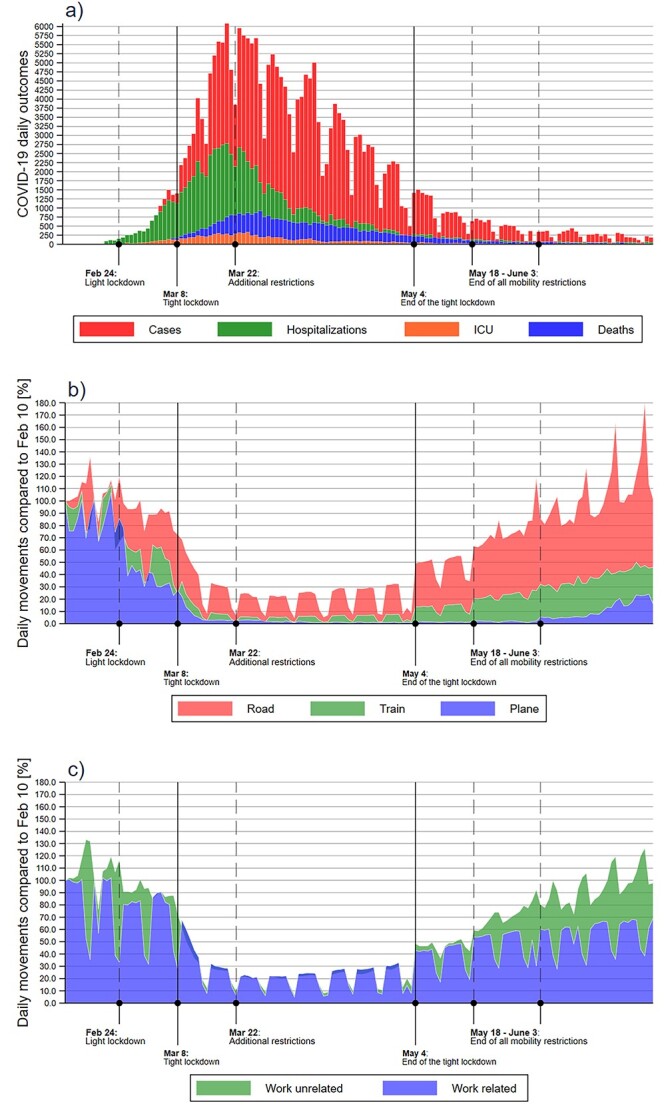
Italy was the first country after China to be severely affected by the COVID-19 pandemic, in early 2020. The country responded swiftly to the outbreak with a nationwide two-step lockdown, the first one light and the second one tight. By analyzing 2020 national mobile phone movements, we assessed how lockdown compliance influenced its efficacy.
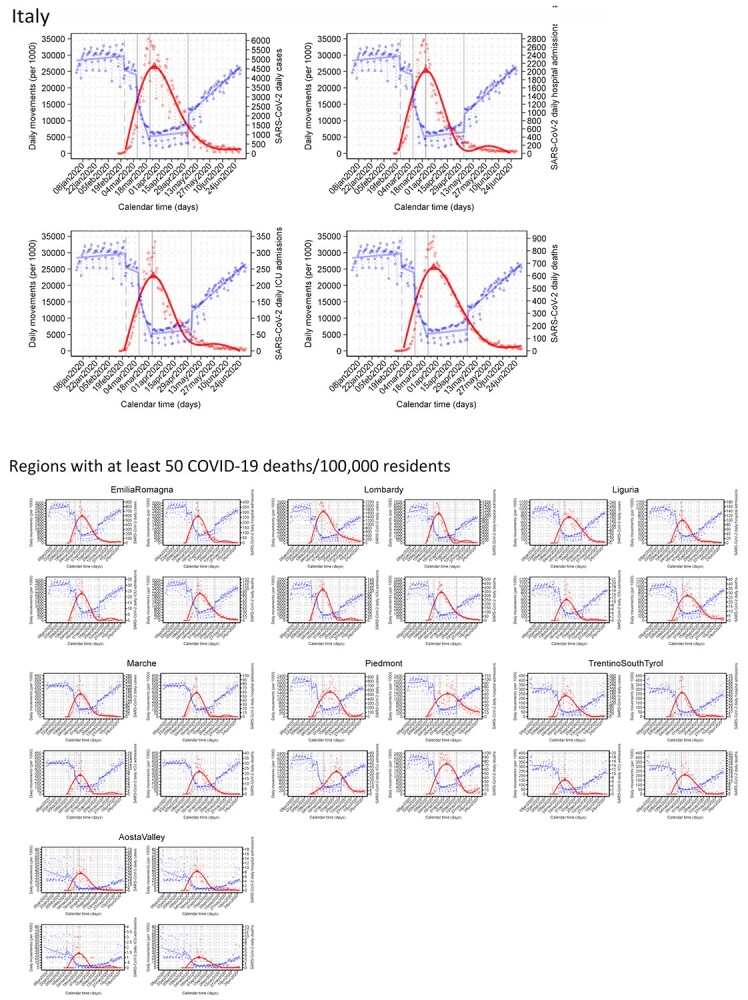
We measured individual mobility during the first epidemic wave with mobile phone movements tracked through carrier networks, and related this mobility to daily new SARS-CoV-2 infections, hospital admissions, intensive care admissions and deaths attributed to COVID-19, taking into account reason for travel (work-related or not) and the means of transport.
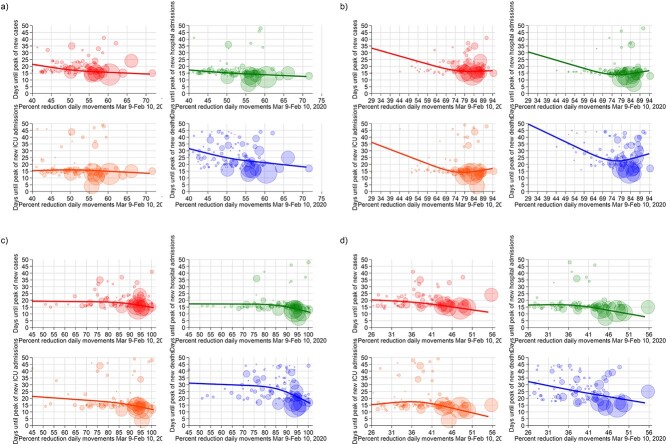
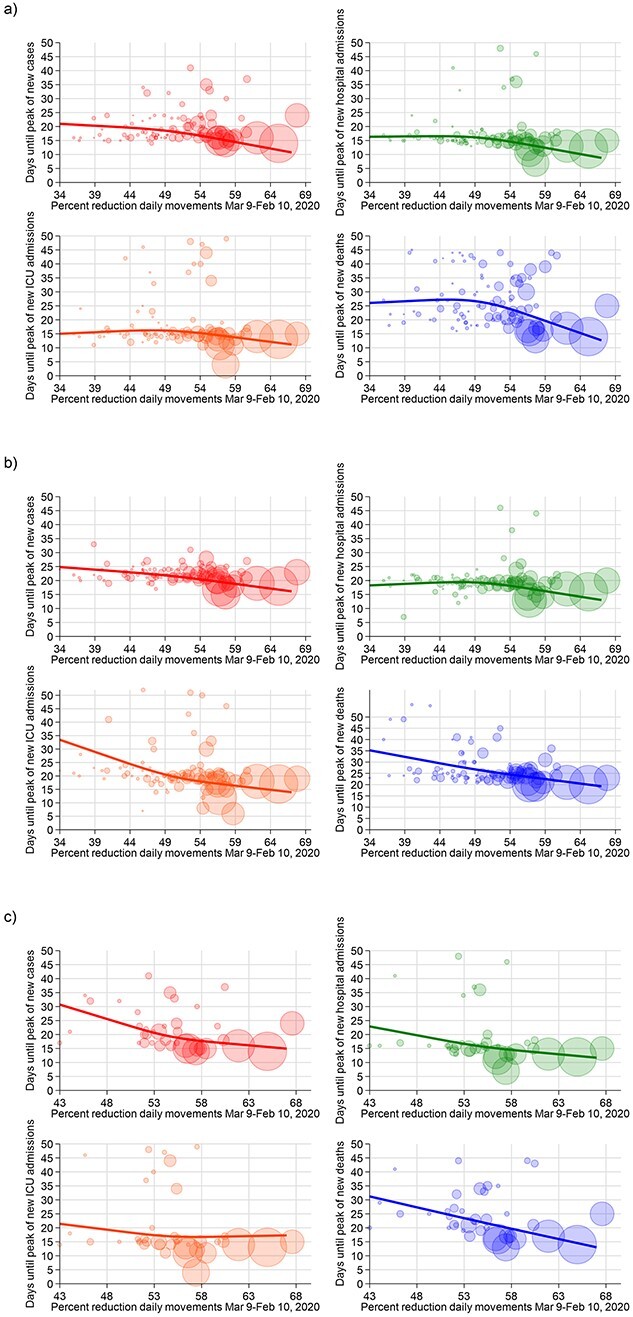
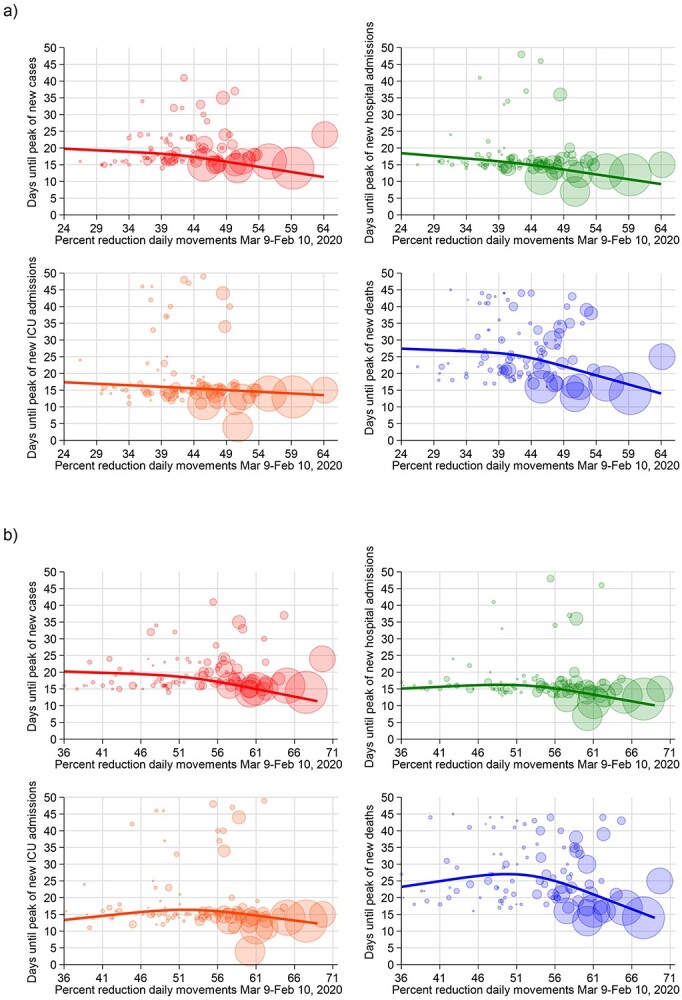
The tight lockdown resulted in an 82% reduction in mobility for the entire country and was effective in swiftly curbing the outbreak as indicated by a shorter time-to-peak of all health outcomes, particularly for provinces with the highest mobility reductions and the most intense COVID-19 spread. Reduction of work-related mobility was accompanied by a nearly linear benefit in outbreak containment; work-unrelated movements had a similar effect only for restrictions exceeding 50%. Reduction in mobility by car and by airplane was nearly linearly associated with a decrease in most COVID-19 health outcomes, while for train travel reductions exceeding 55% had no additional beneficial effects. The absence of viral variants and vaccine availability during the study period eliminated confounding from these two sources.
Adherence to the COVID-19 tight lockdown during the first wave in Italy was high and effective in curtailing the outbreak. Any work-related mobility reduction was effective, but only high reductions in work-unrelated mobility restrictions were effective. For train travel, there was a threshold above which no further benefit occurred. These findings could be particular to the spread of SARS-CoV-2, but might also apply to other communicable infections with comparable transmission dynamics.
意大利是继中国之后第一个受到 COVID-19 大流行严重影响的国家,于 2020 年初。该国迅速对疫情做出反应,实施了全国范围的两步封锁,第一次封锁较为宽松,第二次封锁较为严格。通过分析 2020 年全国移动电话使用情况,我们评估了封锁措施的遵守情况对其效果的影响。
我们通过运营商网络跟踪移动电话的使用情况来衡量首次疫情浪潮期间的个人移动情况,并将这种移动性与每日新的 SARS-CoV-2 感染、住院、重症监护入院和 COVID-19 死亡联系起来,同时考虑出行原因(与工作相关或不相关)和交通工具。
全面封锁导致全国范围内的流动性减少了 82%,这一措施迅速有效地遏制了疫情的蔓延,所有健康结果的峰值时间都缩短了,特别是在流动性减少最多和 COVID-19 传播最严重的省份。减少与工作相关的流动性伴随着疫情控制的显著线性收益;仅当限制措施超过 50%时,与工作无关的流动才具有类似的效果。私家车和飞机的流动性减少与大多数 COVID-19 健康结果的下降几乎呈线性相关,而对于火车旅行,减少超过 55%则没有额外的有益效果。在研究期间没有病毒变异和疫苗供应,因此消除了这两个因素的混杂影响。
意大利在首次疫情浪潮期间对 COVID-19 严格封锁的遵守程度很高,这一措施有效地遏制了疫情的蔓延。任何与工作相关的流动性减少都是有效的,但只有大幅减少与工作无关的流动性限制才有效。对于火车旅行,超过一定阈值后,进一步减少的效果不再明显。这些发现可能与 SARS-CoV-2 的传播有关,但也可能适用于其他具有类似传播动力学的传染性感染。