Euler Maximilian, Perl Thorsten, Eickel Isabell, Dudakova Anna, Maguilla Rosado Esther, Drees Carolin, Vautz Wolfgang, Wieditz Johannes, Meissner Konrad, Kunze-Szikszay Nils
Department of Anesthesiology, University Medical Center Göttingen, Robert-Koch-Straße 40, 37075 Göttingen, Germany.
Department of General, Visceral and Pediatric Surgery, University Medical Center Göttingen, Robert-Koch-Straße 40, 37075 Göttingen, Germany.
Antibiotics (Basel). 2022 Jul 23;11(8):992. doi: 10.3390/antibiotics11080992.
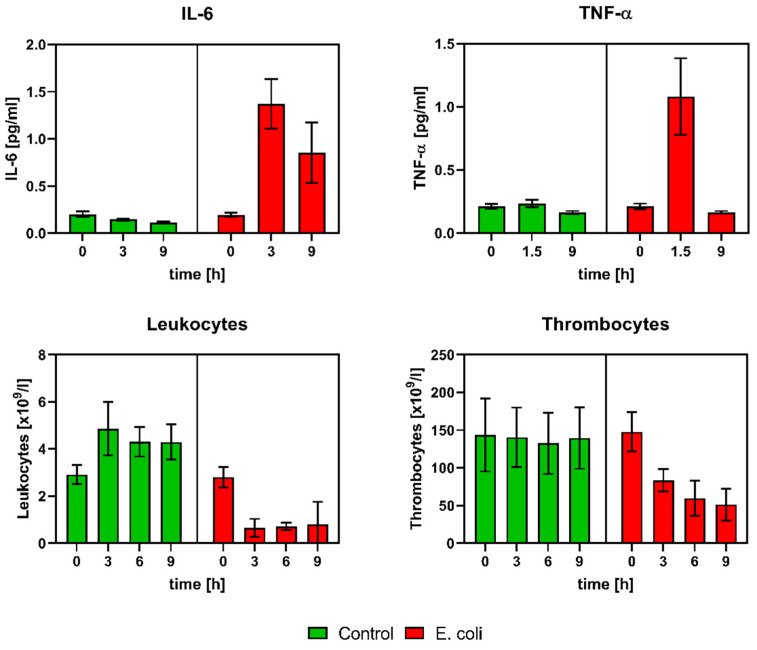
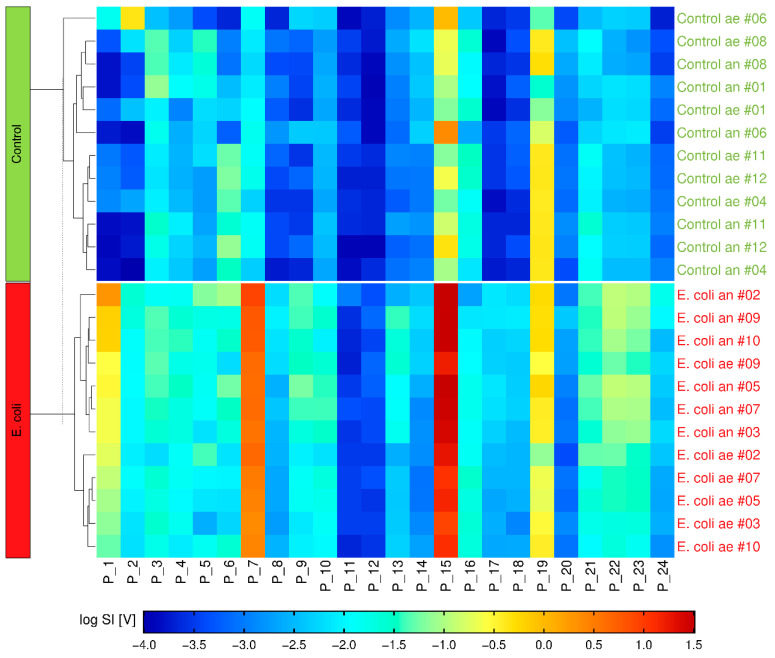
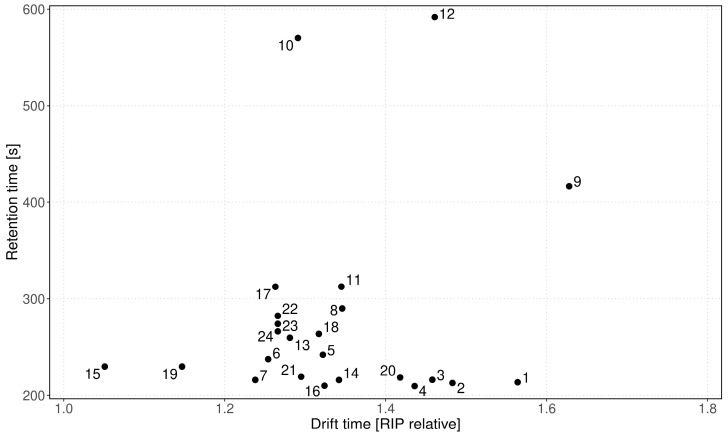
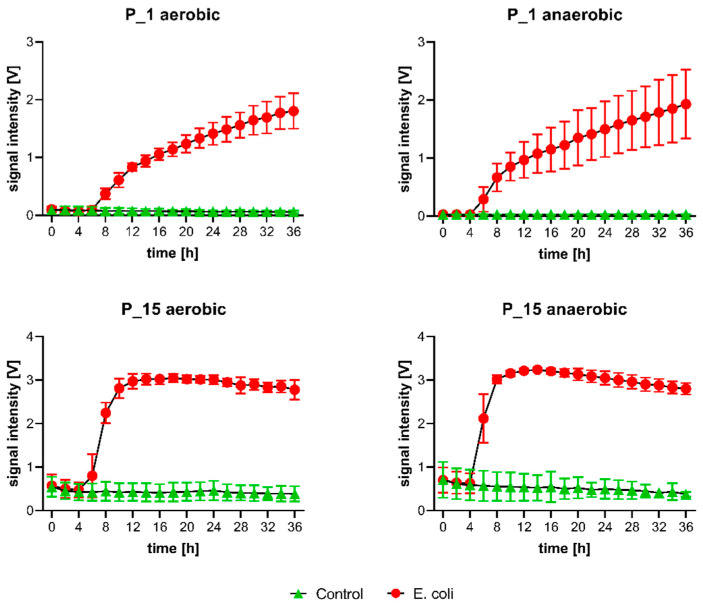
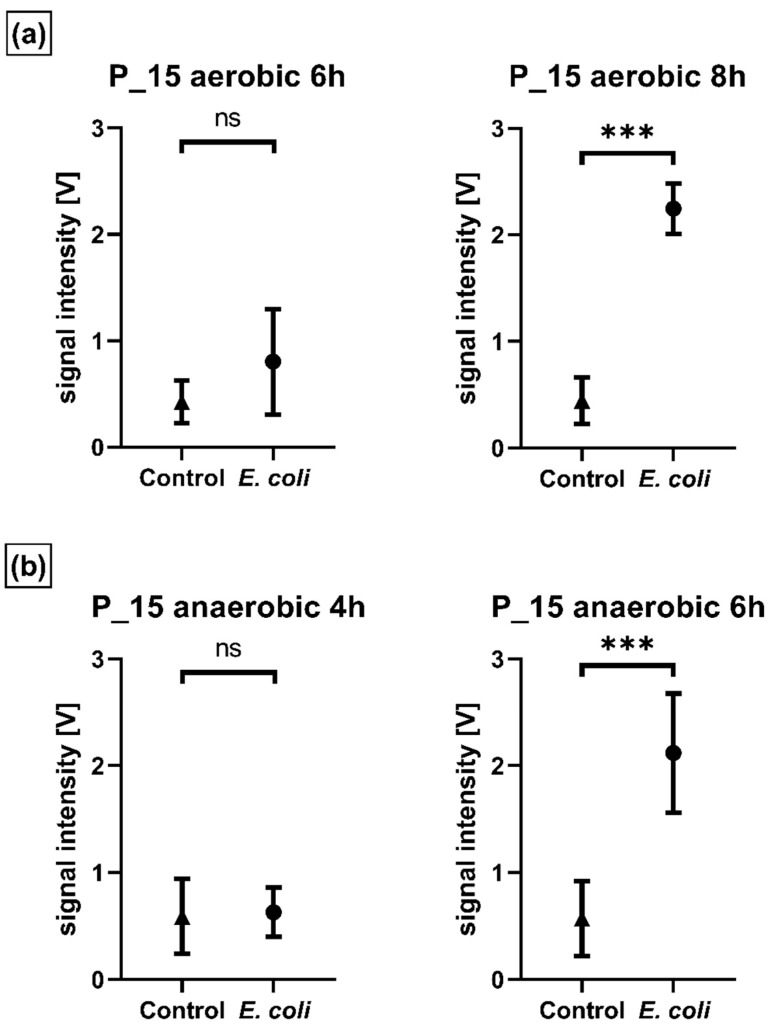
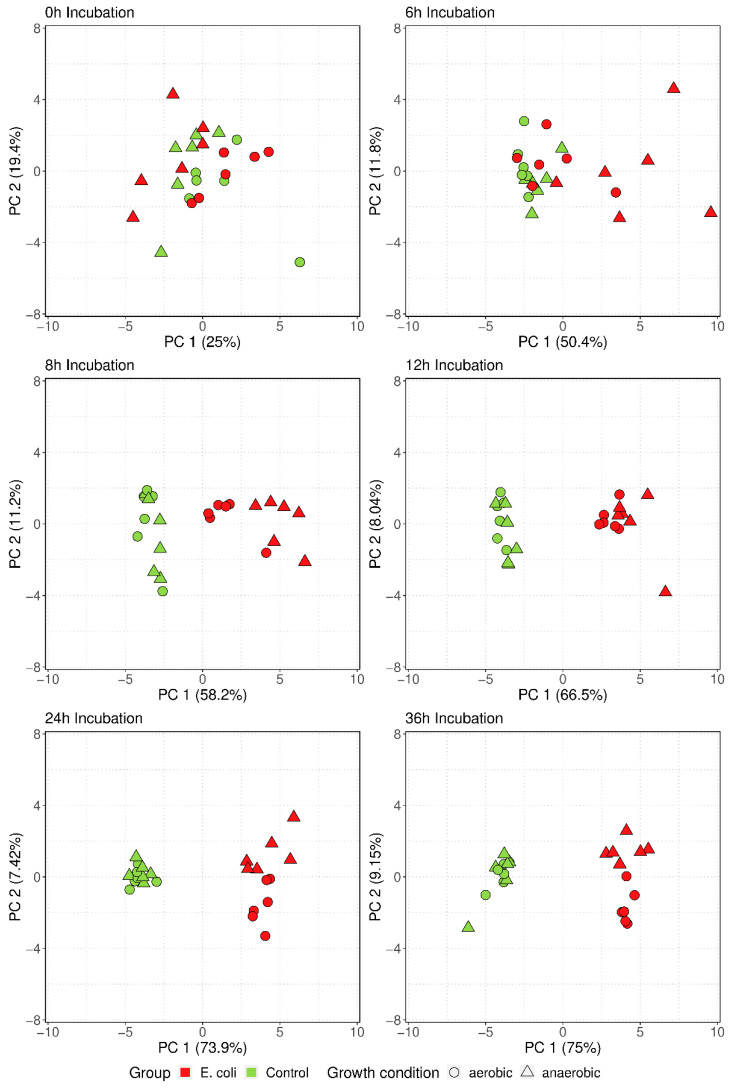
(1) Background: Automated blood culture headspace analysis for the detection of volatile organic compounds of microbial origin (mVOC) could be a non-invasive method for bedside rapid pathogen identification. We investigated whether analyzing the gaseous headspace of blood culture (BC) bottles through gas chromatography-ion mobility spectrometry (GC-IMS) enables differentiation of infected and non-infected; (2) Methods: BC were gained out of a rabbit model, with sepsis induced by intravenous administration of E. coli (EC group; n = 6) and control group (n = 6) receiving sterile LB medium intravenously. After 10 h, a pair of blood cultures was obtained and incubated for 36 h. The headspace from aerobic and anaerobic BC was sampled every two hours using an autosampler and analyzed using a GC-IMS device. MALDI-TOF MS was performed to confirm or exclude microbial growth in BCs; (3) Results: Signal intensities (SI) of 113 mVOC peak regions were statistically analyzed. In 24 regions, the SI trends differed between the groups and were considered to be useful for differentiation. The principal component analysis showed differentiation between EC and control group after 6 h, with 62.2% of the data variance described by the principal components 1 and 2. Single peak regions, for example peak region P_15, show significant SI differences after 6 h in the anaerobic environment (p < 0.001) and after 8 h in the aerobic environment (p < 0.001); (4) Conclusions: The results are promising and warrant further evaluation in studies with an extended microbial panel and indications concerning its transferability to human samples.
(1) 背景:通过自动血液培养顶空分析检测微生物来源的挥发性有机化合物(mVOC)可能是一种用于床边快速病原体鉴定的非侵入性方法。我们研究了通过气相色谱 - 离子迁移谱(GC - IMS)分析血液培养(BC)瓶的气态顶空是否能够区分感染和未感染情况;(2) 方法:从兔模型中获取血液培养样本,通过静脉注射大肠杆菌诱导败血症(EC组;n = 6),对照组(n = 6)静脉注射无菌LB培养基。10小时后,获取一对血液培养样本并培养36小时。使用自动进样器每两小时对需氧和厌氧血液培养的顶空进行采样,并使用GC - IMS设备进行分析。进行基质辅助激光解吸电离飞行时间质谱(MALDI - TOF MS)以确认或排除血液培养中的微生物生长;(3) 结果:对113个mVOC峰区域的信号强度(SI)进行了统计分析。在24个区域中,两组之间的SI趋势不同,被认为有助于区分。主成分分析显示6小时后EC组和对照组之间存在差异,主成分1和2描述了62.2%的数据方差。单峰区域,例如峰区域P_15,在厌氧环境中6小时后(p < 0.001)和需氧环境中8小时后(p < 0.001)显示出显著的SI差异;(4) 结论:结果很有前景,值得在扩大微生物组和关于其向人类样本可转移性的适应症的研究中进行进一步评估。