Sánchez-Cid Pablo, Jiménez-Rosado Mercedes, Romero Alberto, Pérez-Puyana Víctor
Departamento de Ingeniería Química, Facultad de Química, Universidad de Sevilla, 41012 Sevilla, Spain.
Polymers (Basel). 2022 Jul 26;14(15):3023. doi: 10.3390/polym14153023.
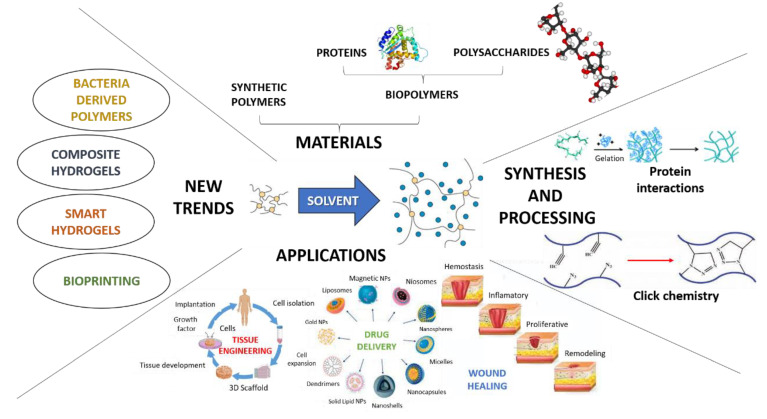
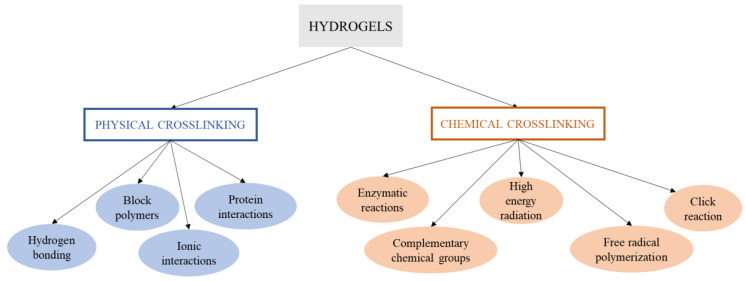
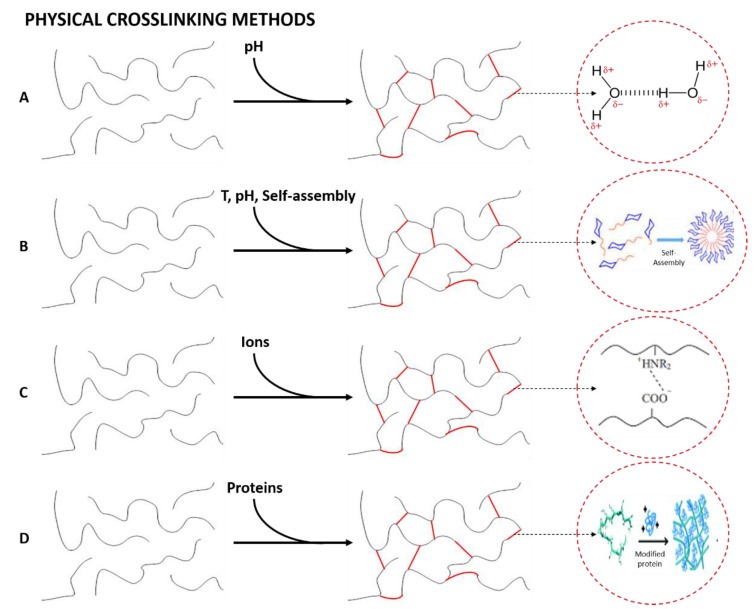
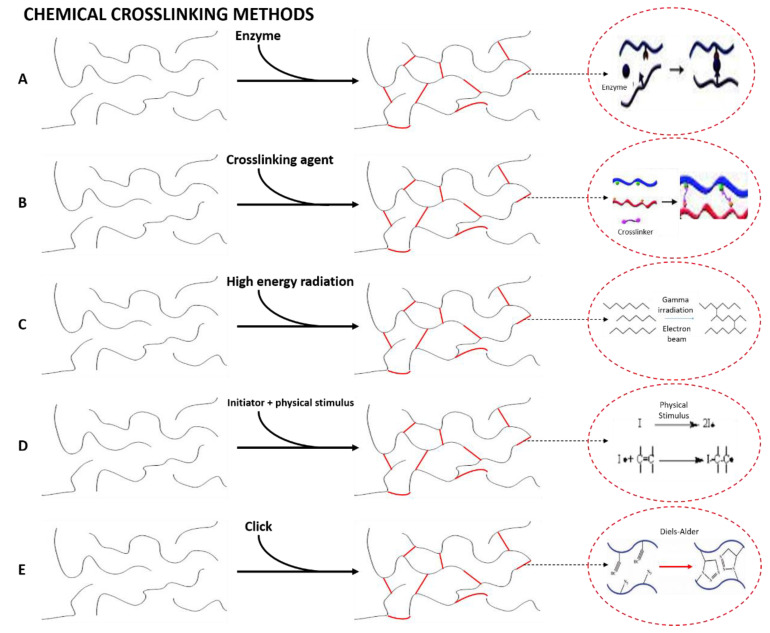
Nowadays, there are still numerous challenges for well-known biomedical applications, such as tissue engineering (TE), wound healing and controlled drug delivery, which must be faced and solved. Hydrogels have been proposed as excellent candidates for these applications, as they have promising properties for the mentioned applications, including biocompatibility, biodegradability, great absorption capacity and tunable mechanical properties. However, depending on the material or the manufacturing method, the resulting hydrogel may not be up to the specific task for which it is designed, thus there are different approaches proposed to enhance hydrogel performance for the requirements of the application in question. The main purpose of this review article was to summarize the most recent trends of hydrogel technology, going through the most used polymeric materials and the most popular hydrogel synthesis methods in recent years, including different strategies of enhancing hydrogels' properties, such as cross-linking and the manufacture of composite hydrogels. In addition, the secondary objective of this review was to briefly discuss other novel applications of hydrogels that have been proposed in the past few years which have drawn a lot of attention.
如今,对于一些著名的生物医学应用,如组织工程(TE)、伤口愈合和可控药物递送,仍然存在诸多挑战,这些挑战必须加以面对和解决。水凝胶已被认为是这些应用的理想候选材料,因为它们具有适用于上述应用的诸多特性,包括生物相容性、生物可降解性、强大的吸收能力以及可调节的机械性能。然而,根据材料或制造方法的不同,所得到的水凝胶可能无法胜任其设计的特定任务,因此人们提出了不同的方法来根据相关应用的要求提高水凝胶的性能。这篇综述文章的主要目的是总结水凝胶技术的最新趋势,介绍近年来最常用的聚合材料和最流行的水凝胶合成方法,包括增强水凝胶性能的不同策略,如交联和复合水凝胶的制造。此外,这篇综述的第二个目标是简要讨论过去几年中提出的、引起广泛关注的水凝胶的其他新应用。