Soft Molecular Activation Research Center (SMARC), Chiba Iodine Resource Innovation Center (CIRIC), Molecular Chirality Research Center (MCRC), and Department of Chemistry, Graduate School of Science, Chiba University, 1-33 Yayoi, Inage, Chiba , 263-8522, Japan.
Sci Rep. 2022 Jul 28;12(1):12892. doi: 10.1038/s41598-022-17230-y.
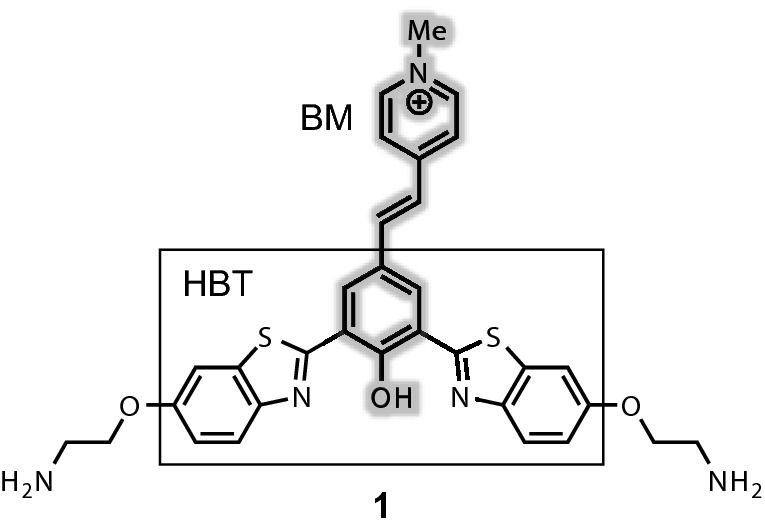
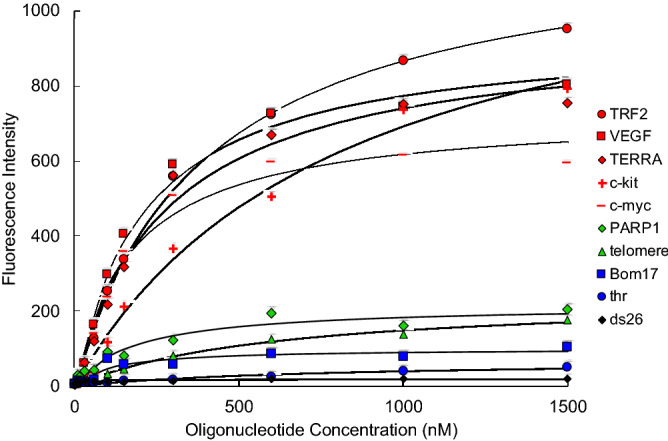
G-quadruplexes (G4s) regulate various biological processes in cells. However, cellular imaging of dynamically forming G4s in biomolecular condensates using small molecules has been poorly investigated. Herein, we present a fluorescent light-up probe with the ability to selectively stabilize G4s and enhance fluorescence upon G4 binding. The foci of the probe were mainly observed in the nucleoli. These were co-localized with anti-fibrillarin antibodies and anti-G4 antibodies (BG4). Moreover, we tested detection of G4 in stress granules using the developed probe. Stress granules were induced through treatment with not only thapsigargin, but also known G4 ligands (pyridostatin, RHPS4, and BRACO-19). In the stress granules, co-localization between the probe, BG4, and stress granule markers (TIA1 and G3BP1) was detected. We present a practical light-up probe for G4s in stress granules, providing potential targets for G4 ligands.
四链体(G4s)在细胞中调节各种生物过程。然而,使用小分子对生物分子凝聚体中动态形成的 G4 进行细胞内成像的研究甚少。在此,我们提出了一种荧光点亮探针,它具有选择性稳定 G4 并在结合 G4 时增强荧光的能力。探针的焦点主要观察到在核仁中。这些与抗核仁纤维蛋白抗体和抗 G4 抗体(BG4)共定位。此外,我们使用开发的探针测试了应激颗粒中 G4 的检测。通过用不仅他泊沙康唑,而且已知的 G4 配体(吡啶并[3,4-d]嘧啶,RHPS4 和 BRACO-19)处理来诱导应激颗粒。在应激颗粒中,检测到探针、BG4 和应激颗粒标记物(TIA1 和 G3BP1)之间的共定位。我们提出了一种用于应激颗粒中 G4 的实用点亮探针,为 G4 配体提供了潜在的靶标。