Department of Population Health Science and Policy, Icahn School of Medicine at Mount Sinai, New York, NY, USA.
Brookdale Department of Geriatrics and Palliative Medicine, Icahn School of Medicine at Mount Sinai, 1 Gustave L. Levy Place, Box 1640, New York, NY, 10029, USA.
BMC Health Serv Res. 2022 Aug 10;22(1):1021. doi: 10.1186/s12913-022-08414-3.
Although racial and ethnic minorities disproportionately use some hospitals, hospital-based racial and ethnic composition relative to geographic region and its association with quality indicators has not been systematically analyzed.
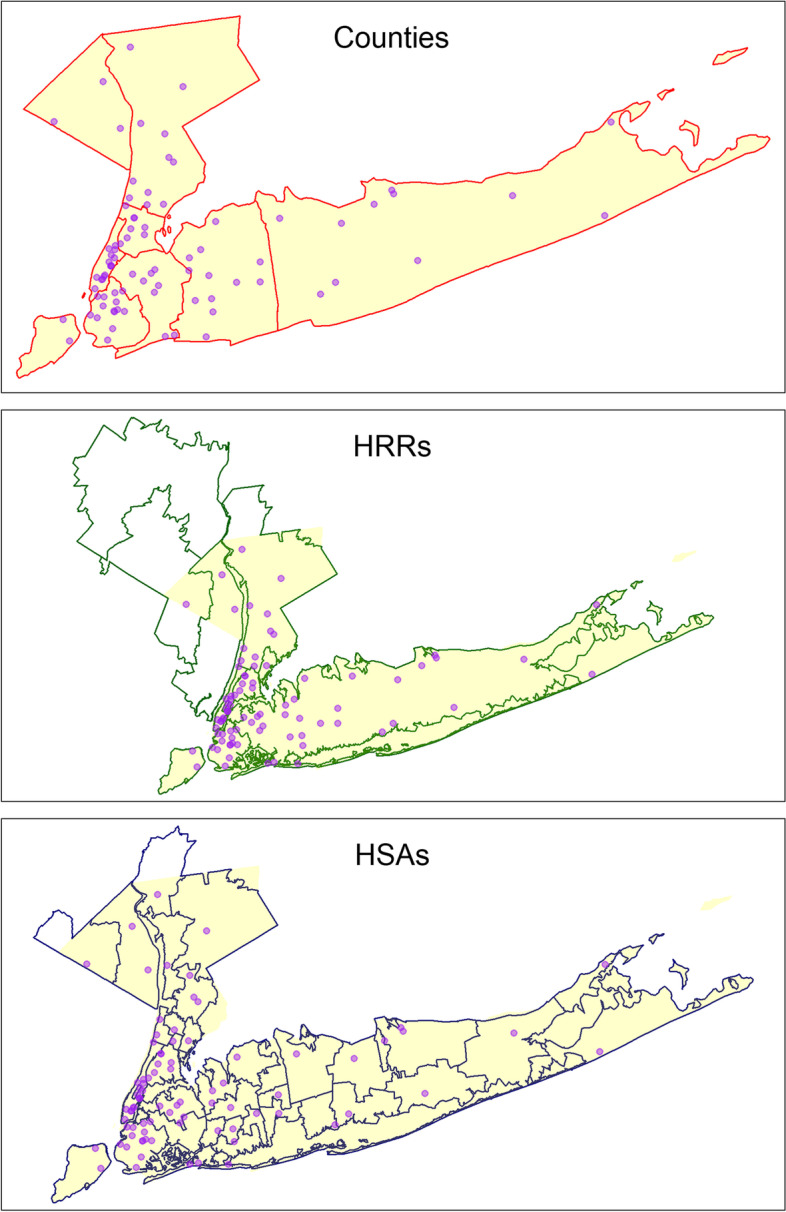
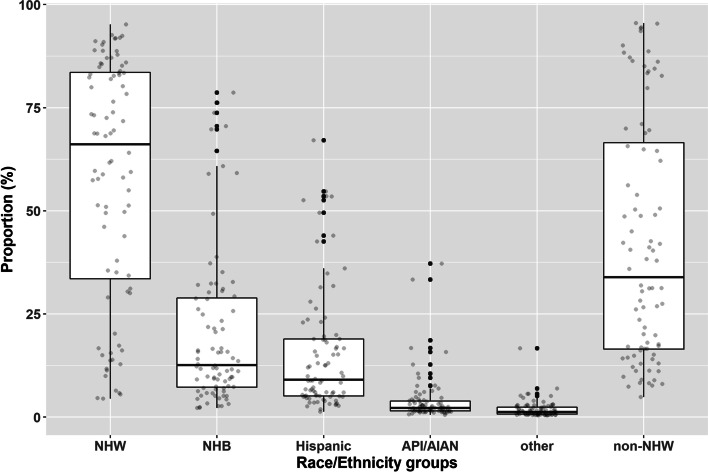
We used four race and ethnicity categories: non-Hispanic white (NHW), non-Hispanic black (NHB), Hispanic, and Asian/Pacific Islander/Alaskan Native/American Indian (API/AIAN), as well as a combined non-NHW category, from the 2010 (latest year publicly available) Medicare Institutional Provider & Beneficiary Summary public use file for 84 hospitals in the New York City region. We assessed the relative distribution of race and ethnicity across hospitals grouped at different geographic levels (region, county, hospital referral region [HRR], or hospital service areas [HSA]) using the dissimilarity index. Hospital characteristics included quality star ratings, essential professional services and diagnostic/treatment equipment, bed size, total expenses, and patients with dual Medicare and Medicaid enrollment. We assessed Spearman's rank correlation between hospital-based racial and ethnic composition and quality/structural measures.
Dissimilarity Index decreases from region (range 30.3-40.1%) to county (range 13.7-23.5%), HRR (range 10.5-27.5%), and HSA (range 12.0-16.9%) levels. Hospitals with larger non-NHW patients tended to have lower hospital ratings and higher proportions of dually-enrolled patients. They were also more likely to be safety net hospitals and non-federal governmental hospitals.
In the NYC metropolitan region, there is considerable hospital-based racial and ethnic segregation of Medicare patients among non-NHW populations, extending previous research limited to NHB. Availability of data on racial and ethnic composition of hospitals should be made publicly available for researchers and consumers.
尽管少数族裔和少数民族不成比例地使用某些医院,但相对于地理区域的医院种族和族裔构成及其与质量指标的关联尚未得到系统分析。
我们使用了四个种族和族裔类别:非西班牙裔白人(NHW)、非西班牙裔黑人(NHB)、西班牙裔以及亚洲/太平洋岛民/阿拉斯加原住民/美洲印第安人(API/AIAN),以及一个非 NHW 类别,来自纽约市地区 84 家医院的 2010 年(最新公开可用)医疗保险机构提供者和受益人摘要公共使用文件。我们使用不相似指数评估了不同地理级别(地区、县、医院转诊区[HRR]或医院服务区[HSA])分组的医院中种族和族裔的相对分布情况。医院特征包括质量星级评定、基本专业服务和诊断/治疗设备、床位数、总费用以及同时参加医疗保险和医疗补助的患者人数。我们评估了医院种族和族裔构成与质量/结构措施之间的 Spearman 等级相关系数。
不相似指数从地区(范围 30.3-40.1%)下降到县(范围 13.7-23.5%)、HRR(范围 10.5-27.5%)和 HSA(范围 12.0-16.9%)。非 NHW 患者人数较多的医院往往评级较低,同时有更多的双重参保患者。这些医院也更有可能是医疗保障网医院和非联邦政府医院。
在纽约市大都市区,非 NHW 人群中医疗保险患者在医院的种族和族裔隔离程度相当大,这扩大了先前仅限于 NHB 的研究范围。应向研究人员和消费者公开提供有关医院种族和族裔构成的数据。