School of Social Sciences, Humanities and Arts, University of California, Merced, CA, United States.
University of California, Davis, Sacramento, CA, United States.
J Med Internet Res. 2022 Aug 19;24(8):e36322. doi: 10.2196/36322.
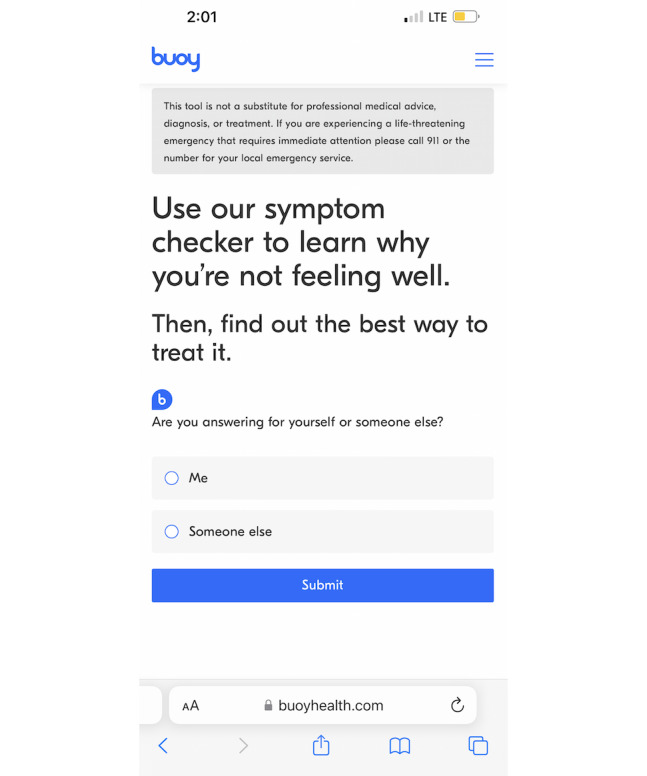
The ever-growing amount of health information available on the web is increasing the demand for tools providing personalized and actionable health information. Such tools include symptom checkers that provide users with a potential diagnosis after responding to a set of probes about their symptoms. Although the potential for their utility is great, little is known about such tools' actual use and effects.
We aimed to understand who uses a web-based artificial intelligence-powered symptom checker and its purposes, how they evaluate the experience of the web-based interview and quality of the information, what they intend to do with the recommendation, and predictors of future use.
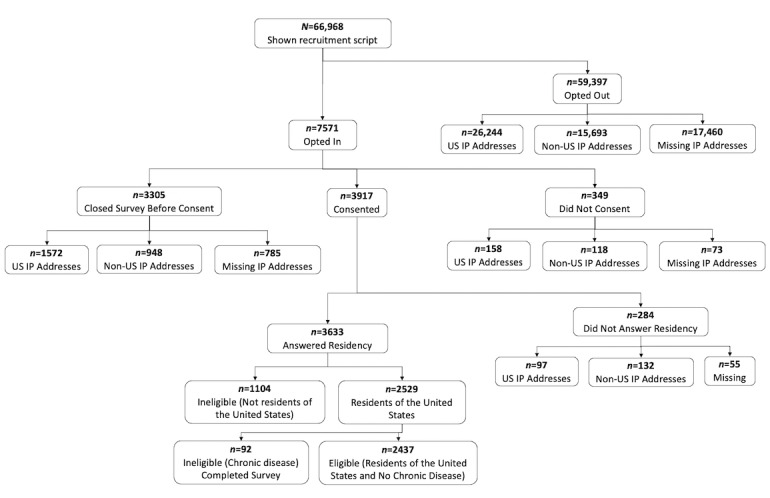
Cross-sectional survey of web-based health information seekers following the completion of a symptom checker visit (N=2437). Measures of comprehensibility, confidence, usefulness, health-related anxiety, empowerment, and intention to use in the future were assessed. ANOVAs and the Wilcoxon rank sum test examined mean outcome differences in racial, ethnic, and sex groups. The relationship between perceptions of the symptom checker and intention to follow recommended actions was assessed using multilevel logistic regression.
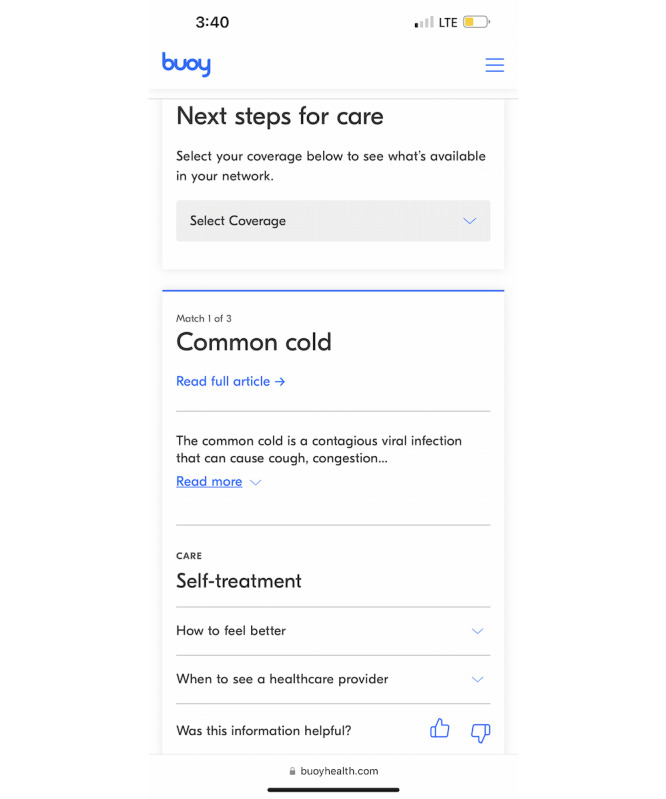
Buoy users were well-educated (1384/1704, 81.22% college or higher), primarily White (1227/1693, 72.47%), and female (2069/2437, 84.89%). Most had insurance (1449/1630, 88.89%), a regular health care provider (1307/1709, 76.48%), and reported good health (1000/1703, 58.72%). Three types of symptoms-pain (855/2437, 35.08%), gynecological issues (293/2437, 12.02%), and masses or lumps (204/2437, 8.37%)-accounted for almost half (1352/2437, 55.48%) of site visits. Buoy's top three primary recommendations split across less-serious triage categories: primary care physician in 2 weeks (754/2141, 35.22%), self-treatment (452/2141, 21.11%), and primary care in 1 to 2 days (373/2141, 17.42%). Common diagnoses were musculoskeletal (303/2437, 12.43%), gynecological (304/2437, 12.47%) and skin conditions (297/2437, 12.19%), and infectious diseases (300/2437, 12.31%). Users generally reported high confidence in Buoy, found it useful and easy to understand, and said that Buoy made them feel less anxious and more empowered to seek medical help. Users for whom Buoy recommended "Waiting/Watching" or "Self-Treatment" had strongest intentions to comply, whereas those advised to seek primary care had weaker intentions. Compared with White users, Latino and Black users had significantly more confidence in Buoy (P<.05), and the former also found it significantly more useful (P<.05). Latino (odds ratio 1.96, 95% CI 1.22-3.25) and Black (odds ratio 2.37, 95% CI 1.57-3.66) users also had stronger intentions to discuss recommendations with a provider than White users.
Results demonstrate the potential utility of a web-based health information tool to empower people to seek care and reduce health-related anxiety. However, despite encouraging results suggesting the tool may fulfill unmet health information needs among women and Black and Latino adults, analyses of the user base illustrate persistent second-level digital divide effects.
网络上不断增加的健康信息量增加了人们对提供个性化和可操作健康信息的工具的需求。这样的工具包括症状检查器,它在响应一组关于症状的探针后为用户提供潜在的诊断。尽管它们的实用性很大,但对于这些工具的实际使用和效果知之甚少。
我们旨在了解谁使用基于网络的人工智能症状检查器及其用途,他们如何评估基于网络的访谈的体验和信息质量,他们打算如何处理推荐,以及未来使用的预测因素。
对完成症状检查器访问后的基于网络的健康信息搜索者进行横断面调查(N=2437)。评估了可理解性、信心、有用性、与健康相关的焦虑、赋权和未来使用的意图等指标。使用方差分析和 Wilcoxon 秩和检验检查了种族、民族和性别群体的平均结果差异。使用多层逻辑回归评估了对症状检查器的看法与遵循推荐行动的意图之间的关系。
博伊用户受教育程度较高(1384/1704,81.22% 大学或以上),主要是白人(1227/1693,72.47%)和女性(2069/2437,84.89%)。大多数人都有保险(1449/1630,88.89%)、定期的医疗保健提供者(1307/1709,76.48%)和良好的健康状况(1000/1703,58.72%)。三种类型的症状——疼痛(855/2437,35.08%)、妇科问题(293/2437,12.02%)和肿块或肿块(204/2437,8.37%)——占网站访问量的近一半(1352/2437,55.48%)。博伊的前三个主要推荐建议分布在较不严重的分诊类别中:初级保健医生在 2 周内(754/2141,35.22%)、自我治疗(452/2141,21.11%)和初级保健在 1 至 2 天内(373/2141,17.42%)。常见的诊断是肌肉骨骼(303/2437,12.43%)、妇科(304/2437,12.47%)和皮肤状况(297/2437,12.19%)和传染病(300/2437,12.31%)。用户普遍对博伊有很高的信心,认为它有用且易于理解,并表示博伊让他们感到焦虑减轻,更有能力寻求医疗帮助。博伊建议“等待/观察”或“自我治疗”的用户最有意愿遵守,而建议寻求初级保健的用户意愿较弱。与白人用户相比,拉丁裔和黑人用户对博伊的信心明显更高(P<.05),而且前者也认为博伊明显更有用(P<.05)。拉丁裔(比值比 1.96,95%CI 1.22-3.25)和黑人(比值比 2.37,95%CI 1.57-3.66)用户与白人用户相比,更有可能与提供者讨论推荐意见。
结果表明,基于网络的健康信息工具具有赋予人们寻求护理和减轻与健康相关的焦虑的潜力。然而,尽管有令人鼓舞的结果表明该工具可能满足了女性和黑人和拉丁裔成年人未满足的健康信息需求,但对用户基础的分析说明了持续存在的第二级数字鸿沟效应。