Altameem Ayman, Mahanty Chandrakanta, Poonia Ramesh Chandra, Saudagar Abdul Khader Jilani, Kumar Raghvendra
Department of Computer Science and Engineering, College of Applied Studies and Community Services, King Saud University, Riyadh 11533, Saudi Arabia.
Department of Computer Science and Engineering, GIET University, Odisha 765022, India.
Diagnostics (Basel). 2022 Jul 28;12(8):1812. doi: 10.3390/diagnostics12081812.
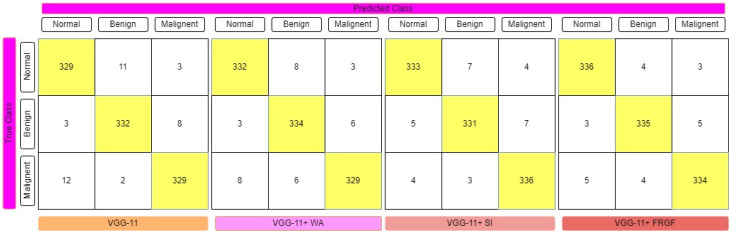
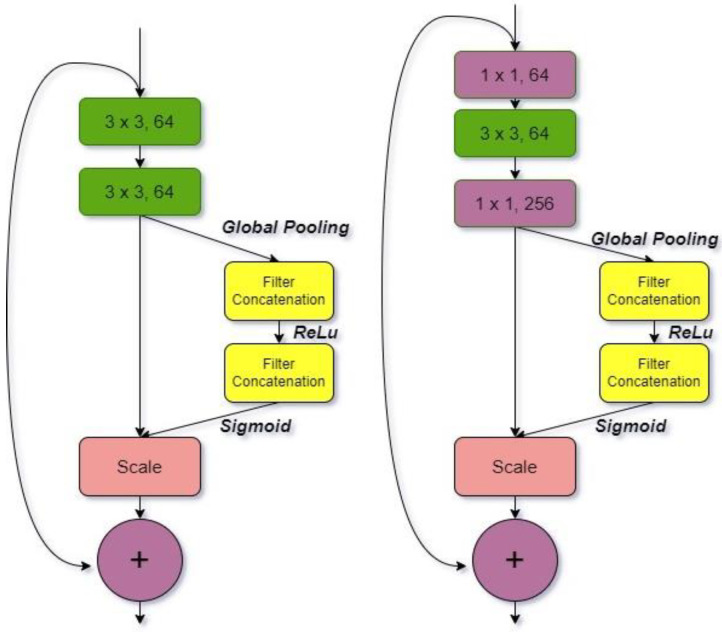
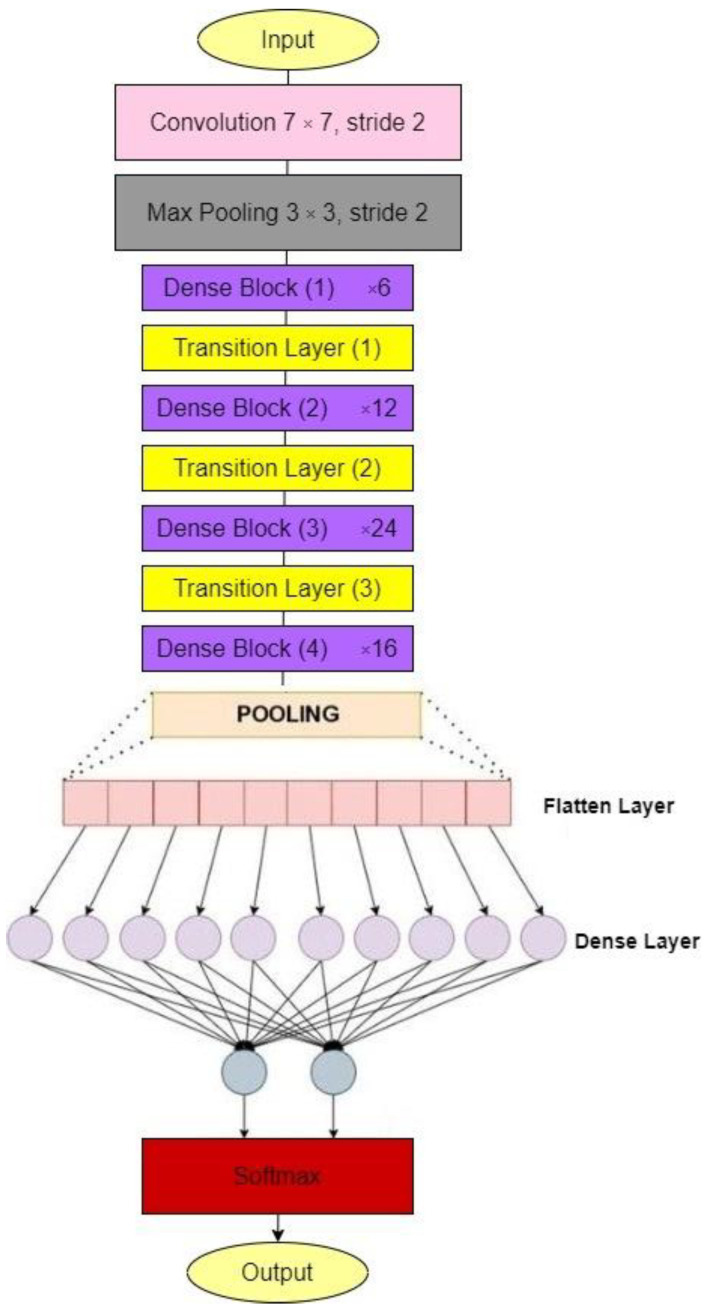
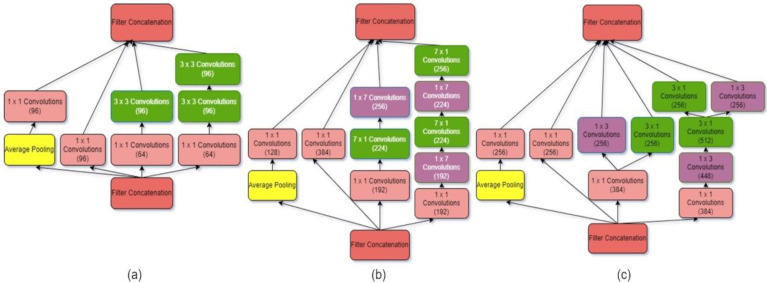
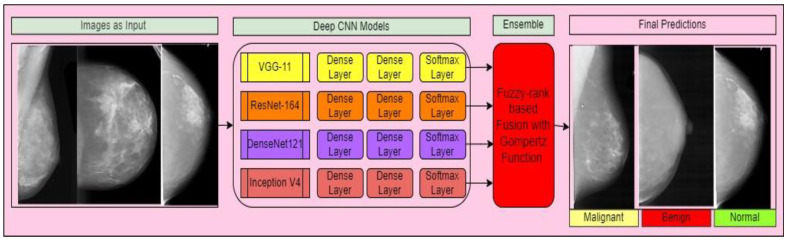
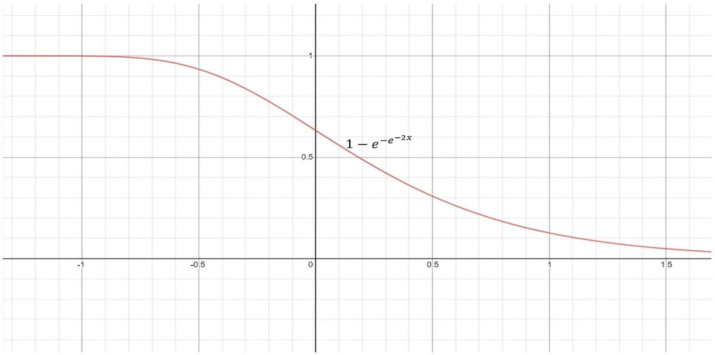
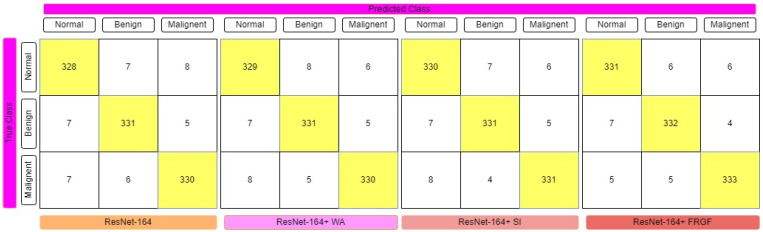
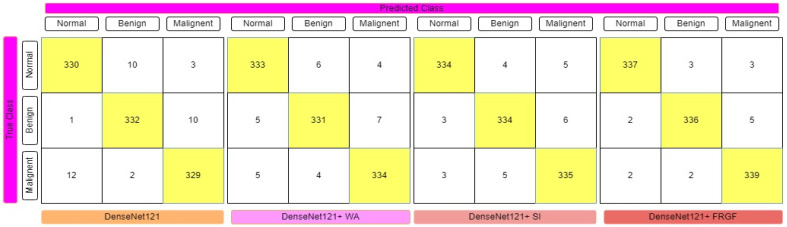
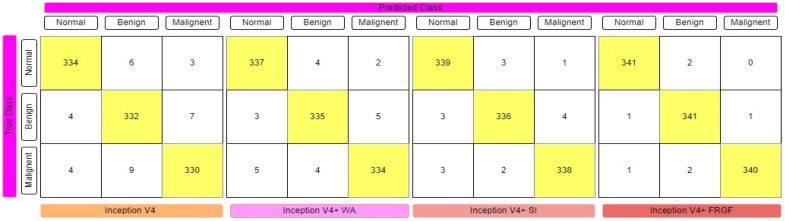
Breast cancer has evolved as the most lethal illness impacting women all over the globe. Breast cancer may be detected early, which reduces mortality and increases the chances of a full recovery. Researchers all around the world are working on breast cancer screening tools based on medical imaging. Deep learning approaches have piqued the attention of many in the medical imaging field due to their rapid growth. In this research, mammography pictures were utilized to detect breast cancer. We have used four mammography imaging datasets with a similar number of 1145 normal, benign, and malignant pictures using various deep CNN (Inception V4, ResNet-164, VGG-11, and DenseNet121) models as base classifiers. The proposed technique employs an ensemble approach in which the Gompertz function is used to build fuzzy rankings of the base classification techniques, and the decision scores of the base models are adaptively combined to construct final predictions. The proposed fuzzy ensemble techniques outperform each individual transfer learning methodology as well as multiple advanced ensemble strategies (Weighted Average, Sugeno Integral) with reference to prediction and accuracy. The suggested Inception V4 ensemble model with fuzzy rank based Gompertz function has a 99.32% accuracy rate. We believe that the suggested approach will be of tremendous value to healthcare practitioners in identifying breast cancer patients early on, perhaps leading to an immediate diagnosis.
乳腺癌已成为影响全球女性的最致命疾病。乳腺癌若能早期发现,可降低死亡率并增加完全康复的几率。世界各地的研究人员都在致力于基于医学成像的乳腺癌筛查工具。深度学习方法因其快速发展而引起了医学成像领域许多人的关注。在本研究中,利用乳腺X线摄影图像来检测乳腺癌。我们使用了四个乳腺X线摄影成像数据集,分别有1145张数量相近的正常、良性和恶性图片,并使用各种深度卷积神经网络(Inception V4、ResNet - 164、VGG - 11和DenseNet121)模型作为基础分类器。所提出的技术采用了一种集成方法,其中使用Gompertz函数对基础分类技术建立模糊排名,并将基础模型的决策分数进行自适应组合以构建最终预测。所提出的模糊集成技术在预测和准确性方面优于每种单独的迁移学习方法以及多种先进的集成策略(加权平均、Sugeno积分)。所建议的基于模糊排名的Gompertz函数的Inception V4集成模型准确率达到99.32%。我们相信,所建议的方法对于医疗从业者早期识别乳腺癌患者将具有巨大价值,可能会带来即时诊断。