Saw Swee Hock School of Public Health, National University of Singapore, The National University Health System Singapore, and Duke-NUS Medical school, Singapore.
Centre for Chronic Disease Control, New Delhi, IN.
Glob Heart. 2022 Aug 26;17(1):61. doi: 10.5334/gh.1141. eCollection 2022.
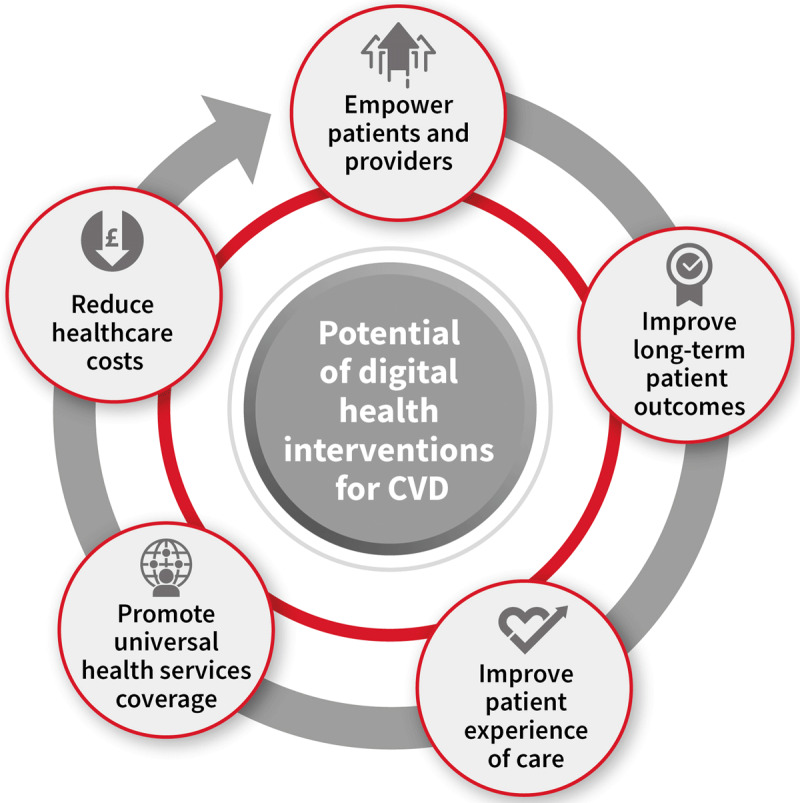
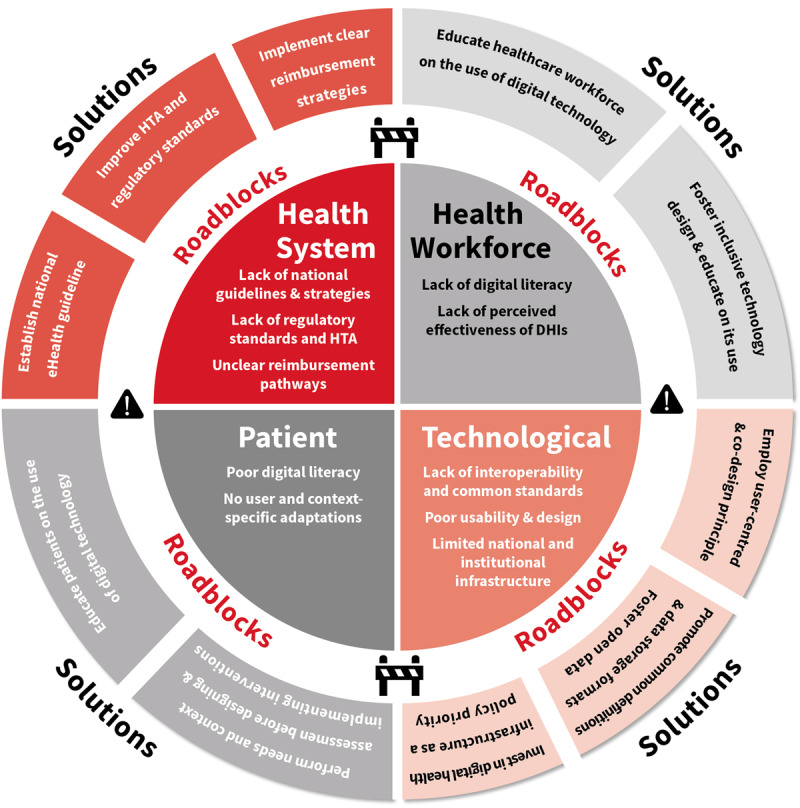
More than 500 million people worldwide live with cardiovascular disease (CVD). Health systems today face fundamental challenges in delivering optimal care due to ageing populations, healthcare workforce constraints, financing, availability and affordability of CVD medicine, and service delivery. Digital health technologies can help address these challenges. They may be a tool to reach Sustainable Development Goal 3.4 and reduce premature mortality from non-communicable diseases (NCDs) by a third by 2030. Yet, a range of fundamental barriers prevents implementation and access to such technologies. Health system governance, health provider, patient and technological factors can prevent or distort their implementation. World Heart Federation (WHF) roadmaps aim to identify essential roadblocks on the pathway to effective prevention, detection, and treatment of CVD. Further, they aim to provide actionable solutions and implementation frameworks for local adaptation. This WHF Roadmap for digital health in cardiology identifies barriers to implementing digital health technologies for CVD and provides recommendations for overcoming them.
全球有超过 5 亿人患有心血管疾病 (CVD)。由于人口老龄化、医疗保健劳动力短缺、融资、CVD 药物的可及性和可负担性以及服务提供等方面的原因,当今的卫生系统在提供最佳护理方面面临着根本性的挑战。数字健康技术可以帮助应对这些挑战。它们可能是实现可持续发展目标 3.4 的工具,并有助于在 2030 年前将非传染性疾病导致的过早死亡率降低三分之一。然而,一系列基本障碍阻止了这些技术的实施和获取。卫生系统治理、卫生提供者、患者和技术因素可能会阻碍或扭曲其实施。世界心脏联合会 (WHF) 路线图旨在确定有效预防、检测和治疗 CVD 道路上的基本障碍。此外,它们旨在为当地适应提供可行的解决方案和实施框架。本 WHF 心血管数字健康路线图确定了实施 CVD 数字健康技术的障碍,并提出了克服这些障碍的建议。