Sree Chitra Tirunal Institute for Medical Sciences and Technology, Trivandum, IN.
World Heart Federation, Geneva, CH.
Glob Heart. 2021 Sep 10;16(1):63. doi: 10.5334/gh.1066. eCollection 2021.
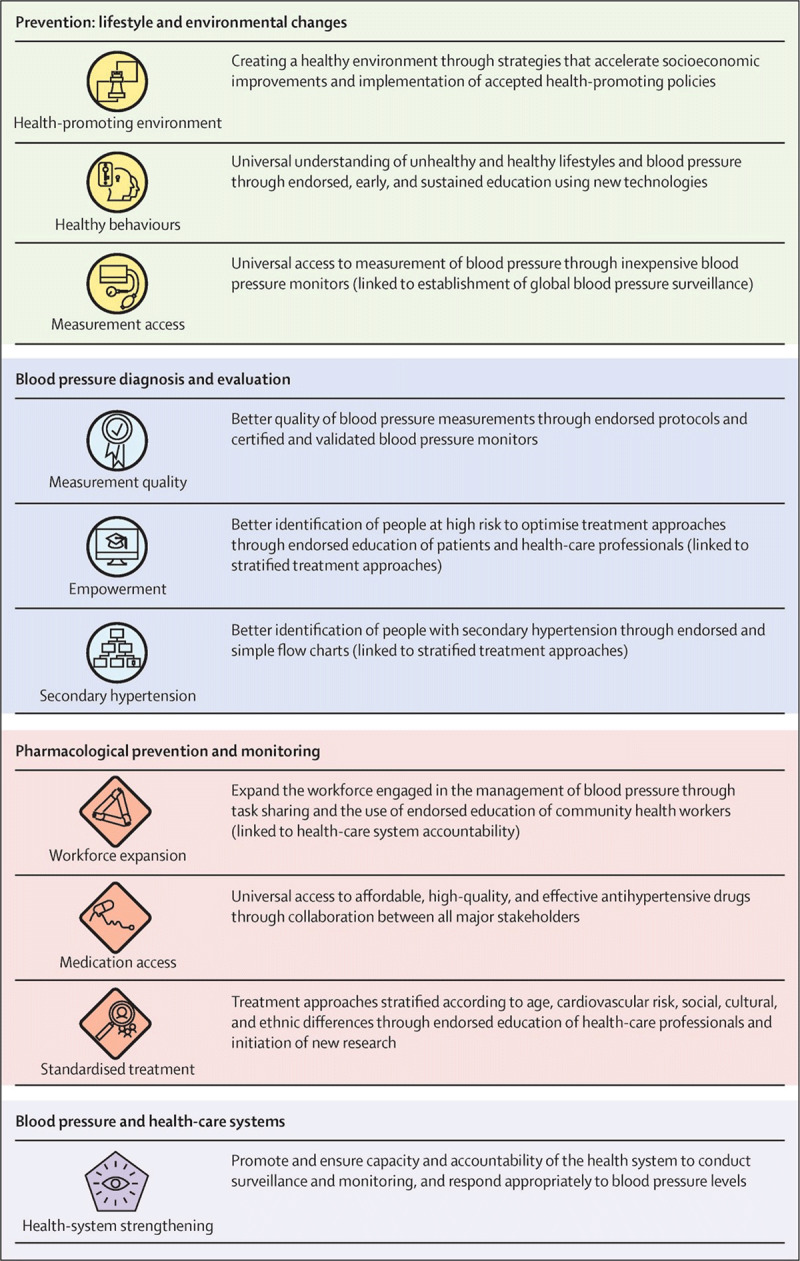
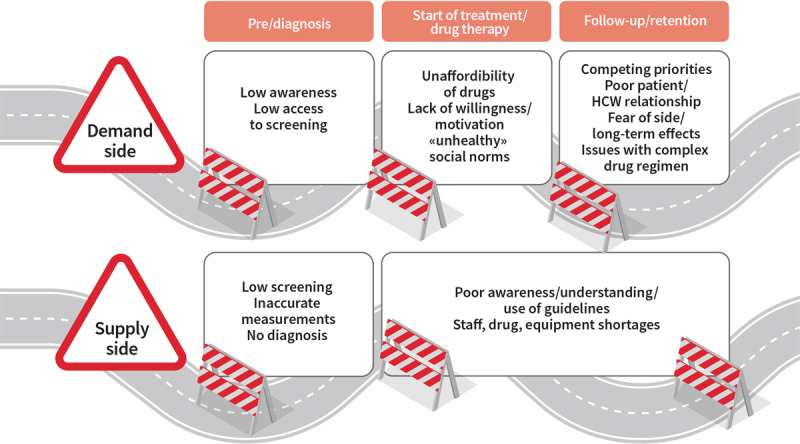
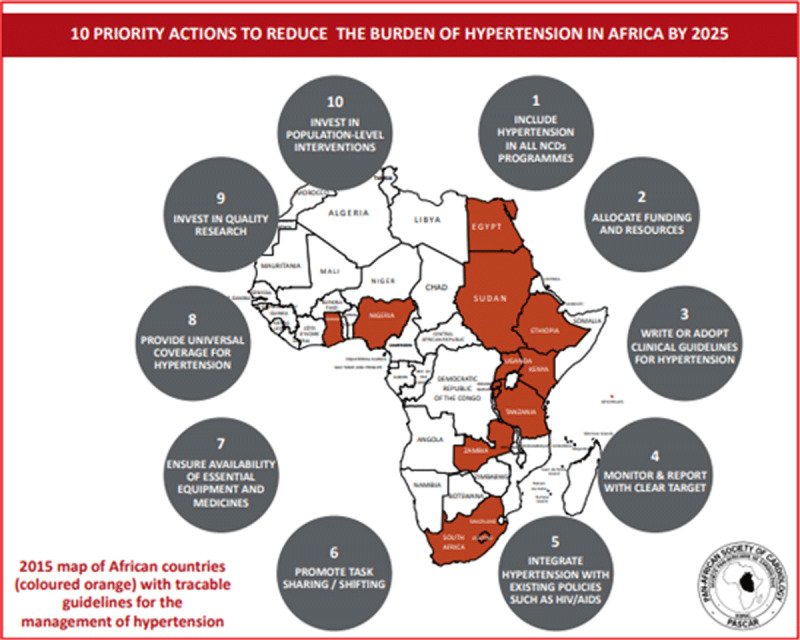
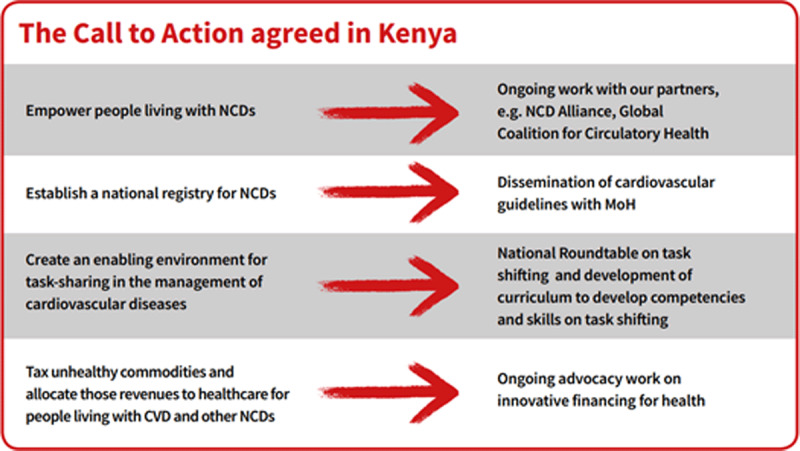
The World Heart Federation (WHF) Roadmap series covers a large range of cardiovascular conditions. These Roadmaps identify potential roadblocks and their solutions to improve the prevention, detection and management of cardiovascular diseases and provide a generic global framework available for local adaptation. A first Roadmap on raised blood pressure was published in 2015. Since then, advances in hypertension have included the publication of new clinical guidelines (AHA/ACC; ESC; ESH/ISH); the launch of the WHO Global HEARTS Initiative in 2016 and the associated Resolve to Save Lives (RTSL) initiative in 2017; the inclusion of single-pill combinations on the WHO Essential Medicines' list as well as various advances in technology, in particular telemedicine and mobile health. Given the substantial benefit accrued from effective interventions in the management of hypertension and their potential for scalability in low and middle-income countries (LMICs), the WHF has now revisited and updated the 'Roadmap for raised BP' as 'Roadmap for hypertension' by incorporating new developments in science and policy. Even though cost-effective lifestyle and medical interventions to prevent and manage hypertension exist, uptake is still low, particularly in resource-poor areas. This Roadmap examined the roadblocks pertaining to both the demand side (demographic and socio-economic factors, knowledge and beliefs, social relations, norms, and traditions) and the supply side (health systems resources and processes) along the patient pathway to propose a range of possible solutions to overcoming them. Those include the development of population-wide prevention and control programmes; the implementation of opportunistic screening and of out-of-office blood pressure measurements; the strengthening of primary care and a greater focus on task sharing and team-based care; the delivery of people-centred care and stronger patient and carer education; and the facilitation of adherence to treatment. All of the above are dependent upon the availability and effective distribution of good quality, evidence-based, inexpensive BP-lowering agents.
世界心脏联盟(WHF)路线图系列涵盖了广泛的心血管疾病。这些路线图确定了潜在的障碍及其解决方案,以改善心血管疾病的预防、检测和管理,并提供一个可供本地调整的通用全球框架。第一份关于高血压的路线图于 2015 年发布。此后,高血压领域的进展包括发布新的临床指南(AHA/ACC;ESC;ESH/ISH);2016 年启动世界卫生组织全球心脏倡议以及 2017 年相关的拯救生命倡议(Resolve to Save Lives,RTSL);将单药联合治疗纳入世界卫生组织基本药物清单,以及在技术方面的各种进展,特别是远程医疗和移动医疗。鉴于有效干预高血压管理所带来的实质性益处及其在中低收入国家(LMICs)的可扩展性潜力,WHF 现在重新审视并更新了“高血压管理路线图”,将其纳入了科学和政策方面的新进展,将其更名为“高血压路线图”。尽管存在成本效益高的生活方式和医疗干预措施来预防和管理高血压,但在资源匮乏地区,这些措施的采用率仍然很低。该路线图研究了沿着患者路径存在的供需双方(人口和社会经济因素、知识和信念、社会关系、规范和传统)的障碍,并提出了一系列可能的解决方案来克服这些障碍。这些解决方案包括制定全民预防和控制计划;实施机会性筛查和非工作场所血压测量;加强初级保健,并更加注重任务分担和团队护理;提供以患者为中心的护理以及加强患者和护理人员教育;以及促进治疗的依从性。所有这些都取决于提供和有效分配高质量、基于证据、价格低廉的降压药物的情况。