Grajek Mateusz, Krupa-Kotara Karolina, Białek-Dratwa Agnieszka, Sobczyk Karolina, Grot Martina, Kowalski Oskar, Staśkiewicz Wiktoria
Department of Public Health, Department of Public Health Policy, Faculty of Health Sciences in Bytom, Medical University of Silesia in Katowice, Katowice, Poland.
Department of Epidemiology, Faculty of Health Sciences in Bytom, Medical University of Silesia in Katowice, Katowice, Poland.
Front Nutr. 2022 Aug 22;9:943998. doi: 10.3389/fnut.2022.943998. eCollection 2022.
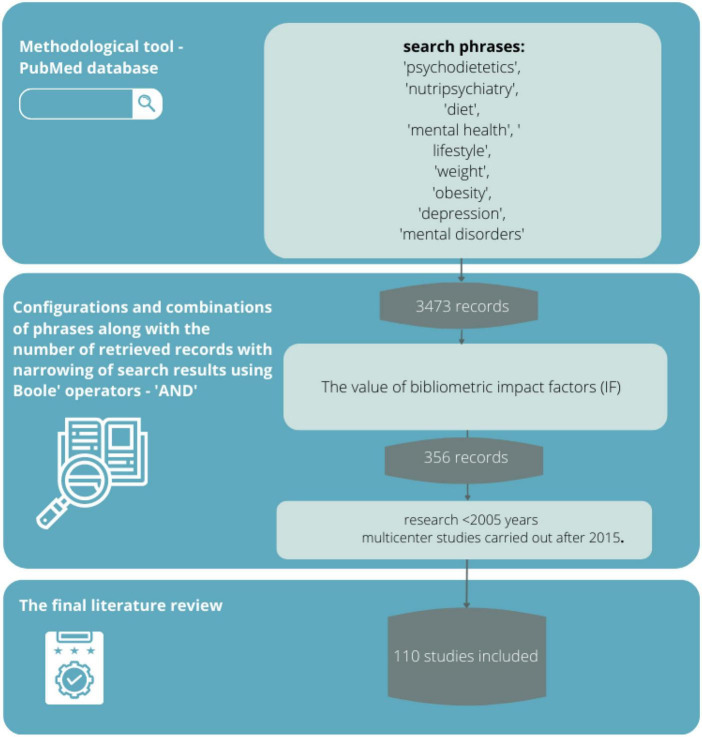
Applied psychopharmacotherapy and psychotherapy do not always bring the expected results in the treatment of mental disorders. As a result, other interventions are receiving increasing attention. In recent years, there has been a surge in research on the effects of nutrition on mental status, which may be an important aspect of the prevention of many mental disorders and, at the same time, may lead to a reduction in the proportion of people with mental disorders. This review aims to answer whether and to what extent lifestyle and related nutrition affect mental health and whether there is scientific evidence supporting a link between diet and mental health. A review of the scientific evidence was conducted based on the available literature by typing in phrases related to nutrition and mental health using the methodological tool of the PubMed database. The literature search yielded 3,473 records, from which 356 sources directly related to the topic of the study were selected, and then those with the highest scientific value were selected according to bibliometric impact factors. In the context of current changes, urbanization, globalization, including the food industry, and changes in people's lifestyles and eating habits, the correlations between these phenomena and their impact on mental state become important. Knowledge of these correlations creates potential opportunities to implement new effective dietary, pharmacological, therapeutic, and above all preventive interventions. The highest therapeutic potential is seen in the rational diet, physical activity, use of psychobiotics, and consumption of antioxidants. Research also shows that there are nutritional interventions that have psychoprotective potential.
在精神障碍的治疗中,应用心理药物疗法和心理疗法并不总能带来预期的效果。因此,其他干预措施正受到越来越多的关注。近年来,关于营养对精神状态影响的研究激增,这可能是预防许多精神障碍的一个重要方面,同时可能会降低精神障碍患者的比例。这篇综述旨在回答生活方式及相关营养是否以及在多大程度上影响心理健康,以及是否有科学证据支持饮食与心理健康之间的联系。通过使用PubMed数据库的方法工具,输入与营养和心理健康相关的短语,对现有文献中的科学证据进行了综述。文献检索产生了3473条记录,从中选择了356篇与研究主题直接相关的文献,然后根据文献计量学影响因素选择了具有最高科学价值的文献。在当前变化的背景下,包括食品行业在内的城市化、全球化以及人们生活方式和饮食习惯的变化,这些现象之间的相关性及其对精神状态的影响变得至关重要。了解这些相关性为实施新的有效的饮食、药物、治疗以及最重要的预防干预措施创造了潜在机会。合理饮食、体育活动、使用心理益生菌和食用抗氧化剂具有最高的治疗潜力。研究还表明,存在具有心理保护潜力的营养干预措施。