Jing Xian, Fu Hongxun, Yu Baojun, Sun Meiyan, Wang Liye
Key Laboratory of Micro/Nano and Ultra-precision Manufacturing, School of Mechatronic Engineering, Changchun University of Technology, Changchun, Jilin, China.
College of Laboratory Medicine, Jilin Medical University, Jilin, China.
Front Bioeng Biotechnol. 2022 Aug 22;10:994355. doi: 10.3389/fbioe.2022.994355. eCollection 2022.
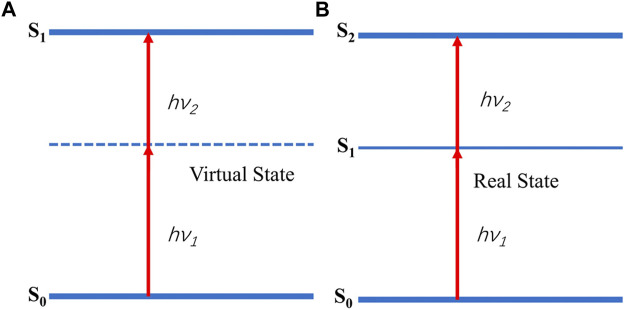
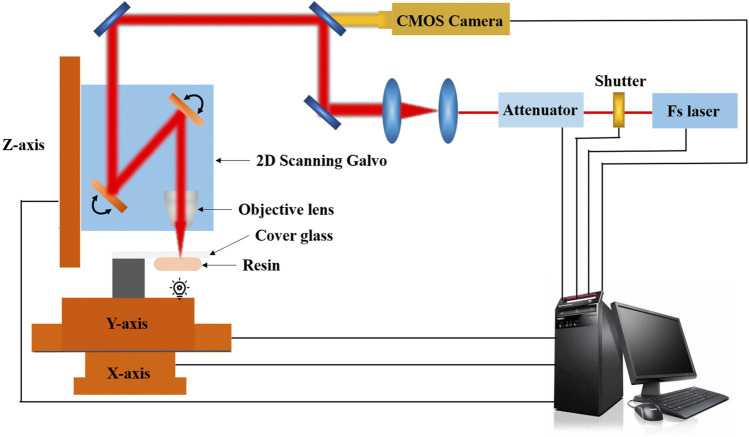
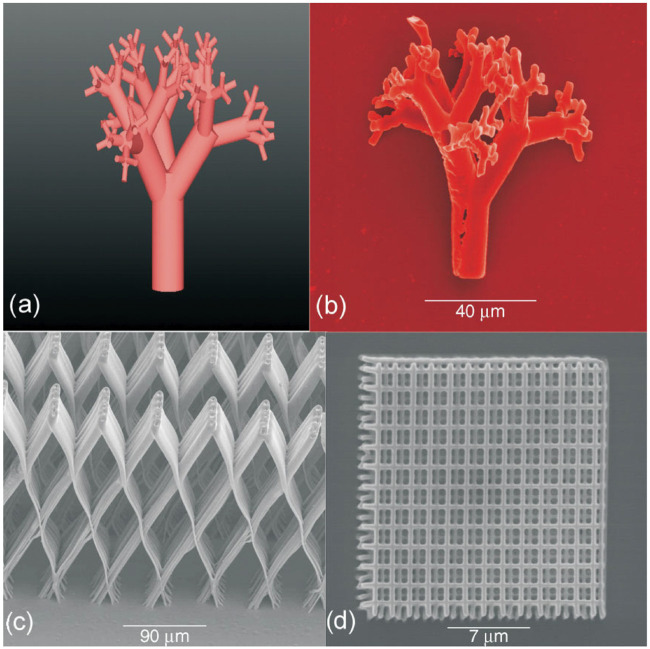
The needs for high-resolution, well-defined and complex 3D microstructures in diverse fields call for the rapid development of novel 3D microfabrication techniques. Among those, two-photon polymerization (TPP) attracted extensive attention owing to its unique and useful characteristics. As an approach to implementing additive manufacturing, TPP has truly 3D writing ability to fabricate artificially designed constructs with arbitrary geometry. The spatial resolution of the manufactured structures TPP can exceed the diffraction limit. The 3D structures fabricated by TPP could properly mimic the microenvironment of natural extracellular matrix, providing powerful tools for the study of cell behavior. TPP can meet the requirements of manufacturing technique for 3D scaffolds (engineering cell culture matrices) used in cytobiology, tissue engineering and regenerative medicine. In this review, we demonstrated the development in 3D microfabrication techniques and we presented an overview of the applications of TPP as an advanced manufacturing technique in complex 3D biomedical scaffolds fabrication. Given this multidisciplinary field, we discussed the perspectives of physics, materials science, chemistry, biomedicine and mechanical engineering. Additionally, we dived into the principles of tow-photon absorption (TPA) and TPP, requirements of 3D biomedical scaffolders, developed-to-date materials and chemical approaches used by TPP and manufacturing strategies based on mechanical engineering. In the end, we draw out the limitations of TPP on 3D manufacturing for now along with some prospects of its future outlook towards the fabrication of 3D biomedical scaffolds.
不同领域对高分辨率、清晰且复杂的三维微观结构的需求推动了新型三维微制造技术的快速发展。其中,双光子聚合(TPP)因其独特且有用的特性而备受关注。作为一种实现增材制造的方法,TPP具有真正的三维写入能力,能够制造具有任意几何形状的人工设计结构。TPP制造的结构的空间分辨率可以超过衍射极限。通过TPP制造的三维结构可以恰当地模拟天然细胞外基质的微环境,为细胞行为研究提供强大工具。TPP能够满足细胞生物学、组织工程和再生医学中使用的三维支架(工程细胞培养基质)制造技术的要求。在本综述中,我们展示了三维微制造技术的发展,并概述了TPP作为一种先进制造技术在复杂三维生物医学支架制造中的应用。鉴于这个多学科领域,我们讨论了物理、材料科学、化学、生物医学和机械工程等方面的观点。此外,我们深入探讨了双光子吸收(TPA)和TPP的原理、三维生物医学支架的要求、迄今为止TPP使用的材料和化学方法以及基于机械工程的制造策略。最后,我们总结了目前TPP在三维制造方面的局限性以及其未来在三维生物医学支架制造方面的一些前景。